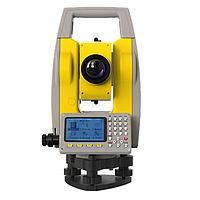
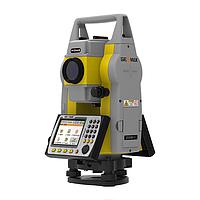
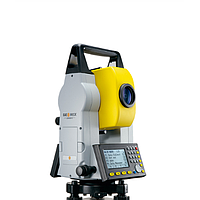
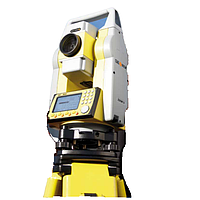
Total Station
Accurate field layout, topographic surveying, and construction staking all depend on equipment that can capture angles and distances in one workflow. A Total Station helps teams work faster in the field while maintaining the precision needed for mapping, civil engineering, infrastructure, and site control tasks.
For buyers comparing instruments for daily surveying work, this category brings together practical options for reflectorless measurement, prism-based distance measurement, coordinate transfer, and data collection. Whether the requirement is a compact system for general construction or a higher-accuracy instrument for detailed survey work, the key is to match performance, operating environment, and data handling to the actual job.
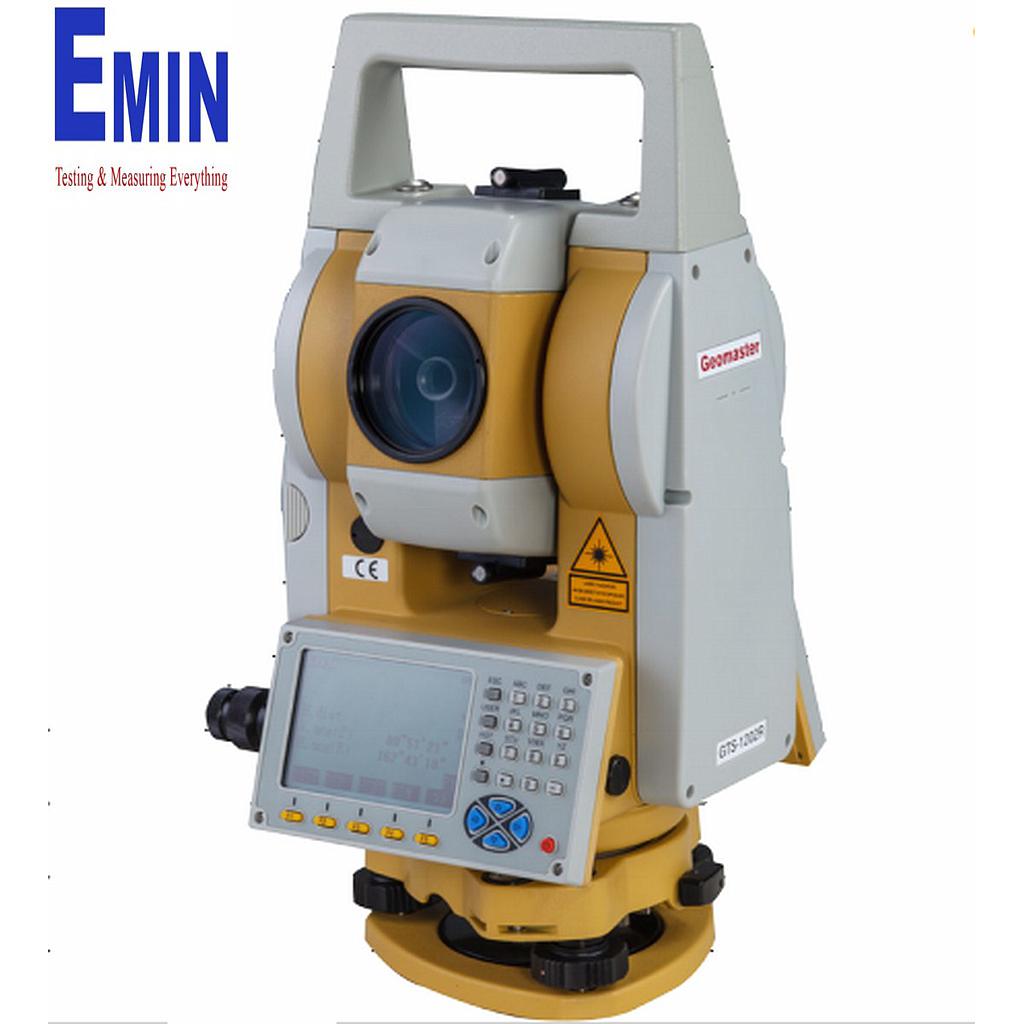
What a total station does in real field work
A total station combines an electronic theodolite with an EDM module, allowing the instrument to measure horizontal and vertical angles together with distance. From those inputs, the device can calculate coordinates, elevations, offsets, and layout points used in survey and construction applications.
In practice, this means one instrument can support boundary surveys, terrain mapping, road alignment, building set-out, as-built checks, and volume-related work. Built-in software and onboard memory also make it easier to record field observations and transfer data back to office workflows without relying on manual note-taking.
How measurement works and why it matters
The operating principle is straightforward: the instrument sends a measuring signal toward a prism or target, receives the return signal, and calculates distance from that exchange. Combined with angle readings and tilt compensation, the total station can determine point positions with a high level of repeatability under field conditions.
This matters because productivity is not only about measurement speed. It also depends on setup stability, compensation accuracy, visibility, display usability, and how easily crews can move from one point to the next. Features such as dual-axis compensators, reflectorless measurement, backlit displays, and USB or Bluetooth data transfer all contribute to smoother site operation.
Choosing the right model for your application
Selection usually starts with required angular accuracy. For general construction staking and routine site measurements, 5" instruments are often suitable. For tighter control or applications where smaller angular error is important, 2" models may be more appropriate.
Measurement range is the next major factor. Some jobs rely heavily on reflectorless measurement for façades, inaccessible points, or rapid checks, while others still depend on prism-based long-distance measurement. Environmental protection is also important for outdoor use, especially when teams work in dusty or wet conditions and need IP-rated equipment for daily operation.
Data handling should not be overlooked. Instruments with internal memory, USB interfaces, or Bluetooth can simplify transfer to CAD and survey processing workflows. On larger or more complex sites, communication support may also be useful alongside field coordination tools such as walkie-talkies.
Examples from leading manufacturers
Users looking for widely recognized survey platforms often compare models from TOPCON, Sokkia, GEOMAX, GEO-Fennel, SATLAB, and GPI. Each brand in this category addresses common needs such as angle measurement, prism and non-prism distance measurement, onboard data storage, and field-ready construction.
For example, the TOPCON GM-52 Reflectorless Total Station offers 2”/5” configurations, prism measurement up to 4,000 m, reflectorless operation, IP66 protection, and long battery operation suited to routine outdoor work. The TOPCON GM-105 Total Station is another option for teams that need a combination of precise measurement, onboard memory, and practical connectivity for daily survey tasks.
Within the same category, the Sokkia IM-55 Sokkia Total Station is a relevant choice for users who want integrated construction and survey software with a practical prism range and reflectorless capability. Buyers comparing alternative platforms may also review the Sokkia product range when evaluating workflow preferences and site requirements.
Typical configurations across this category
Different projects call for different instrument profiles. A model such as the SATLAB SLT10 Satlab Total Station is positioned around 2" accuracy with long prism range, reflectorless capability, and dual-side keyboard operation, making it relevant for crews that need flexibility in the field. For more standard site work, the SATLAB SLT5 Total Station provides a 5" alternative with a similar practical measurement concept.
The GPI GPI-600L Total Station (2") is another example of a field-oriented setup with dual-axis compensation, onboard memory, and multiple communication options. GEO-Fennel models such as the FTS 300 Total station and FTS 310 Total Station illustrate how users can compare reflectorless range, angular resolution, environmental rating, and operating time depending on project scope and crew preference.
For users interested in compact dual-display operation, the GEOMAX Zoom10 -2” FULL ELECTRONIC MACHINERY also represents a familiar survey workflow focused on coordinate transfer, field data collection, and routine construction measurement. If your work extends beyond land-based positioning, related solutions in hydrography and oceanography survey equipment may also be worth reviewing.
Key buying criteria before placing an order
When comparing instruments on a category page, it helps to focus on a short list of technical priorities rather than only price or brand. In most B2B purchasing decisions, the most useful comparison points are accuracy, range, data workflow, and field durability.
- Angular accuracy: typically a main divider between general construction use and more demanding survey applications.
- Reflectorless and prism range: important for line-of-sight conditions, site scale, and access to measured points.
- Compensation and stability: dual-axis compensators help maintain reliable measurements during setup.
- Ingress protection: IP-rated housings are valuable for outdoor and all-weather operation.
- Battery life and memory: useful for long workdays and larger point sets.
- Connectivity: USB, RS-232, and Bluetooth can simplify export and integration into office processing.
It is also worth considering the broader measurement environment. On projects where movement or speed information must be monitored in parallel with positional data, teams may also look at complementary devices such as speed sensors for related applications.
Who this category is suitable for
Total stations are commonly specified by survey contractors, civil engineering firms, road and bridge teams, utility installers, industrial site operators, and construction companies. They are also relevant for organizations that need repeatable coordinate measurement without moving to a more complex GNSS- or scanning-heavy workflow for every task.
The right instrument depends on how the field team actually works: number of setup points per day, average shooting distance, need for reflectorless checks, target accuracy, and preferred data export method. In many cases, choosing a practical, durable instrument with the right accuracy class is more valuable than selecting a model with features that will rarely be used on site.
Final considerations
This Total Station category is intended to help buyers compare instruments that support real surveying and construction workflows, from routine layout to more accuracy-sensitive measurement. Looking closely at measurement performance, environmental protection, battery endurance, and data transfer options will usually lead to a better fit than comparing model names alone.
If you are narrowing down options, start with the required accuracy class, expected distance range, and daily field conditions. From there, it becomes much easier to identify whether a model from TOPCON, Sokkia, GEOMAX, GEO-Fennel, SATLAB, or GPI matches the job and the team that will use it.
Get exclusive volume discounts, bulk pricing updates, and new product alerts delivered directly to your inbox.
By subscribing, you agree to our Terms of Service and Privacy Policy.
Direct access to our certified experts