Light source
Accurate optical testing starts with a stable, repeatable source. In fiber networks, lab setups, and optical calibration work, the quality of the emitted light directly affects measurement confidence, troubleshooting speed, and overall test consistency. This is why choosing the right Light source is not only about wavelength output, but also about stability, connector compatibility, and the intended application.
Within this category, users can find light sources used for fiber optic testing as well as precision lamp-based sources for optical measurement environments. The range is relevant for telecom field work, FTTH and PON maintenance, component verification, and controlled optical testing where dependable output is essential.
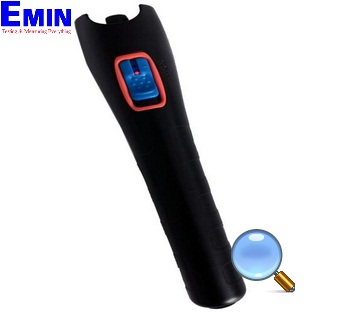
Where light sources fit in an optical test workflow
In practical field and bench work, a light source is often paired with an optical power meter to measure insertion loss, continuity, and transmission quality. A stable source provides known optical output, allowing technicians and engineers to evaluate fiber links and passive components more reliably.
Light sources also play a supporting role alongside tools such as an OTDR meter or an optical fault locator. While those instruments focus on event analysis or fault tracing, a dedicated source remains useful for routine attenuation testing, acceptance checks, and maintenance tasks where simple, repeatable measurement is preferred.
Main types available in this category
The strongest focus of this category is on fiber optic light sources. These are designed to emit specific wavelengths commonly used in telecom and data communication testing, such as 850 nm, 1300 nm, 1310 nm, 1490 nm, 1550 nm, and 1625 nm, depending on the fiber type and network environment. Many models support continuous wave and modulated output modes, which can help with signal identification during field testing.
There is also a more specialized group of precision lamp sources and irradiance standard lamps intended for optical measurement and calibration-oriented applications. These are more relevant in controlled environments where output accuracy, long-term stability, and spectral performance matter more than portability.
Because the category covers more than one use case, buyers should begin by identifying whether they need a compact fiber test source for network work or a lamp-based source for laboratory or photometric applications.
Representative product options and use cases
For fiber testing, several models from 3S Telecom illustrate the typical selection logic. The 3S Telecom FOLS-3155A is aimed at singlemode applications with 1310/1550 nm output, while the FOLS-314955A expands coverage with 1310/1490/1550 nm wavelengths that can suit broader FTTH and PON-related work. For mixed fiber environments, the FOLS-85303155A supports both multimode and singlemode wavelength combinations, making it relevant when technicians work across different link types.
Models from AFS, such as the AFS OS540FC, OS540SC, and OS540ST variants, show another important decision point: connector interface. When a source is offered in FC, SC, or ST versions, the choice should align with the connector style used in the existing test setup to reduce extra adaptation and handling complexity.
On the precision measurement side, OPTRONIC products such as the OL 410-200 Precision Lamp Source and the OL 245M Irradiance Standard Lamp are suited to more specialized optical tasks. These products are not interchangeable with handheld telecom sources; instead, they serve applications where controlled lamp output and measurement-grade stability are the priority.
How to choose the right light source
The first selection factor is wavelength compatibility. Singlemode and multimode systems use different wavelength sets, so the source should match the fiber under test and the measurement procedure being performed. A mismatch here can lead to misleading results even if the device is functioning correctly.
The second factor is connector format. Products in this category include versions with FC/PC, FC, SC, and ST interfaces. In B2B environments, connector compatibility matters not only for convenience but also for repeatability, because each added adapter or mating surface can introduce loss and variability.
Output stability and modulation options are also important. Stable output supports more reliable loss testing over time, while CW and common modulation frequencies can help identify the test signal in the field. For portable work, battery operation, automatic shutdown, and compact dimensions may also be useful, especially for maintenance teams and installation crews.
Brand coverage across practical applications
This category brings together several recognizable brands with different strengths. 3S Telecom and AFS are strongly associated with handheld fiber optic testing needs, where portability, wavelength options, and standard connector formats are key. These products are suitable for telecom contractors, field service teams, and technicians handling FTTH, PON, and routine link verification.
OPTRONIC addresses a different layer of optical work, where lamp-based sources support more controlled measurement conditions. That makes the brand relevant for users involved in calibration, irradiance reference work, or optical lab processes that require a more specialized source than a typical field instrument.
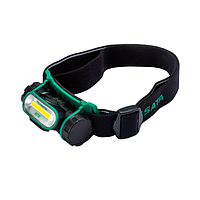
SATA appears in this category with the SATA 90716 waterproof headlight with lithium battery. While it is not a measurement source in the same sense as fiber or precision optical instruments, it can still support inspection and maintenance work in low-light environments where technicians need hands-free illumination during cable routing, splicing preparation, or site service activity.
Typical applications in industry and field service
In telecom and structured cabling environments, light sources are commonly used for attenuation testing, link commissioning, maintenance verification, and basic troubleshooting. They are especially valuable when paired with other optical instruments as part of a broader toolkit that may also include a fusion splicer for installation work and an optical analyzer for more advanced optical evaluation.
In laboratories and specialized optical measurement settings, lamp sources and irradiance standards are used where output quality must remain consistent over time. These environments usually place more emphasis on repeatability, instrument stability after warm-up, and traceable measurement practices than on portability.
What to check before ordering
Before placing an order, confirm the fiber type, required wavelengths, connector style, and operating environment. For field use, temperature range, battery format, and automatic shutdown can influence daily usability. For bench or lab applications, output characteristics and stability are usually the priority.
It is also helpful to consider how the source will fit into the rest of the test chain. A well-matched light source improves the value of the instruments around it and reduces avoidable setup errors. When the application is clear from the start, selecting the right model becomes much more straightforward.
Short FAQ
Is a fiber optic light source the same as a visible fault locator?
No. A fiber optic light source is generally used for controlled optical testing at defined wavelengths, often together with a power meter. A visible fault locator is mainly used to identify breaks, bends, or leakage points by emitting visible light.
How do I choose between singlemode and multimode light sources?
Choose based on the fiber under test and the wavelengths required by your application. Singlemode work commonly uses 1310 nm and 1550 nm, while multimode testing often uses 850 nm and 1300 nm.
Why does connector type matter?
Connector type affects physical compatibility and measurement repeatability. Matching FC, SC, ST, or FC/PC interfaces to your setup helps reduce unnecessary adapters and minimizes potential loss variation.
A suitable light source should match the measurement method, fiber type, and working conditions rather than simply offering more wavelengths or features. Whether the requirement is portable fiber testing or more specialized optical measurement, this category supports a practical selection process with solutions from established brands and application-relevant product lines.
Get exclusive volume discounts, bulk pricing updates, and new product alerts delivered directly to your inbox.
By subscribing, you agree to our Terms of Service and Privacy Policy.
Direct access to our certified experts