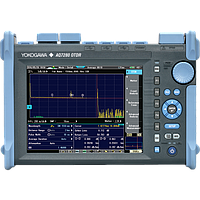
OTDR meter
Reliable fiber networks depend on being able to see what is happening along the link, not just at the endpoints. When installers, maintenance teams, and telecom engineers need to locate loss, reflections, splice issues, or fiber breaks, the OTDR meter is one of the most practical tools in the workflow. It helps convert reflected optical signals into a trace that reveals the condition of the cable over distance.
On this page, you can explore OTDR-related instruments and supporting accessories used in fiber inspection, commissioning, troubleshooting, and long-route analysis. The category also includes selected platforms and connector accessories that fit into broader optical test environments, making it easier to choose equipment for field service, lab work, or network maintenance.
How an OTDR meter supports fiber testing
An optical time-domain reflectometer sends light pulses into a fiber and evaluates the returned signal caused by scattering and reflections. From that trace, technicians can estimate cable length, identify high-loss events, detect reflective connectors, and locate discontinuities such as bends, bad splices, or complete breaks.
This makes OTDR testing especially useful when the problem is somewhere between two endpoints and cannot be confirmed by insertion-loss measurement alone. In many service and installation tasks, OTDR results are reviewed alongside tools such as an optical power meter or a visual fault tool to build a more complete picture of link performance.
Typical applications in telecom and enterprise fiber networks
OTDR meters are widely used during new fiber deployment, acceptance testing, preventive maintenance, and fault isolation. They are relevant in backbone links, campus networks, FTTx environments, and structured cabling projects where operators need to document attenuation behavior and event locations along the route.
They are also valuable after splicing or connector replacement. For example, after work is completed with a fusion splicer, an OTDR trace can help verify splice quality and highlight whether any section of the cable introduces unexpected loss or reflection.
What to consider when selecting an OTDR meter
The right instrument depends on the type of fiber, the expected link length, the level of detail required, and whether the work is done in the field or on a modular test platform. Common evaluation points include operating wavelength, dynamic range, event blind zone, attenuation blind zone, display readability, file export options, and battery operation.
For short links and dense event environments, blind-zone performance and trace clarity are often more important than maximum distance. For longer telecom routes, users may prioritize higher range capability and flexible platform integration. If the job includes basic continuity checks in addition to trace analysis, pairing OTDR testing with an optical fault locator can be a practical approach.
Examples of products in this category
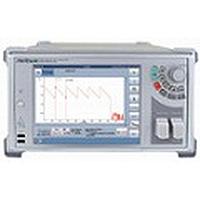
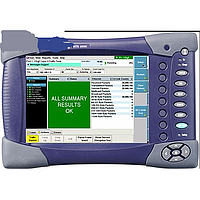
Several products in this category illustrate the range of OTDR-related solutions available. The Triplett OTDR1315 Professional Multi-Function OTDR/Network Tool combines OTDR capability with additional network-oriented functions, which can be useful for technicians who handle both fiber and copper-side troubleshooting in one workflow.
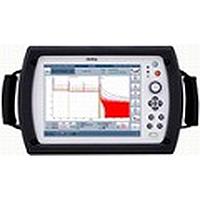
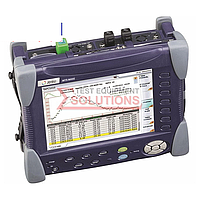
For platform-based testing environments, EXFO solutions such as the FTB-1v2 Pro, FTB-2, FTB-2 PRO, and FTB-4 Pro represent modular test platforms often used where expandability, data handling, and multi-application field testing are important. In broader test ecosystems, the Viavi OneAdvisor 800 Wireless Platform also shows how modern field platforms can integrate multiple test functions, including optical-related options in some workflows.
Accessories and connector compatibility matter
In OTDR work, the instrument itself is only part of the setup. Connector condition, interface compatibility, and accessory selection have a direct effect on measurement stability and day-to-day usability. This is why OTDR categories often include adapter and connector items alongside the main instruments.
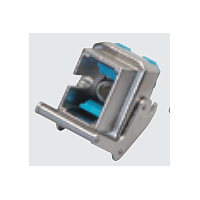
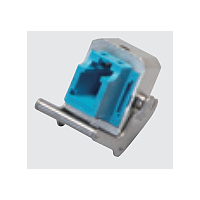
Examples here include YOKOGAWA accessories such as the SU2005A-LCC, SU2005A-FCC, and SU2005A-SCC connectors, as well as AQ9441.LC and AQ9441.FC connector adapters. These items are used with compatible YOKOGAWA platforms and help ensure the test interface matches the connector type used in the field. If your project standardizes on a specific vendor ecosystem, it may also be helpful to review the broader YOKOGAWA product range.
OTDR versus TDR and other test methods
Although the names are similar, OTDR and TDR are used for different media. OTDR is intended for optical fiber, while TDR is associated with electrical cable analysis. The Gossen Metrawatt METRACABLE TDR PRO listed in this category is a time-domain reflectometer for cable diagnostics rather than a fiber OTDR, and it can be relevant in mixed infrastructure environments where teams support more than one cabling technology.
For fiber projects, OTDR should be viewed as part of a wider test strategy rather than a stand-alone answer to every issue. OTDR traces are strong for locating events and understanding link behavior over distance, while power measurement, source testing, and optical analysis may be better suited for confirming absolute loss, transmission quality, or signal characteristics in other stages of deployment and maintenance.
Practical setup tips for more useful OTDR results
Accurate traces depend not only on instrument quality but also on test setup. Wavelength selection should match the network and test objective, while pulse width and range settings should be adjusted to suit the fiber length and event density. A setup that is too aggressive may miss fine detail, while an overly narrow setting may not provide enough reach for long links.
Connector cleanliness, proper launch conditions, and consistent file handling are also important. Many teams save OTDR results in standard formats for reporting, comparison, and future maintenance records. In practice, repeatable procedures matter just as much as the headline specifications when the goal is to compare traces over time or confirm work quality after repair.
Choosing the right OTDR category for your workflow
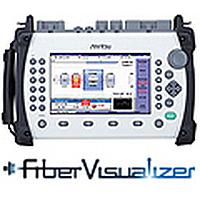
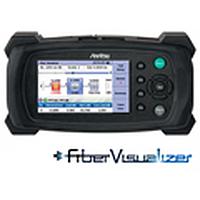
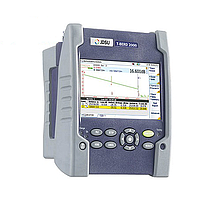
Some buyers need a compact handheld unit for routine field troubleshooting, while others need a modular platform that can be expanded across different test tasks. There are also users who primarily need compatible adapters or connector accessories for existing OTDR systems rather than a new instrument body.
Reviewing the category with your actual application in mind will usually narrow the selection quickly: link length, connector type, reporting needs, portability, and whether the work is focused on installation, fault isolation, or long-term maintenance. A well-matched OTDR setup improves both troubleshooting speed and the reliability of the final documentation.
For fiber installation and maintenance teams, OTDR equipment remains a key part of finding faults, validating splices, and understanding link behavior beyond simple pass/fail checks. Whether you are selecting a handheld tester, a modular platform, or the right connector accessories, this category is designed to help you compare practical options for real optical test environments.
Get exclusive volume discounts, bulk pricing updates, and new product alerts delivered directly to your inbox.
By subscribing, you agree to our Terms of Service and Privacy Policy.
Direct access to our certified experts