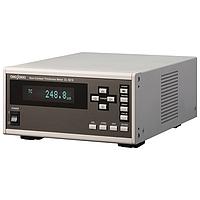
Coating thickness meter Non contact
When coating thickness has to be checked without touching the surface, a non-contact method can make inspection faster, more repeatable, and easier to integrate into production. This is especially useful for painted parts, powder coatings, moving components, or delicate surfaces where probe contact may affect the result or slow down the process.
Coating thickness meter Non contact products are used in paint and coating inspection where users need thickness data while maintaining stand-off distance from the target. Depending on the application, these instruments can support incoming quality checks, line-side verification, process adjustment, and final inspection for coated metal and other coated parts.
Why choose non-contact coating thickness measurement?
The main advantage of non-contact thickness measurement is that it avoids physical contact with the coating. In practical terms, this helps when the surface is still wet, recently applied, soft, hot, moving, or difficult to access with a conventional probe.
Non-contact systems are also attractive in automated environments. Instead of stopping the process for spot checks, users can measure at a defined distance and angle, which can support more consistent monitoring. For teams comparing technologies, it can also be helpful to review the broader coating thickness meter range to decide whether contact or non-contact measurement better fits the process.
Typical applications in paint and coating inspection
These instruments are commonly selected for powder coating, wet paint, dried paint films, and other industrial coating layers where speed and surface protection matter. They are relevant in metal finishing, general manufacturing, automotive components, fabricated parts, and coating lines that require repeatable thickness control.
Some systems are designed for handheld or semi-portable use, while others are more suitable for fixed installation or machine integration. In many coating workflows, thickness is only one part of quality control, so users may also evaluate related test methods such as coating hardness testing or adhesion testing depending on the coating specification.
Common technology approaches in this category
Non-contact coating thickness meters in this category include both portable analysers and industrial sensor-based solutions. Some instruments focus on handheld measurement for flexible inspection, while others are built for line integration, real-time monitoring, or high-speed process feedback.
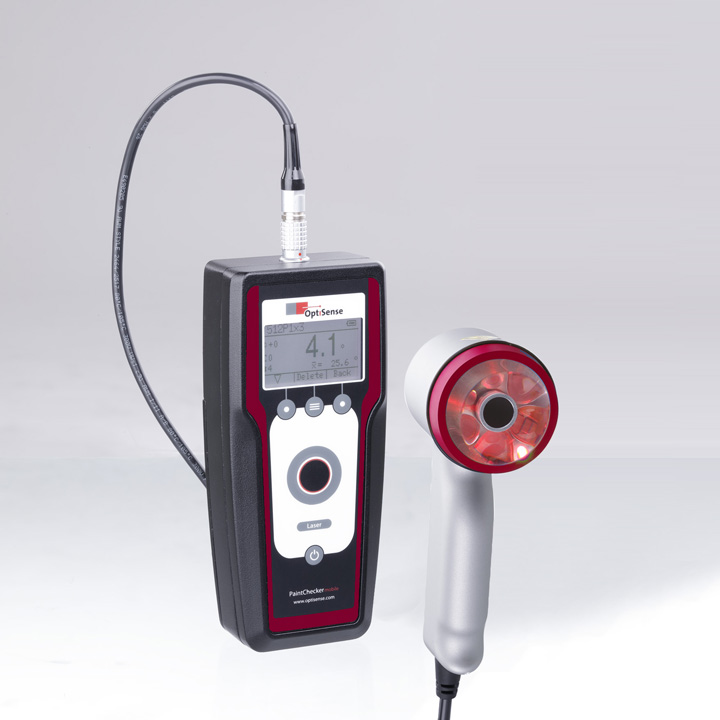
For example, the TQCSheen LD5860 PowderTAG Thickness Analysing Gauge is suited to powder thickness analysis in a non-contact format, while the TQCSheen LD5865 Coatmaster Flex Paint Thickness Gauge is positioned for fast measurement of cured, wet, or powder coatings. For industrial setups, OptiSense Paint Checker sensors such as Cube, Tube, and Angle designs illustrate how sensor geometry, stand-off distance, and measuring spot size can be adapted to different machine layouts and target shapes.
Examples of instruments and where they fit
Portable solutions are often preferred when inspectors move between parts, production cells, or coating booths. A model like the TQCSheen LD5865 offers a wide stated measuring range for cured coatings and pre-dry or pre-cure inspection, making it relevant where users want one device that can support several coating stages.
For fixed or semi-integrated setups, Onosokki and OptiSense provide useful reference points. The Onosokki CL-5610 Non-Contact Thickness system is oriented toward precise thickness and gap measurement with fast sampling, while OptiSense sensor variants such as Cube-LEDB3.3, Tube-LHP3.5, Tube-LHP10, and Angle-LHP1.6 show how different optical designs can be selected for close-range, angled, or longer stand-off measurement tasks.
Not every coating application requires non-contact technology. In routine checks on ferrous and non-ferrous substrates, conventional handheld testers such as the Triplett CTT42 or CTT47 may still be appropriate if contact measurement is acceptable. That distinction is important when balancing speed, budget, substrate type, and inspection method.
How to choose the right non-contact coating thickness meter
A good starting point is the coating condition: are you measuring wet paint, powder before curing, or a finished dry film? This affects the measurement principle you need and determines whether a handheld analyser or a permanently mounted sensor will make more sense.
Next, look at the part geometry and installation constraints. Small measuring spots can help on narrow components or local features, while stand-off distance and angular tolerance matter when access is limited or when the sensor cannot be mounted directly above the target. For inline use, response time, data output, and integration into control or ERP environments may be just as important as the basic thickness range.
It is also worth checking whether the application involves metal only or includes other substrates and coating systems. If your work includes substrates outside typical metal-based measurement methods, the related non-metal coating thickness solutions may provide a better fit.
Key selection criteria for industrial users
- Measurement range: The required coating thickness window should match the actual process, whether for thin films or thicker protective coatings.
- Surface condition: Wet, uncured, soft, or moving surfaces often favor non-contact methods.
- Working distance: Sensor-to-target distance must be practical for your fixture, conveyor, or manual inspection setup.
- Spot size: Small spots help on detailed parts, edges, or narrow coated areas.
- Integration needs: For production environments, consider interfaces, data export, and response speed.
- Process stability: If the goal is continuous monitoring rather than occasional inspection, sensor-based systems may offer better workflow value.
Manufacturer coverage in this category
This category includes recognized names used in coating and industrial measurement environments, including TQCSheen, Onosokki, Triplett, and OptiSense. Each brings a different emphasis, from portable coating analysis to inline sensor measurement and precision thickness or gap monitoring.
Manufacturer selection should be based on the measurement task rather than brand familiarity alone. A portable unit may be the right choice for flexible inspection routines, while a dedicated optical sensor is often more suitable for automated equipment, repeated positioning, or production monitoring where stable installation conditions can be maintained.
Final considerations before ordering
Choosing a non-contact coating thickness meter is ultimately about matching the instrument to the coating stage, substrate, part geometry, and inspection workflow. The most suitable option is not always the one with the broadest range, but the one that aligns with how measurements are actually taken on your line or in your lab.
If you are comparing portable gauges, fixed sensors, or non-contact solutions for specific coating processes, this category provides a focused starting point. Reviewing the intended measurement distance, coating type, and data requirements up front will help narrow the selection to instruments that support practical, reliable coating inspection.
Get exclusive volume discounts, bulk pricing updates, and new product alerts delivered directly to your inbox.
By subscribing, you agree to our Terms of Service and Privacy Policy.
Direct access to our certified experts