Paint Dew Point Meter
Surface preparation and coating application are highly sensitive to ambient conditions. When the substrate temperature approaches the dew point, moisture can condense on the surface and create a hidden risk for adhesion loss, blistering, premature corrosion, or coating failure. That is why a Paint Dew Point Meter is a practical tool for inspectors, coating contractors, and quality teams working in fabrication shops, offshore maintenance, steel structures, and protective coating projects.
Within coating inspection workflows, dew point measurement is not an isolated task. It supports better decisions before painting starts, during application, and while documenting environmental compliance for specifications and project records.
Why dew point measurement matters in coating work
In paint inspection, the key concern is not only air temperature or humidity on their own, but the relationship between surface temperature, ambient air temperature, relative humidity, and calculated dew point. If the steel or coated surface is too close to the dew point, condensation may occur even when it is not immediately visible.
This is especially important for protective coatings on tanks, pipelines, structural steel, marine equipment, and industrial assets exposed to changing weather. A dew point meter helps operators confirm whether environmental conditions are suitable for application, helping reduce rework and improve consistency alongside other inspection tools such as a coating thickness meter.
What a paint dew point meter typically measures
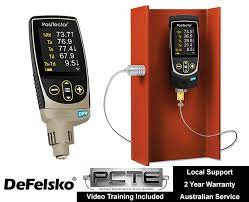
Most instruments in this category are designed to capture the core environmental values required for coating inspection. These commonly include air temperature, surface temperature, relative humidity, dew point, and the difference between surface temperature and dew point, often shown as TΔ or a similar parameter.
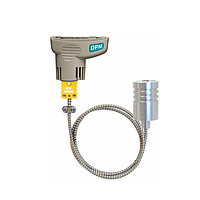
Some models also add wet bulb calculations, external probe support, infrared surface temperature capability, onboard memory, data logging, or USB and Bluetooth communication. In practice, these features help teams move from a simple spot check to a more traceable inspection process, particularly when reports need to be reviewed later by QA, clients, or third-party inspectors.
Representative instruments in this category
Several well-known manufacturers are relevant for this type of work, including DEFELSKO, ELCOMETER, SUTO, TQCSheen, and NOVOTEST. The product mix in this category includes both handheld field meters and monitoring-oriented devices for ongoing environmental control.
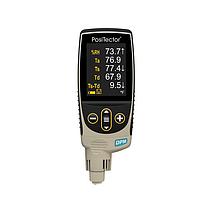
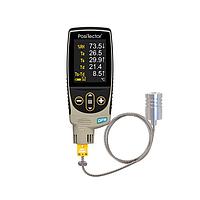
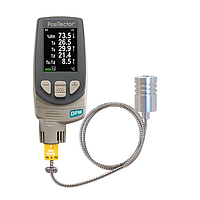
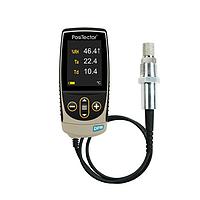
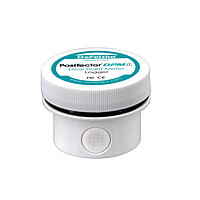
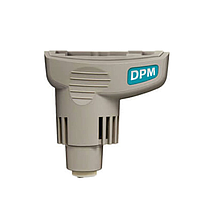
For example, the DEFELSKO DPM1 PosiTector Dew Point Meter is aimed at practical field inspection, combining humidity, air temperature, surface temperature, dew point, and related values in a portable format. The DEFELSKO DPML Dew Point Meter Logger adds longer-term logging capability, which is useful when environmental conditions must be tracked over time rather than checked only at one moment.
ELCOMETER G319 variants are also relevant for coating inspectors who need portable dew point measurement with environmental parameter review, while the TQCSheen DC7100 supports humidity and temperature-based dew point checks with memory and alarm functions. For broader monitoring applications, the SUTO S305 Dew point monitor and the NOVOTEST DPM LAB show how this category can extend from handheld inspection into continuous measurement and data-oriented workflows.
How to choose the right meter for your application
The best choice depends on how the instrument will be used in the field. For general coating inspection, a compact handheld unit with reliable readings for humidity, air temperature, surface temperature, and dew point is often the starting point. If technicians work across multiple sites each day, portability, easy display readability, and straightforward operation are usually more valuable than advanced menu depth.
For traceability-focused environments, it makes sense to look at data logging, memory capacity, batch storage, and communication options such as USB or Bluetooth. These functions can simplify documentation and support digital reporting. If the work includes hot surfaces, difficult access points, or process monitoring, probe range and measurement method become more important than compact size alone.
Durability is another practical factor. In industrial painting and maintenance work, handheld devices are often used outdoors or in harsh environments, so sealed housings, robust construction, and clear alarms can make daily operation easier. Buyers should also consider whether calibration, inspection, or repair support is available for long-term use.
Where these meters fit in a coating inspection workflow
A dew point meter is typically used before blasting or painting, immediately before coating application, and during the work if ambient conditions are changing. On many projects, environmental readings are recorded together with surface preparation and film build results to create a more complete quality record.
That is why this category often sits alongside other coating control instruments. After environmental checks, inspectors may continue with surface condition verification, then film thickness checks, adhesion evaluation, or porosity testing depending on project requirements. Related tools such as an adhesion tester or a holiday detector are used at different stages, but all contribute to the same goal: reducing coating defects and improving long-term performance.
Handheld meters, loggers, and monitoring devices
Not every job requires the same type of instrument. A standard handheld dew point meter is suitable for inspectors who need immediate on-site acceptance decisions. These devices are commonly used for spot measurement on steelwork, tanks, bridges, plant equipment, and general protective coating jobs.
A logger is more suitable when trends matter, such as overnight monitoring, enclosed area work, or projects where environmental conditions must be documented across a shift. A monitor-style product may be preferred in process environments or compressed air and system-related applications, where continuous dew point awareness is part of ongoing equipment control rather than a single coating inspection event.
Calibration, inspection, and lifecycle support
Measurement confidence depends not only on the instrument itself but also on how it is maintained over time. This category includes service-related items such as calibration, inspection, and repair support for selected models. That matters in professional environments where auditability and repeatable measurement are part of contract or QA requirements.
For buyers managing multiple coating instruments, it is worth planning for periodic verification as part of the broader inspection program. A dew point meter that is regularly checked can remain a dependable part of environmental control, just as other coating test tools need routine attention to stay accurate and ready for field use.
Choosing with the full inspection process in mind
When selecting a dew point meter, it helps to think beyond the specification sheet and focus on the actual inspection sequence. The right unit should match the working environment, the level of documentation required, and the way the team records coating quality data. In many cases, a simple handheld model is enough; in others, memory, connectivity, or long-duration logging will justify a more advanced option.
This category brings together instruments that support one of the most important checks in coating work: confirming that the surface is suitable for painting at the moment the decision is made. When paired with the right inspection routine and complementary tools such as coating hardness testers, a dew point meter helps create a more controlled and better-documented coating process.
Get exclusive volume discounts, bulk pricing updates, and new product alerts delivered directly to your inbox.
By subscribing, you agree to our Terms of Service and Privacy Policy.
Direct access to our certified experts