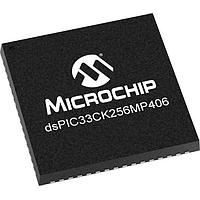
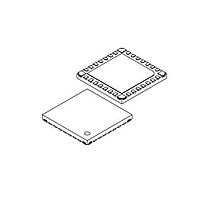
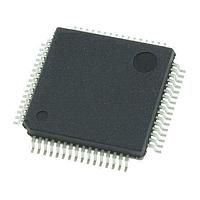
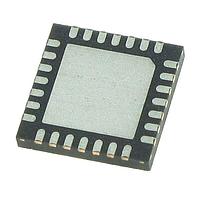
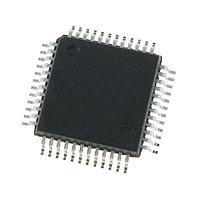
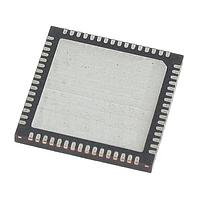
Digital Signal Processors & Controllers
When embedded systems need to process data streams in real time, general-purpose computing devices are not always the most efficient choice. Applications such as communications infrastructure, industrial control, audio processing, and signal-intensive embedded platforms often rely on Digital Signal Processors & Controllers to execute repetitive mathematical operations with predictable timing and low latency.
This category brings together devices designed for fast signal handling, dedicated control logic, and embedded processing tasks where response time matters. Whether the priority is filtering, encoding, motor control, or system-level data handling, these components help engineers build architectures that balance performance, integration, and power constraints.
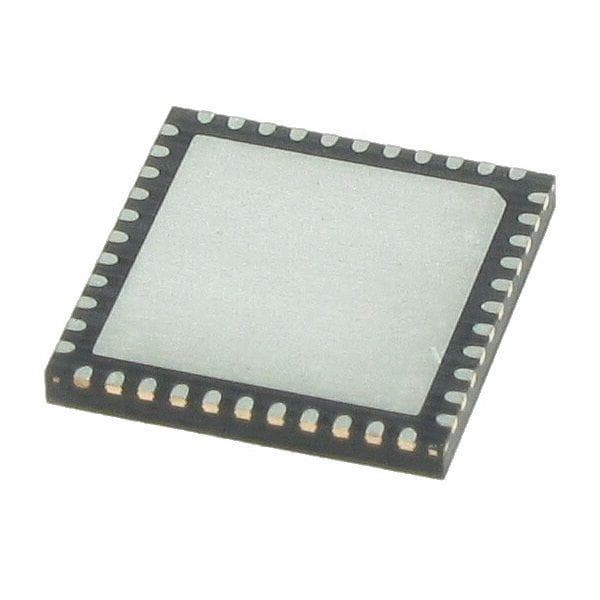
Where DSPs and controllers fit in embedded design
In many designs, a DSP sits between raw input data and the final control or communication layer. It can process incoming signals from sensors, audio paths, radio interfaces, or machine subsystems, then convert that data into usable output for decision-making, transmission, or actuation. This makes DSP-oriented devices especially relevant in systems that must work continuously and with consistent timing.
Compared with standard central processing units, DSP-focused components are typically chosen when the workload is dominated by repeated arithmetic operations, signal conditioning, or deterministic processing loops. In broader embedded architectures, they may also work alongside programmable logic or dedicated memory resources depending on the complexity of the application.
Typical applications for digital signal processors and controllers
Signal processing workloads appear across a wide range of B2B and industrial electronics. Common examples include audio enhancement, telecom baseband processing, automotive media systems, industrial automation control, smart sensing, and secure communications platforms. In these environments, the processing device must do more than compute quickly; it also needs to support stable operation within an integrated hardware ecosystem.
Controllers in this category are also relevant where a design combines data processing with interface management and embedded coordination. That can include systems that need to acquire data, run filtering or transformation routines, and then pass results to other modules. If your project requires a wider programmable platform for logic-heavy tasks, related options such as complex programmable logic devices may also be worth comparing during architecture planning.
Representative products in this category
The product range in this section includes several established embedded processing families from manufacturers widely used in professional electronics. From NXP, examples such as the MSC7115VM800, MSC8156ESVT1000B, MSC8156ESAG1000B, MSC8256TAG1000B, and DSPA56371AF160B illustrate how DSP devices can address communication and high-throughput processing requirements across different embedded designs.
Other representative devices include the Analog Devices ADSST-DOLBY-1000Z, the Maxim Integrated DS2165Q/T&R, the onsemi CR17335SE-T-C1, and the STMicroelectronics STA321MPL. These examples show the breadth of the category: some devices are aligned with media and audio-oriented processing, while others are better suited to telecom, embedded control, or application-specific digital workloads. The key point is not the model count, but the availability of architectures tailored to particular processing patterns.
How to choose the right DSP or controller
Selection usually starts with the nature of the signal and the required processing chain. Engineers often evaluate data type, throughput, latency targets, interface needs, and whether the design must prioritize real-time control, algorithm execution, or a mix of both. A controller used for deterministic embedded coordination may be selected differently from a DSP intended for dense arithmetic processing.
Interface availability, memory architecture, operating temperature, and software ecosystem are also important. For example, a device such as the NXP MSC8156ETAG1000B is notable in the product list because it reflects the kind of multi-core, high-integration DSP platform often considered for advanced communications or compute-intensive embedded tasks. In contrast, smaller or more specialized devices may be better suited to focused signal paths where board space, power budget, or application scope is narrower.
Comparing DSPs with other embedded processing options
Not every embedded workload requires a DSP-first architecture. Some projects are better served by application processors, while others benefit from programmable hardware or mixed architectures. The choice depends on whether the dominant challenge is signal math, software flexibility, deterministic control, or hardware acceleration.
For teams evaluating system partitioning, this category is often considered alongside FPGA configuration memory and other embedded component groups that support more configurable hardware platforms. In practical terms, DSPs are typically strongest where repetitive real-time processing is the main requirement, while adjacent technologies may offer advantages in custom logic implementation or platform flexibility.
Leading manufacturers covered in this category
Supplier consistency matters in B2B sourcing, especially for long-life embedded designs and industrial production planning. This category includes products associated with recognized manufacturers such as Analog Devices, Maxim Integrated, NXP, onsemi, and STMicroelectronics, with additional broader manufacturer coverage available across the embedded portfolio.
Each supplier brings different strengths at the portfolio level, whether in signal-chain expertise, embedded integration, industrial support, or communication-focused processing. Rather than choosing by brand alone, it is usually more effective to align the device family with the application's processing profile, peripheral needs, and lifecycle expectations.
What to review before ordering
Before finalizing a part, it is useful to confirm package compatibility, system interfaces, development support, and the role the device will play within the larger hardware stack. In many projects, the DSP or controller is not a standalone decision; it affects memory selection, power design, communication links, and firmware workflow.
This category is intended to support that evaluation process by grouping relevant embedded processing components in one place. If your design depends on real-time math operations, digital filtering, media handling, or embedded control logic, reviewing the available DSP and controller options here can help narrow the shortlist to devices that better match your architecture and deployment environment.
For engineers and sourcing teams, the most effective approach is to begin with the processing task itself, then compare device families by integration level, interfaces, and long-term fit within the system. A well-matched DSP or controller can simplify the design path, improve responsiveness, and create a more efficient embedded platform overall.
Get exclusive volume discounts, bulk pricing updates, and new product alerts delivered directly to your inbox.
By subscribing, you agree to our Terms of Service and Privacy Policy.
Direct access to our certified experts