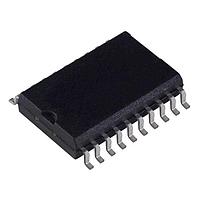
Simple Programmable Logic Devices
When a design needs small-footprint logic customization without moving to a larger programmable platform, Simple Programmable Logic Devices are often the practical choice. They help engineers implement basic logic functions, timing control, glue logic, signal conditioning, and compact mixed-signal behavior in embedded hardware while keeping board space, power, and design complexity under control.
This category is relevant for designers building compact control boards, interface circuits, consumer electronics, industrial modules, and automotive-adjacent applications where fixed-function logic may be too rigid and larger programmable devices may be unnecessary. It is especially useful when the goal is to replace several discrete components with one programmable device and simplify the overall design.

Where SPLDs fit in embedded design
SPLDs are commonly selected for applications that require predictable logic behavior, moderate I/O handling, and compact programmability. In practice, they are used for state control, signal routing, watchdog-related functions, interface adaptation, and simple timing tasks that do not justify a more complex architecture.
Compared with larger programmable solutions, this device class is typically easier to integrate into space-constrained designs. It also sits in a useful middle ground between fixed logic ICs and broader programmable platforms such as complex programmable logic devices, making it a sensible option for many cost- and size-sensitive products.
Common device types in this category
The products shown in this category include several mixed-signal matrix style devices, which are well suited to compact embedded control tasks. These devices can support combinations of logic, timing, GPIO-oriented behavior, and signal management in a single package, helping reduce the number of supporting components on the PCB.
For example, parts such as the SLG46169V, SLG46537V, SLG46620V, and SLG46827-AG illustrate how this category covers different logic densities, operating ranges, and target environments. The Texas Instruments TPLD1201RWBR also represents a practical path for designs that need programmable logic with multiple general-purpose I/O functions in a compact implementation.
Key selection factors for engineers and buyers
Choosing the right part usually starts with the actual logic task rather than the package alone. Engineers typically review I/O count, logic resources such as macrocells, operating voltage range, switching or propagation behavior, temperature range, and whether the design needs mixed-signal or watchdog-related capability.
Voltage flexibility is often important in real-world systems. Many devices in this range support low-voltage and standard logic rails, which can help when interfacing with 1.8 V, 3.3 V, or 5 V sections of a design. Temperature capability also matters for industrial or demanding environments, especially where extended-range or automotive-oriented variants are under consideration.
- Logic density: Match the available resources to the required combinational or sequential logic.
- I/O behavior: Check whether the design needs general-purpose inputs/outputs, signal monitoring, or routing flexibility.
- Supply range: Confirm compatibility with existing power rails and interface levels.
- Thermal envelope: Consider standard, extended-temperature, or more demanding operating conditions.
- Application focus: Some parts are better suited to timing, watchdog, or high-voltage output scenarios.
Examples from leading manufacturers
Dialog Semiconductor is strongly represented in this category with GreenPAK, GPAK, and HVPAK style devices used for compact programmable mixed-signal logic. Parts such as SLG46110V and SLG46120VTR are relevant for low-power embedded logic tasks, while SLG47115V stands out in cases where higher-voltage output-related functionality is part of the design requirement.
Texas Instruments contributes another useful design option through the TPLD1201RWBR, which is suitable for applications requiring programmable logic behavior with multiple GPIOs. Together, these examples show that this category is not limited to a single implementation style, but spans several approaches to compact programmable control and logic integration.
Typical application scenarios
In embedded systems, SPLDs are often used as glue logic between processors, sensors, communication interfaces, and power-control blocks. They can help clean up board designs by consolidating discrete logic, implementing startup sequencing, handling status logic, or supporting supervisory behavior around a main controller.
They are also useful when the design team wants fast customization without redesigning a dedicated ASIC or overcommitting to a larger programmable architecture. In systems where software control is paired with hardware-level signal management, SPLDs can provide a compact hardware layer that improves determinism and simplifies board-level integration.
If your design requires more compute-oriented control rather than compact programmable logic, related options such as digital signal processors and controllers or central processing units may be more appropriate depending on the system architecture.
Why mixed-signal programmable logic is valuable
A notable characteristic of this category is the presence of mixed-signal matrix devices. This is important because many embedded products do not need programmable logic in isolation; they need logic that interacts with real board-level signals, timing conditions, reset behavior, watchdog functions, or controlled outputs.
That is why devices such as the SLG7RN46910V for watchdog-oriented use or the automotive-focused SLG46827-AG can be valuable in practical engineering workflows. Instead of building the same support circuitry from multiple fixed-function components, engineers can often implement a more compact and maintainable solution around one programmable device matched to the task.
How to evaluate this category for procurement
For purchasing teams, the right selection process usually combines engineering fit with lifecycle and sourcing considerations. Start with the target operating voltage, required logic complexity, environmental range, and package preference, then narrow the shortlist based on whether the design benefits from mixed-signal integration, watchdog functionality, or specialized output characteristics.
It can also be useful to compare this category with adjacent non-volatile logic options such as electronically erasable programmable logic devices when retention and update behavior matter to the project. A careful category-level review helps ensure the selected part supports both current functionality and future design revisions.
Choosing the right SPLD for the project
The best fit usually depends on whether the priority is compact logic replacement, mixed-signal integration, extended operating range, GPIO flexibility, or specialized functions such as watchdog timing or higher-voltage output handling. Reviewing representative parts in this category can quickly clarify which architecture aligns with the board-level problem you are trying to solve.
For engineers and B2B buyers working on embedded electronics, this selection of Simple Programmable Logic Devices provides a focused range of programmable logic options for efficient, compact hardware implementation. A clear understanding of logic requirements, voltage domain, and environmental conditions will make it much easier to choose a device that supports stable integration and scalable product development.
Get exclusive volume discounts, bulk pricing updates, and new product alerts delivered directly to your inbox.
By subscribing, you agree to our Terms of Service and Privacy Policy.
Direct access to our certified experts