Equalizers
High-speed links often fail for a simple reason: the signal arriving at the receiver is no longer clean enough to decode reliably. Losses in copper traces, coaxial cable, backplanes, and interconnects can reduce amplitude, distort edges, and increase jitter. In these situations, Equalizers help restore signal integrity so digital video, serial data, and other high-bandwidth interfaces can operate more consistently across real-world transmission paths.
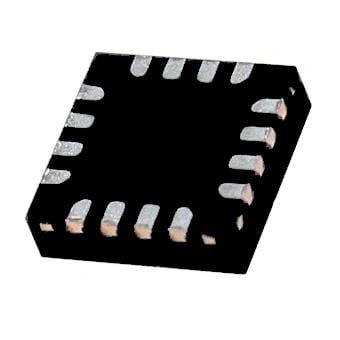
Where equalizer ICs are used
Equalizer ICs are commonly selected for applications where attenuation and frequency-dependent loss become a design constraint. Typical use cases include video transport, high-speed serial communication, long cable runs, and machine vision systems that need to maintain data quality between source and receiver. Rather than redesigning the entire channel, engineers often use an equalizer stage to compensate for degradation introduced by the physical medium.
Within modern electronic systems, these devices may appear alongside amplifier ICs, clocking devices, and other signal-conditioning components. The exact implementation depends on interface standard, channel length, operating data rate, and whether the design needs adaptive behavior, programmable tuning, or retiming support.
How equalizers improve signal integrity
The main role of an equalizer is to counteract channel loss by boosting or reshaping the parts of the signal most affected by transmission. In practice, this can help reopen the eye diagram, reduce intersymbol interference, and improve receiver margin. For engineers working with fast serial links, that usually means better tolerance to cable length, PCB losses, and connector discontinuities.
Some devices are designed for adaptive equalization, automatically adjusting compensation based on incoming signal conditions. Others use programmable or application-specific behavior for defined standards such as SDI, HDMI, DVI, or industrial imaging links. When channel conditions are stable and predictable, fixed or adjustable equalizers may be sufficient; where conditions vary, adaptive devices are often more practical.
Typical device types in this category
This category covers a range of equalizer ICs rather than one single architecture. For broadcast and professional video designs, examples such as the Semtech GS1674-INTE3, GS3241-INE3, and GS3140-INTE3 illustrate how equalizers are used in HD-SDI and 3G-SDI signal paths. These parts are relevant when designers need multi-rate handling, adaptive cable compensation, or in some cases retiming functions for cleaner downstream data recovery.
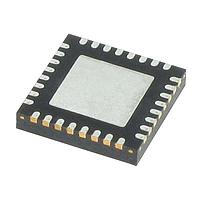
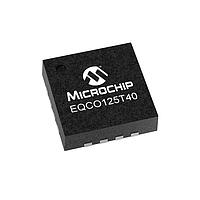
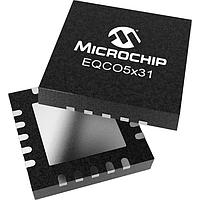
For digital video over HDMI or DVI, examples like the Analog Devices MAX3815ACCM+ and MAX3814CHJ+T show how equalization can support TMDS-based channels where cable and board losses affect signal quality. In machine vision and industrial imaging, Microchip Technology devices such as the EQCO125T40C1T-I/3DW and EQCO125X40C1TB-I/3DW highlight the role of equalization in CoaXPress 2.0 links, where high throughput and robust transmission are both important.
Selection factors for engineering and purchasing teams
Choosing the right equalizer starts with the transmission standard and required data rate. A device intended for SDI video will not necessarily fit an HDMI, DVI, or CoaXPress design, even if the package style looks similar. It is also important to check whether the IC supports the required voltage rails, operating temperature range, and integration level needed by the rest of the board.
Another key point is whether the design needs only equalization or a broader signal-conditioning function. Some projects benefit from programmable settings, while others need retiming, pre-emphasis, or a transmitter/receiver combination. Devices such as the Texas Instruments DS32EV100SD/NOPB and LMH0074SQE/NOPB are useful references for applications where cable compensation and serial link conditioning are central selection criteria.
Engineers may also compare equalizers with nearby signal-chain options in specialized ICs or filtering solutions such as active filter devices, depending on whether the design challenge is transmission loss, bandwidth shaping, or broader analog front-end conditioning.
Examples from leading manufacturers
This category includes devices from well-known semiconductor suppliers used in high-speed interface design. Analog Devices appears prominently with parts aimed at low-noise differential reception, DVI/HDMI equalization, and high-speed pre-emphasis or cable compensation. These are often considered in systems where signal integrity needs to be maintained across demanding board and cable environments.
Microchip Technology contributes parts tailored to CoaXPress applications, which are especially relevant in industrial cameras and frame grabber ecosystems. Semtech is a strong reference point for SDI-oriented equalization, while Texas Instruments offers options for programmable or adaptive cable equalization in serial data paths. Together, these manufacturers cover a useful cross-section of video, industrial, and high-speed interconnect requirements.
Integration considerations in real designs
Equalizer IC selection is rarely isolated from the rest of the signal chain. Power integrity, impedance control, connector quality, and PCB layout all influence final performance. Even a capable equalizer cannot fully compensate for severe layout issues or a poorly characterized channel, so channel modeling and validation remain important during development.
It is also worth considering how the equalizer interacts with upstream transmitters and downstream receivers. In some designs, the best outcome comes from balancing transmitter pre-emphasis, channel design, and receiver equalization rather than relying on one function alone. This is especially relevant for compact, high-density hardware where margin can quickly disappear at multi-gigabit speeds.
Finding the right equalizer for your application
When comparing devices in this category, start with interface type, channel medium, target speed, supply requirements, and environmental limits. Then narrow the shortlist based on whether the application needs adaptive response, programmable behavior, retiming, or support for a specific video or serial standard. That approach usually leads to a more efficient comparison than filtering by package or manufacturer name alone.
For B2B sourcing and design work, this category provides a practical starting point for evaluating equalizer ICs used in signal-conditioning paths across video, imaging, and high-speed digital systems. A focused review of channel loss, protocol requirements, and system architecture will make it easier to identify the most suitable part for stable link performance and long-term design reliability.
Get exclusive volume discounts, bulk pricing updates, and new product alerts delivered directly to your inbox.
By subscribing, you agree to our Terms of Service and Privacy Policy.
Direct access to our certified experts