
Security ICs / Authentication ICs
As connected products become more distributed and more exposed to physical and network-level threats, hardware-based trust has moved from a niche requirement to a practical design priority. For engineers building embedded devices, industrial controllers, gateways, or secure connected systems, Security ICs / Authentication ICs provide a dedicated foundation for identity, key storage, secure boot support, and device authentication.
Rather than relying only on software protections inside a host processor, these devices help isolate sensitive credentials and critical security functions in dedicated hardware. That matters in designs where protecting firmware integrity, securing communication endpoints, and preventing unauthorized cloning are all part of the product lifecycle.
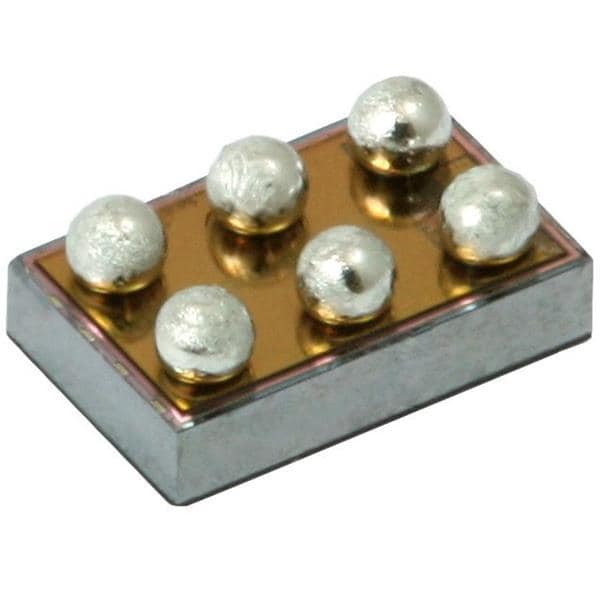
Where security and authentication ICs fit in embedded design
This category typically supports systems that need a verifiable hardware identity or a protected environment for cryptographic material. In practice, that can include industrial HMIs, edge gateways, access control equipment, POS terminals, smart peripherals, and many other embedded platforms that must prove device authenticity or protect stored secrets.
Security ICs may be selected for different roles depending on architecture. Some are used as trusted platform modules for platform integrity and secure provisioning, while others are better suited to secure authentication, protected data storage, or specialized microcontroller-based security functions. In broader chip-level design workflows, they often complement devices found in specialized IC portfolios and secure memory-oriented architectures.
Common device types in this category
Although the page groups related products together, there are meaningful differences between device classes. A Trusted Platform Module, or TPM, is typically chosen when the system needs standardized trust functions such as secure key handling, attestation support, and platform integrity use cases. Examples in this category include devices such as the Infineon SLB9670VQ12FW643XUMA2, Infineon SLB9665XQ20FW562XUMA1, and Microchip AT97SC3205T-U3A1C10B.
Other parts are more application-specific. Devices such as the Infineon SLJ52ACA150A1VQFN32XUMA1 Optiga Trust security chip are aimed at secure identity and programmable trust functions, while parts like the Microchip AT88SC family combine memory and protection features that can be relevant in credential storage or authentication-related subsystems. There are also specialized microcontrollers in this category, including the Infineon OC2321VQFN8XTMA1 and Microchip Technology MEC1701H-C1-SZ-TR, which may be considered when security is tied closely to embedded control logic.
Representative manufacturers and product examples
Infineon is one of the most visible names in this category, especially for TPMs and dedicated trust devices. The presence of parts such as the SLB9665 series, SLB9670 series, and the Optiga Trust family illustrates how security ICs can serve different integration models, from platform-level root of trust to programmable authentication functions.
Microchip and Microchip Technology are also well represented, with examples spanning TPM devices and protected memory-oriented products such as the AT88SC0104CA-MJ, AT88SC6416C-MJ, and AT88SC25616C-MJ. Silicon Labs appears in the category through the EZR32HG220F64R67G-B0, highlighting that some projects evaluate security-related functions alongside low-power embedded processing and wireless-capable system design.
How to choose the right security IC
The best starting point is to define the security function as clearly as the electrical interface. If the goal is measured boot, secure provisioning, or trust anchoring for a host platform, a TPM-oriented device may be the right fit. If the priority is protecting credentials, verifying accessories, or adding a secure identity element to an end product, an authentication or secure element approach may be more appropriate.
Engineers should also review practical integration factors such as package style, supply range, interface choice, operating temperature, and the level of firmware interaction required on the host side. For example, some listed products use SPI, LPC, or I2C-related communication approaches depending on their intended role. When security data handling overlaps with protected storage requirements, it can also be useful to review related memory IC options as part of the overall design decision.
Typical applications in industrial and connected systems
In industrial and B2B electronics, these devices are often selected to reduce risk across manufacturing, deployment, and field operation. A secure IC can help establish a hardware root of trust for device onboarding, support cryptographic authentication between system modules, or store keys separately from the main application processor to improve resilience against tampering.
They are also relevant in systems that must identify genuine peripherals or licensed modules. That can be important in serviceable equipment, infrastructure nodes, and edge devices where cloned accessories or unauthorized replacement boards introduce operational and cybersecurity concerns. In computing-oriented architectures, security ICs may sit alongside embedded computing platforms to strengthen platform identity and integrity from the hardware layer upward.
Why dedicated hardware security still matters
Software security remains essential, but it is often not sufficient on its own when secrets must survive real-world deployment. Once a device leaves the lab, it may face physical access, firmware extraction attempts, interface probing, or unauthorized duplication. A dedicated authentication IC helps separate sensitive assets from the main application domain and can reduce the attack surface associated with storing keys in general-purpose memory.
This separation is especially useful in long-life industrial products where updates, maintenance access, and distributed installation environments create additional exposure. By adding a dedicated trust component early in the design phase, teams can build a stronger basis for secure provisioning, protected communication, lifecycle management, and product authenticity verification.
Selection considerations for procurement and engineering teams
For B2B sourcing, part selection is rarely based on security function alone. Engineering teams usually need alignment between the device role, the host processor architecture, the expected operating environment, and the software stack available for implementation. Procurement teams may also need to compare package preferences, approved manufacturers, and long-term platform consistency across product generations.
That is why this category is best approached as part of a broader system design decision rather than a standalone component purchase. Looking at TPMs, secure memory devices, and specialized security controllers together can help narrow the choice more effectively than filtering only by package or pin count.
Final thoughts
Choosing security hardware is ultimately about matching the level of trust required by the system with the way the product will be deployed, maintained, and protected over time. This category brings together components suited to secure identity, protected storage, TPM-based trust, and embedded security functions from recognized suppliers such as Infineon, Microchip, Microchip Technology, and Silicon Labs.
If your project needs stronger device authentication, safer key handling, or a more robust platform trust model, reviewing the available security IC options here is a practical next step. A well-matched device can simplify secure system architecture and support more reliable product protection throughout the lifecycle.
Get exclusive volume discounts, bulk pricing updates, and new product alerts delivered directly to your inbox.
By subscribing, you agree to our Terms of Service and Privacy Policy.
Direct access to our certified experts
