
Switch ICs
Efficient power routing and controlled signal switching are fundamental to modern electronic design, especially in automotive, industrial, and embedded systems where protection, reliability, and compact integration matter. Switch ICs help designers manage loads more safely than a simple discrete approach by combining switching functionality with control and, in many cases, protection behavior in a single device.
Within this category, engineers typically look for devices that match the application’s switching side, channel count, current capability, interface method, and thermal requirements. Whether the goal is distributing power to multiple loads, replacing relays, or protecting downstream electronics from fault conditions, the right device choice can simplify the overall design and improve system robustness.
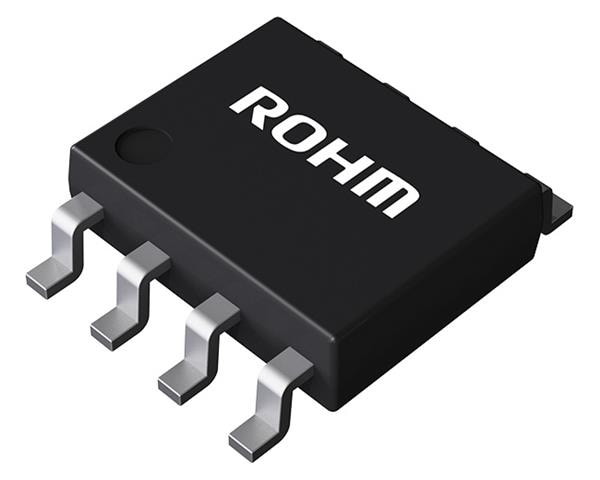
Where switch ICs are commonly used
These devices are widely used wherever a controller needs to turn a load on or off in a predictable and protected way. Typical use cases include automotive body electronics, industrial control panels, PLC output stages, distributed power control, lighting modules, actuators, solenoids, and embedded systems that need compact electronic switching.
In many designs, switch ICs are selected not only for basic on/off control but also for features that support safer operation under real-world conditions. Designers often consider factors such as high-side switching, low-side switching, current limitation, channel density, and package style to fit board space, wiring architecture, and control logic.
High-side and low-side architectures
One of the first selection steps is understanding whether the application requires a high-side or low-side device. A high-side switch controls the positive supply path to the load, which is often preferred when the load should remain referenced to ground. A low-side switch controls the return path and can be useful in systems where that topology better matches the control scheme or cost target.
This category includes examples of both approaches. Devices such as the Infineon ITS4141NXT and BTS70802EPAXUMA1 represent high-side switching options for load control, while parts like the Infineon BTS3125EJXUMA1 and TLE7230RAUMA1 illustrate low-side switching for single-channel or multi-channel implementations. The right architecture depends on system grounding, fault strategy, and how the load must behave during startup or fault events.
From single-channel load control to multi-channel distribution
Some applications only require one output to drive a pump, lamp, valve, or motor-related load. In those cases, a single-channel device can provide a compact and straightforward solution. Examples in this range include the Infineon BTS452RATMA1, BTF500601TEAAUMA1, and BTS428L2ATMA1, which are relevant when a designer needs controlled switching for an individual branch.
Other systems need to manage several outputs from one IC, especially in space-constrained control modules. Multi-channel devices such as the Infineon BTS56033LBAAUMA1 or TLE7230RAUMA1 can support denser output stages and simplify PCB routing. For designs that involve broader mixed-control logic, it can also be useful to review related specialized IC categories when evaluating how switching, diagnostics, and control functions fit together.
What to evaluate when choosing a switch IC
Electrical fit should come before package preference. Input or operating voltage range, output current, on-state resistance, and temperature capability directly affect whether the device can support the load reliably. In practical terms, lower on-resistance may help reduce conduction losses, while higher temperature tolerance can be important in enclosed industrial or under-hood environments.
Control method is another important factor. Some switch ICs use simple logic-level inputs, while others support serial or parallel-style interfaces for more complex systems. For example, devices in this category include both straightforward single-output parts and multi-channel versions with serial control, which can help reduce MCU pin usage in larger designs. If the switching IC is part of a wider signal chain, engineers may also compare nearby functions such as amplifier ICs or conditioning stages in the same design workflow.
Typical benefits in industrial and automotive electronics
A well-chosen switch IC can reduce the need for multiple discrete components while improving repeatability across production builds. This is especially useful in systems that must handle load transients, controlled startup behavior, or fault-prone wiring environments. In automotive and factory automation, integrated switching devices are often used to help make output stages more compact and easier to standardize.
Several featured parts in this category also reflect application needs such as elevated operating temperature ranges and, in some cases, automotive-oriented screening context. Parts like the Infineon BTS70802EPAXUMA1, BTS56033LBAAUMA1, and BTS3125EJXUMA1 are representative of the kinds of solutions engineers review when balancing channel count, switching side, and thermal performance for harsh-duty electronics.
Manufacturer focus and ecosystem considerations
Among the manufacturers represented here, Infineon is especially prominent in power load distribution and smart switching solutions. The available product examples cover a broad range of use cases, from compact single-channel devices in TO-252 or SOT-223 style packages to multi-channel devices designed for denser control applications. That breadth is helpful when a project needs platform consistency across several current levels or output counts.
Depending on the overall architecture, switch IC selection may also sit alongside broader semiconductor decisions involving memory, processing, and interface devices. In embedded designs, engineers sometimes review adjacent building blocks such as memory ICs to ensure the control platform, firmware strategy, and power distribution approach are aligned from the start.
Practical selection approach for engineers and buyers
For technical procurement teams, it is usually more effective to narrow options by application constraints than by part number alone. Start with switching side, number of outputs, load current, and voltage range. Then review package preference, interface type, and operating temperature to identify parts that are realistic for the board layout and target environment.
For design engineers, it also helps to think about future revisions. A prototype may begin with a single-channel high-side device, but later move to a multi-channel load distribution IC as the design matures. Looking at families such as the Infineon ITS4141NXT, BTS4140N, BTS70082EPGXUMA1, or BTS71202EPGXUMA1 can provide a practical sense of how different switching needs can be addressed within one broader solution space.
Closing thoughts
Choosing the right switch IC is ultimately about matching the control method, electrical load, and protection needs of the application without overcomplicating the design. This category brings together devices for both high-side and low-side switching, from simple single-output parts to more integrated multi-channel load distribution solutions.
If you are comparing options for industrial control, automotive electronics, or embedded power management, use this range to evaluate the balance between topology, current capability, thermal margin, and integration level. A well-matched device can simplify implementation, support more reliable load control, and make the overall system easier to scale.
Get exclusive volume discounts, bulk pricing updates, and new product alerts delivered directly to your inbox.
By subscribing, you agree to our Terms of Service and Privacy Policy.
Direct access to our certified experts
