Stopwatch/Timer/Clock
Precise time tracking is still essential in many technical and laboratory workflows, even as more systems become automated. Whether the task is timing a process step, monitoring elapsed time during testing, managing countdown intervals, or using a handheld stopwatch for field work, the right device helps teams stay consistent, repeatable, and easy to audit.
This Stopwatch/Timer/Clock category brings together compact timing instruments used across laboratories, education, production support, inspection routines, and general workplace control. The range includes basic countdown and count-up timers, stopwatch-style handheld units, multi-function digital models, and clocks with added convenience features such as calendar, alarm, or temperature display.
Where stopwatch, timer, and clock devices are commonly used
In B2B environments, these products are not limited to sports timing. They are often used to control manual steps in sample preparation, mixing, heating, incubation, cleaning cycles, observation intervals, maintenance checks, and operator training. In many cases, a simple dedicated timer is preferred over a smartphone or general-purpose device because it is easier to standardize and keep available at the workstation.
Timing tools also support visual management. A bench timer with large digits can help operators track a short process, while a portable stopwatch can be useful for field measurements, event logging, or comparing repeated operations. For broader instrumentation workflows, users may also review related products in meters and indicators when a process requires both time tracking and live status display.
Typical product formats in this category
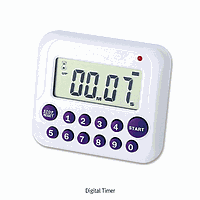
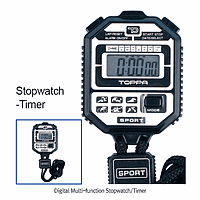
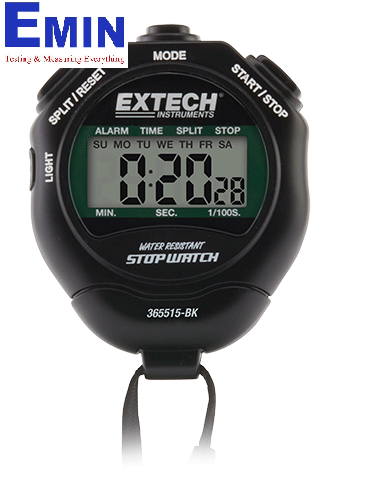
The assortment generally covers several practical formats. Handheld stopwatches are suitable for mobile use, split timing, elapsed time measurement, and manual comparison tasks. Desktop or bench timers are often chosen for laboratories, kitchens, storage areas, classrooms, and testing benches where countdown or count-up visibility matters more than portability.
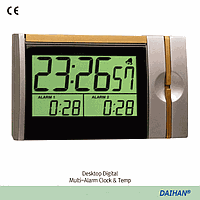
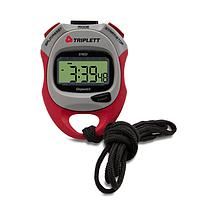
Some models combine multiple functions in one unit. For example, the Triplett STW25 Digital Stopwatch / Clock / Calendar and Triplett STW25-NIST Digital Stopwatch / Clock / Calendar illustrate how a compact device can serve as a stopwatch, time-of-day clock, and calendar in one form factor. In the lab-oriented segment, products such as the DaiHan A1.TM120T Timer Alarmclock&Thermometer add utility for environments where both timing and ambient checks are useful.
Selection criteria that matter in real work
The best choice depends on how the timer will be used day to day. Start with the required timing mode: elapsed time, countdown, count-up, split timing, or multi-channel timing. If the device will support repetitive procedures, easy button access and a clear display may be more important than advanced functions that are rarely used.
Resolution and capacity are also important. Some tasks require fine timing increments for short-duration measurements, while others need long countdown periods that can run for many hours. Models in this category cover use cases ranging from minute-based routines to extended timing windows, such as the ETL SL.Tim3004 Timer 100hr down-up mag.clip tp-02 for longer-duration tracking, or the ETL SL.Tim3003 Timer 100min down-up mag.clip tp-03 for shorter timed procedures.
Physical handling should not be overlooked. Magnetic backing, clips, necklace-style carrying, or tabletop placement can make a meaningful difference depending on whether the device is fixed at a station or carried by an operator. If timing is only one part of a wider control setup, it can also be useful to compare options alongside process control and monitoring devices for more integrated applications.
Examples of devices for different timing needs
For handheld stopwatch use, Triplett offers models such as the STW25 series with functions that fit manual measurement, split timing, and general-purpose day-to-day use. Based on the available product data, these units combine stopwatch capability with clock and calendar features, making them practical when one compact tool needs to cover several basic timing tasks.
For bench or lab support, DaiHan provides several timer formats aimed at routine work. The DaiHan A1.TM150 Timer Digital, Multi, 3Row 23:59:59 and DaiHan A1.TM044 Timer Digital 99:59:59 are examples of digital timing devices suited to clear display-based operation, while the DaiHan A1.TM190 Timer/Stopwatch, Count-Down/-Up, Timer up to 99:59:59 fits users who need both stopwatch and timer functions in one device.
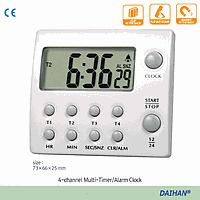
Additional practical formats are represented by ETL and SciLab products. The ETL SL.Tim3002 Timer stopwatch 24hr Necklace Type, tp-05 is aligned with wearable or portable operation, while the ETL SL.Tim3005 Timer 4channel supports workflows where multiple timed events need to be tracked at once. The SciLab SL.Tim3001 Digital Timer/Stopwatch, Count-up & Count-down, w/10 Setting Buttons is a good example of a device designed for quick manual setting and frequent repeated use.
Why dedicated timing devices still make sense
In many workplaces, dedicated timers remain easier to deploy than relying on personal electronics. They reduce distractions, keep procedures consistent between shifts, and make it simpler to assign one device to one station or one standard operating step. This is especially helpful in training, quality checks, or routine tasks where repeatability matters more than connectivity.
Dedicated timing instruments can also improve visibility and accountability. A clearly placed countdown timer helps operators see remaining time at a glance, while a stopwatch assigned to a test method ensures that the same tool is used every time. In applications tied to movement, sequencing, or operator action checks, related categories such as motion and position monitoring may also be relevant.
How to choose the right model for your application
For field use or mobile measurement, a lightweight stopwatch with split or elapsed timing is usually the most practical choice. For fixed workstations, look for large-display timers, stable placement, and straightforward controls. If users wear gloves or perform repetitive timed procedures, button layout and fast reset behavior may be more valuable than extra display functions.
If timing is linked to SOP-driven laboratory or production work, consider whether additional features such as clock, alarm, thermometer display, multi-channel timing, or long-duration countdown are genuinely useful. Choosing only the functions your team will use helps avoid unnecessary complexity and supports faster adoption by operators.
Support a more consistent timing workflow
A well-matched stopwatch, timer, or clock helps keep manual processes controlled without adding unnecessary complexity. From simple elapsed-time measurement to multi-function digital timing for lab benches and workstations, this category covers practical tools for everyday operational control.
When comparing options, focus on the timing mode, display style, operating format, and working environment rather than feature count alone. That approach makes it easier to select a device that fits the task, supports repeatable results, and integrates naturally into your wider control and monitoring workflow.
Get exclusive volume discounts, bulk pricing updates, and new product alerts delivered directly to your inbox.
By subscribing, you agree to our Terms of Service and Privacy Policy.
Direct access to our certified experts