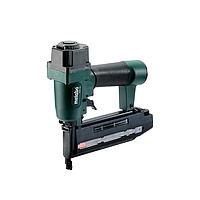
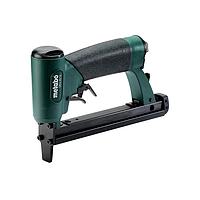
Air Stapler
Fast fastening tools are used every day in furniture production, interior fit-out, packaging, upholstery, and light assembly work where speed and repeatability matter. On this page, Air Stapler products are grouped for buyers who need a practical way to compare pneumatic fastening options alongside related workshop tools and brand ecosystems.
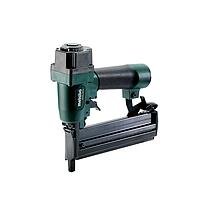
An air stapler uses compressed air to drive staples quickly and consistently, making it a common choice for repetitive jobs that would be slow or tiring by hand. For industrial users, contractors, and maintenance teams, the main priorities are usually fastening speed, handling comfort, air supply compatibility, and suitability for the material being fixed.

Where air staplers fit in a pneumatic tool setup
Within a broader pneumatic workshop, an air stapler is typically selected for fastening soft to medium-density materials, trims, fabrics, thin panels, insulation layers, or packaging components. Compared with more general-purpose tightening or drilling tools, its role is highly task-specific: it is built to deliver fast, repeatable fastening with minimal operator effort.
Many buyers evaluate this category together with other compressed-air equipment used on the same production line or workstation. If your application also includes pilot holes, surface finishing, or assembly tightening, it can be useful to review related tools such as air drills or air screwdrivers as part of the overall tool selection process.
Common applications for air staplers
Pneumatic fastening is especially useful in jobs where operators perform the same action many times per shift. Typical use cases include upholstery work, wooden frame assembly, cabinet back panels, interior trim installation, carton and crate preparation, and light manufacturing tasks where a staple offers a quick mechanical hold.
In these environments, air staplers help maintain a more uniform fastening depth and cycle rate than manual tools. That consistency can support cleaner finishing, more stable assembly quality, and better throughput in production or on-site installation work.
What to consider when choosing an air stapler
The first selection point is always the fastener format. Staple type, crown size, leg length, and the materials being joined determine whether a tool is suitable for upholstery, wood-based panels, packaging, or light fabrication. Even when the overall tool category looks similar, fastening requirements can differ significantly from one task to another.
The second factor is operating environment. Buyers should consider compressor capacity, hose setup, trigger mode, magazine capacity, and the expected duty cycle. For frequent use, handling balance and reduced user fatigue are just as important as raw speed, especially in repetitive bench work or overhead installation.
It is also worth thinking about whether a pneumatic tool is the best fit for the jobsite. In a fixed workstation with stable compressed air, air staplers are often a practical solution. In more mobile environments, some users may compare them with cordless fastening tools depending on access, productivity targets, and maintenance preference.
Examples of fastening tools and adjacent solutions
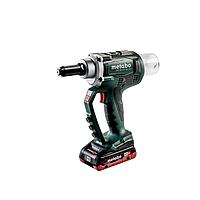
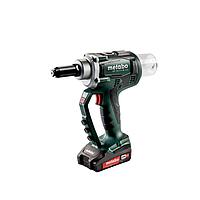
Although this category is focused on air staplers, buyers often compare fastening workflows across pneumatic and cordless platforms. For example, the Milwaukee (tool) M18 FN18GS-0X0 Finish Nailer is a cordless fastening option designed for brad applications, while the Milwaukee (tool) M18 FRT-0X0 FUEL Rivet Tool targets blind rivet installation in metalworking and assembly tasks.
TOPTUL also appears in adjacent fastening applications with products such as the GAAT0101 Hand Riveter Set, GAAT0103 Pro-Series Hand Riveter Set, and the KPRA0306 series brushless cordless rivet tools. These are not substitutes for every stapling job, but they show how fastening requirements can vary between woodwork, trim, sheet material assembly, and metal joining.
For buyers managing mixed workshops, seeing these neighboring tool types can clarify when a staple is the right fastening method and when a brad, rivet, or rivet nut system may be more suitable.
Brand considerations for B2B procurement
For procurement teams, brand choice is rarely only about the tool itself. Availability, after-sales support, familiarity across maintenance teams, and consistency with existing workshop equipment all influence purchasing decisions. In this category, brands such as MAKITA, METABO, Milwaukee (tool), KAWASAKI, TOPTUL, and YATO may be relevant depending on current fleet standardization and user preference.
Platform consistency can matter even more when a facility uses both pneumatic and cordless tools. A buyer may keep pneumatic fastening for fixed benches while adopting battery-powered tools for installation or field work. Looking at the wider brand ecosystem helps reduce training complexity and simplify spare tool planning over time.
How air staplers compare with other pneumatic tools
An air stapler is designed for one specific output: rapid staple driving. That makes it different from torque-oriented or material-removal tools in the same compressed-air family. If your work involves bolt tightening, grinding, or higher-torque fastening, categories such as air impact wrench or air grinder may be more relevant to the task.
Application fit is the key distinction. Staplers are usually chosen for lightweight fastening and repetitive finishing work, while other pneumatic tools support drilling, screw driving, grinding, or torque multiplication. Matching the tool to the actual joint type and material stack-up is the most reliable way to avoid underperformance or unnecessary wear.
Who typically buys from this category
This category is relevant to furniture manufacturers, carpentry shops, interior contractors, packaging operations, maintenance departments, and industrial buyers sourcing workshop tools for recurring fastening tasks. It is also useful for resellers and project buyers who need to compare pneumatic tool options within a broader compressed-air equipment range.
Selection usually depends on how the tool will be used in practice: bench assembly, line-side installation, periodic maintenance, or high-frequency production. That is why category-level comparison remains valuable before narrowing down to a specific product, fastener system, or tool platform.
Final thoughts
Choosing the right air stapler is less about finding a generic fastening tool and more about aligning staple format, material type, air setup, and working conditions. For B2B users, the best decision usually comes from viewing the tool as part of a wider fastening and workshop process rather than as a standalone purchase.
Use this category to compare available options, review relevant brands, and identify where pneumatic stapling fits within your production or installation workflow. If your operation also relies on drilling, driving, or finishing tools, evaluating adjacent pneumatic categories can help build a more efficient and consistent tool setup.
Get exclusive volume discounts, bulk pricing updates, and new product alerts delivered directly to your inbox.
By subscribing, you agree to our Terms of Service and Privacy Policy.
Direct access to our certified experts