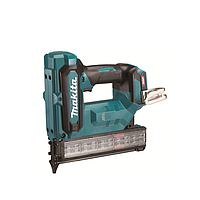
Battery powered nail gun
Fastening work on site often depends on mobility, repeatability, and clean operation in spaces where hoses or cords can slow the job down. For contractors, maintenance teams, fit-out specialists, and industrial assembly users, a battery powered nail gun is a practical choice when consistent driving performance is needed without relying on an air compressor.
This category focuses on cordless fastening tools suited to portable installation and finishing work. It is especially useful for users comparing battery platforms, fastener compatibility, magazine capacity, and handling in real working conditions such as overhead tasks, confined areas, or repetitive trim and panel installation.

Why cordless fastening tools are widely used
Battery-powered nail guns help simplify workflow by reducing setup time and improving freedom of movement around the jobsite. In many applications, that means fewer accessories to carry, easier repositioning, and more efficient work when moving between rooms, floors, or production stations.
Another advantage is better suitability for environments where compressed air systems are impractical. A cordless tool can support maintenance work, interior finishing, light assembly, and installation tasks while keeping the setup compact. For users already working within the MAKITA ecosystem, battery compatibility can also be an important part of tool selection and daily productivity.
Typical applications for a battery powered nail gun
These tools are commonly chosen for trim work, interior wood applications, light panel fixing, cabinetry support tasks, and general finishing where a neat result matters. They are also relevant in service and renovation environments where portability is more important than maximum fastening force.
In B2B settings, buyers often look at the full workflow rather than the tool alone. A cordless nail gun may be part of a wider portable toolkit that also includes a drill machine for pilot holes and assembly, depending on the substrate and installation method. This makes category selection less about a single product and more about choosing a fastening solution that fits the actual application.
Representative products in this category ecosystem
A good example from the current range is the MAKITA FN001GZ02 Cordless Brad Nailer. This model is positioned for brad nailing work with 18 Ga fasteners and supports a range of nail lengths, making it relevant for finishing jobs that require portability and controlled handling. Its magazine capacity and cordless platform make it suitable for repeated fastening without the constraints of pneumatic equipment.
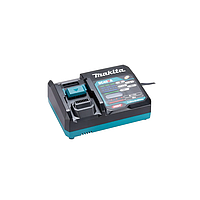
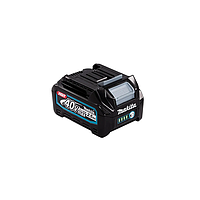
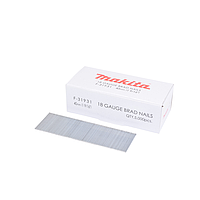
The category context also includes related consumables and power accessories that support day-to-day operation. For example, MAKITA F-31931 Brad Nails are directly relevant to fastening continuity, while the MAKITA 191B36-3 Battery BL4025 and MAKITA 191E07-8 Fast Charger DC40RA illustrate the importance of runtime planning and charging speed in professional cordless workflows. In practice, buyers should evaluate the tool together with the battery and consumable ecosystem rather than as a standalone item.
What to consider when choosing the right model
The first point is fastener compatibility. Gauge and length range affect where the tool can be used and what material thickness it can support. For finishing applications, users often need a balance between holding performance and a clean visible result, so matching the tool to the exact nail specification is essential.
The second point is battery platform and duty cycle. Runtime, charging time, and battery weight all influence productivity, especially for teams working across multiple shifts or moving continuously between locations. A lighter battery can improve handling, while a larger battery may reduce interruptions in repetitive work.
The third point is physical handling. Weight, dimensions, balance, and access in tighter spaces can matter just as much as raw capacity. On interior jobs or in compact installation zones, a well-balanced cordless nail gun can improve operator comfort and consistency over long periods.
Comparing cordless nailing with other portable fastening and fabrication tools
Not every task should be solved with the same type of handheld tool. A battery powered nail gun is efficient when the job involves repeated fastening of compatible nails into suitable materials, but adjacent operations may still require drilling, hole preparation, or joining with other methods.
For example, some fabrication or installation workflows may also involve drill bits for pilot work or material preparation before final fixing. In electrical or light assembly environments, a soldering iron may be part of a different stage of the process entirely. Looking at the broader tool chain helps purchasing teams avoid selecting a fastening tool in isolation.
Related cordless fastening tools and accessories
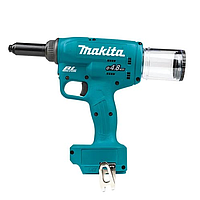
While this category centers on nail guns, some users may also encounter nearby cordless fastening tools such as riveters. The MAKITA DRV150Z Cordless Riveter, for example, serves a different fastening method and is better aligned with blind rivet applications than nail-based installation. That distinction matters when comparing tools for sheet materials, maintenance work, or assembly requirements.
Accessories are equally important in procurement planning. Nails, batteries, and chargers directly affect uptime, replenishment cycles, and deployment across teams. For organizations standardizing tool fleets, selecting a consistent cordless platform can reduce complexity in spare battery management and day-to-day field support.
How buyers can evaluate category fit for their operation
For purchasing teams, the best starting point is to define the material, nail specification, daily usage frequency, and expected mobility. A finishing crew working room-to-room has very different needs from a production support team that uses the tool intermittently for maintenance or packaging-related tasks.
It is also worth considering whether the tool will be used as a primary fastening device or as part of a broader portable toolkit. This affects battery quantities, charging strategy, and consumable stock planning. In many cases, overall workflow efficiency comes from choosing the right supporting accessories and platform, not just the nail gun itself.
Final thoughts
A well-matched cordless fastening solution can improve portability, reduce setup burden, and support more flexible work across installation and finishing tasks. When reviewing this category, it makes sense to compare not only the nail gun itself but also the available nails, batteries, chargers, and the wider handheld tool ecosystem around it.
If your application depends on clean finishing, mobile operation, and reduced reliance on pneumatic infrastructure, this category provides a practical starting point for selecting a cordless fastening setup that aligns with real jobsite and industrial requirements.
Get exclusive volume discounts, bulk pricing updates, and new product alerts delivered directly to your inbox.
By subscribing, you agree to our Terms of Service and Privacy Policy.
Direct access to our certified experts