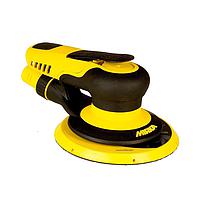
Grinder
Grinding, cutting, deburring, and surface preparation often depend on one tool family that appears in nearly every workshop, fabrication line, and maintenance team. A well-chosen grinder helps improve work speed, control, and finish quality, whether the job involves steel, stainless surfaces, weld seams, or detail work in tight spaces.
On this category page, you can explore grinder options for different workloads, from compact angle grinders for general use to die grinders for more precise finishing tasks. The range also includes accessories such as grinding wheels, helping buyers match the tool and consumable to the actual application rather than choosing only by brand or price.
Choosing the right grinder for the job
Not every grinding task requires the same machine format. In practical use, buyers usually separate requirements into three groups: general-purpose angle grinding and cutting, fine detail finishing, and heavy-duty material removal. This is why grinder selection should begin with the workpiece, access area, duty cycle, and disc or collet size required.
For broad workshop use, angle grinders are often the most versatile option. They can handle cutting metal, removing welds, cleaning edges, and preparing surfaces before coating. For tighter areas and smaller contact points, die grinders are often a better fit because they provide higher rotational speed and better access to corners, contours, and internal features.
Angle grinders and die grinders serve different applications
Angle grinders are commonly used when the job involves a cutting disc or grinding wheel with larger diameter. Compact 100 mm and 125 mm tools are easier to maneuver for daily maintenance and installation work, while 180 mm and 230 mm machines are more suitable for heavier cutting depth and more demanding industrial tasks.
Die grinders are typically selected for precision finishing, deburring, mold work, and localized grinding where a larger disc cannot reach. Models such as the Milwaukee (tool) M18 FDG-0C Fuel Die Grinder and M12 FDGA-0 Right Angle Die Grinder illustrate this role well, especially where portability and access matter more than broad surface coverage.
If your workflow also includes hole-making or metalworking preparation before grinding, related tool groups such as drill machines and drill bits may be useful alongside this category.
Power, disc size, and speed should be evaluated together
A common buying mistake is focusing on motor power alone. In reality, grinder performance is shaped by the balance between rated power, no-load speed, tool weight, and disc diameter. A lighter 100 mm grinder can be more productive for repetitive overhead or one-handed work than a larger machine with higher wattage.
For example, the DEWALT DWE8200T-B1 Angle Grinders combines an 850 W motor with a 100 mm disc format and high no-load speed, making it suitable for lighter grinding and cutting tasks where agility matters. At the heavier end, the BOSCH GWS 2200-180 Angle Grinder and DEWALT D28414 move into larger disc classes designed for more aggressive removal and deeper cutting work.
No-load speed also affects the result. Higher speed can support faster cutting and efficient stock removal, but the right choice still depends on the material, the accessory used, and the desired surface finish. For polishing or work on heat-sensitive materials, controlled speed can be more important than maximum speed.
Examples from leading brands in this category
This category includes products from established manufacturers such as BOSCH, DEWALT, METABO, Milwaukee (tool), MAKITA, and others commonly specified in professional maintenance, fabrication, and installation environments. Brand preference often depends on existing fleet compatibility, operator familiarity, and required service support.
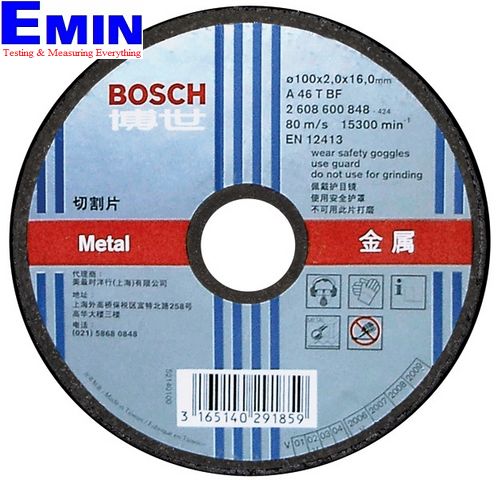
As examples, the METABO W24-230 Angle Grinder fits the large-angle-grinder segment for heavy-duty work, while Milwaukee cordless models such as the M18 FSAG100XB-0X0 Angle Grinder and M18 FLAG230XPDB-0C Fuel Large Angle Grinder address use cases where mobility, battery platform compatibility, and fast stopping features are important in the field. For accessory matching, the BOSCH 2608600017 Iron Grinding Wheel is a typical reminder that grinder performance is never just about the tool body; the wheel or disc selection is equally critical.
Corded vs cordless grinders in industrial use
Corded grinders are still a strong choice for continuous-duty applications, fixed workstations, and fabrication areas where stable power supply is available. They are often preferred for heavy material removal because users can work longer without thinking about battery runtime and charging cycles.
Cordless grinders are increasingly relevant for site work, maintenance access, steel structure installation, and jobs where cable drag reduces safety or speed. Milwaukee (tool) M18 and M12 grinder models in this category show how cordless platforms now cover both compact and larger grinder formats, from right-angle die grinding to large-angle cutting and grinding.
For buyers already standardizing around a battery ecosystem, cordless selection may improve fleet efficiency. For continuous bench-side production use, corded tools may still offer a simpler solution.
How to select the right accessory and setup
The grinder itself is only one part of the process. Wheel type, diameter, thickness, spindle compatibility, guard setup, and switch style all influence safety and usability. A tool intended for iron grinding should be paired with the appropriate wheel specification, just as detail finishing work should be matched with the correct die grinder attachment or collet size.
It is also worth considering operator comfort features such as anti-vibration design, quick disc change, braking behavior, and handle format. These details affect fatigue, restart control, and overall safety in repetitive industrial use. In multi-tool workshops, buyers often review grinder selection together with adjacent categories such as hole saws when planning a broader metalworking tool set.
What buyers usually compare before ordering
On a B2B purchasing level, grinder comparison usually comes down to a few practical questions: what material is being processed, how often the tool will run, which disc size is already standard in the workshop, and whether the application is better served by an angle grinder or a die grinder. This approach is more useful than comparing headline wattage alone.
It also helps to review switch type, weight, spindle or collet format, and overall handling. Compact tools may improve productivity in confined areas, while larger machines are better suited to structural steel, thicker sections, and longer cutting passes. If the job calls for higher precision rather than broad cutting, a die grinder can be the better investment.
Find a grinder that matches your actual workload
This grinder category is intended for buyers who need practical options for fabrication, maintenance, repair, and installation work. Whether you are looking for a compact handheld grinder, a larger cutting and grinding machine, or a die grinder for detail finishing, the right choice starts with the application, not just the specification sheet.
Review the available products, compare tool format with disc size and speed range, and consider how the grinder will be used day to day. A suitable match will usually deliver better control, safer operation, and more consistent finishing results over time.
Get exclusive volume discounts, bulk pricing updates, and new product alerts delivered directly to your inbox.
By subscribing, you agree to our Terms of Service and Privacy Policy.
Direct access to our certified experts