
Planer
Removing high spots, fitting edges, and preparing a clean wood surface often depends on one tool doing precise material removal without slowing down the job. A Planer is widely used in woodworking, furniture production, site installation, and maintenance work where consistent surface finish and accurate depth control matter.
On this page, buyers can compare handheld electric and cordless planers for different workloads, from light trimming to repeated planing and rebating tasks. The category includes practical options from manufacturers such as BOSCH, MAKITA, HITACHI KOKI, Milwaukee (tool), Trotec, FEG, and RYOBI, covering both compact workshop use and more demanding field applications.
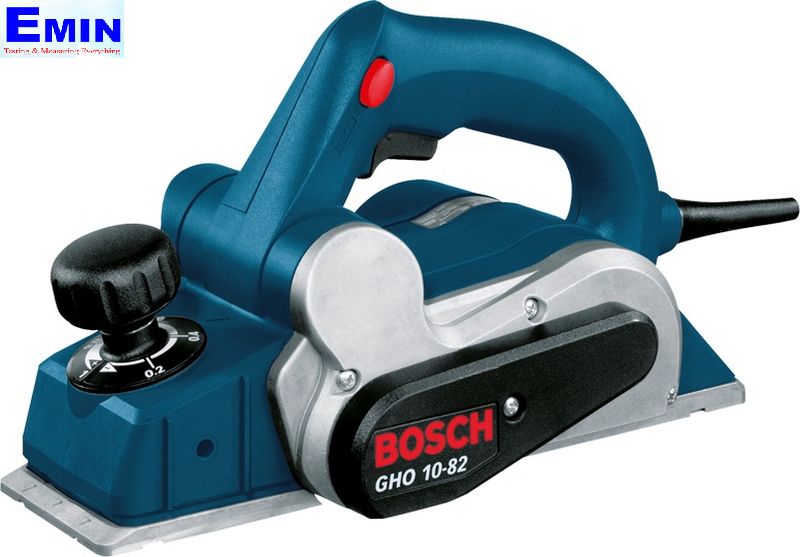
Where planers are commonly used
Handheld planers are commonly chosen when wood needs to be flattened, reduced in thickness slightly, or adjusted for better fit during assembly. Typical jobs include trimming doors, smoothing boards, correcting uneven edges, chamfer preparation, and cutting shallow rebates.
In practice, this makes the tool relevant for carpenters, furniture workshops, contractors, and maintenance teams. Compared with manual planing, powered units help improve speed and consistency, especially when the operator needs repeatable results across multiple workpieces.
Common planer configurations in this category
Most products in this category follow the familiar 82 mm planing width format used for general woodworking. That size is suitable for many routine tasks because it balances maneuverability, cutting coverage, and overall tool weight.
There are also broader or more specialized formats depending on the application. For example, the MAKITA 1805N Power Planer offers a much wider 155 mm planing width for larger surface coverage, while the MAKITA PC5000C Concrete Planer is a different type of planer intended for concrete surface work rather than wood finishing.
Power source is another important distinction. Corded models are often selected for continuous workshop or site use, while cordless options are helpful when mobility, ladder work, or power access is a constraint. If your workflow also involves drilling and installation work around the same jobsite, you may also want to review drill machines for a more complete tool setup.
Examples of planer models for different needs
For general wood planing, the BOSCH GHO6500 Planer is a representative corded model with 650 W input, 16,500 rpm no-load speed, adjustable chip thickness up to 2.6 mm, and rebating depth up to 9 mm. This specification range suits routine smoothing, edge correction, and fitting work where controlled passes are preferred.
The Milwaukee (tool) M18 BP-0 Planer is a cordless alternative for users who prioritize portability. With 18 V Li-ion battery operation, 82 mm cutting width, and up to 2 mm cutting depth, it fits applications where a power cord would be inconvenient, such as finishing installed components or moving between work areas.
For buyers comparing compact corded units, the HITACHI KOKI P20ST Planer (580W), RYOBI HL-83 Planer, and FEG EG series models show the typical class of lightweight hand planers used for standard woodworking tasks. Trotec also offers several variants, including the PPLS 10-800, PPLS 10‑750, and PPLS 10-20V, which make it easier to choose between corded and battery-powered operation based on workload.
How to choose the right planer
The first point to review is cutting depth and rebating depth. A deeper maximum cut can speed up material removal, but in many real jobs, a shallower and more controlled pass gives a cleaner finish and reduces load on the motor and blades. If you regularly need rebates, check that the model supports sufficient rebate depth for your work.
Next, consider whether corded or cordless operation is more practical. Corded planers are generally better for repeated use and longer working sessions. Cordless models are more convenient on active jobsites, especially when moving around large installations or working where extension cords are not ideal.
Weight and handling also matter. A lighter planer may be easier to guide along edges, while a heavier unit can feel more stable on broader surfaces. Buyers comparing established tool brands can also explore the wider ranges from MAKITA and Milwaukee (tool) if they want to match the planer with an existing platform or brand preference.
What to check before using a planer
Safe operation starts with the workpiece itself. Wood should be checked for nails, screws, embedded grit, or knots that may damage blades or cause unstable cutting. The operator should also confirm blade condition, base plate alignment, power cord or battery fitment, and switch function before starting work.
Dust control and personal protection are also important. Eye protection, hearing protection, and a suitable dust mask are recommended during regular use, especially in enclosed spaces or when working on treated timber. A clean and unobstructed workspace helps reduce handling errors and improves visibility during planing passes.
When accuracy matters, it is usually better to remove material in several controlled passes rather than attempting a heavy cut in one movement. This approach helps maintain surface quality, reduces strain on the motor, and lowers the risk of blade damage.
Planers in a broader workshop workflow
A planer is often one part of a wider fabrication or installation process rather than a standalone purchase. In woodworking and fit-out tasks, it is commonly paired with drilling, cutting, fastening, and finishing tools depending on how the job is organized.
For example, after trimming or fitting timber components with a planer, operators may continue with hole making or assembly tasks using accessories such as hole saws for cutouts in related installation work. Looking at the tool ecosystem can help B2B buyers standardize procurement across workshop teams and jobsite crews.
Frequently asked questions
Can a handheld planer be used on hard wood?
It can be used on many hardwood applications, but the result depends on blade condition, cutting depth, feed rate, and the wood itself. For harder material, lighter passes are typically more effective than forcing a deep cut.
Is a cordless planer enough for regular work?
For mobile fitting, adjustment, and short-planing tasks, a cordless model can be very practical. For continuous production or longer sessions, many users still prefer corded models for uninterrupted runtime.
Can all planers in this category be used on concrete?
No. Standard wood planers and concrete planers serve different purposes. A model such as the MAKITA PC5000C Concrete Planer is intended for concrete surface work, while most other products in this category are designed for wood.
Find a planer that matches the job
Choosing the right planer depends less on headline power alone and more on how the tool will actually be used: material type, required cut depth, runtime expectations, mobility, and finish quality. A compact 82 mm hand planer may be ideal for daily fitting and edge correction, while wider or more specialized models are better suited to surface coverage or non-wood applications.
This category is designed to help buyers compare those options more clearly, from straightforward corded tools to cordless platforms and specialized planers. Reviewing the intended workload first will make it easier to select a model that fits both the application and the working environment.
Get exclusive volume discounts, bulk pricing updates, and new product alerts delivered directly to your inbox.
By subscribing, you agree to our Terms of Service and Privacy Policy.
Direct access to our certified experts


