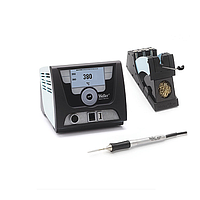
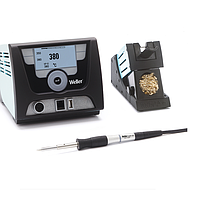
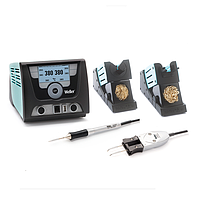
Soldering Stations
Consistent heat control makes a visible difference in electronics work, whether the task is PCB assembly, rework, cable termination, or bench repair. A well-matched soldering station helps maintain tip temperature, improves joint quality, and reduces the risk of overheating sensitive components during repeated use.
For technicians, maintenance teams, laboratories, and electronics production environments, the right station is not only about wattage. Temperature stability, ESD safety, ergonomics, tool compatibility, and the type of work being performed all affect long-term efficiency. This category brings together solutions for both general soldering and more specialized rework needs.
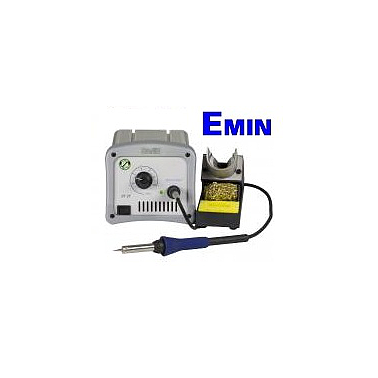
Why a soldering station is preferred over a basic soldering iron
A standalone iron may be sufficient for occasional tasks, but controlled assembly and repair usually require better thermal management. A station-based setup provides stable temperature control, faster recovery when the tip contacts a joint, and more predictable results across different boards and component sizes.
This becomes especially important in B2B and technical settings, where operators may work continuously or switch between fine-pitch parts, connectors, wires, and heavier solder joints. More advanced systems also support ESD-safe workstations and integration with related tools used in electronics production.
Typical applications in electronics assembly and maintenance
Soldering stations are widely used in electronics repair benches, control board assembly, prototyping labs, industrial maintenance departments, and technical training environments. They support tasks such as component replacement, wire-to-board soldering, connector assembly, and routine service work on power and control circuits.
In more demanding processes, users may also need coordinated hot air, nano rework, or multi-tool platforms. If your workflow involves thermal removal of SMD parts or localized heating, it may also be useful to review hot air rework systems for applications beyond conventional hand soldering.
Common product types found in this category
Not every station is designed for the same job. General-purpose units focus on day-to-day soldering, while other systems are tailored for precision work, multi-channel operation, or rework support. The category therefore includes both complete stations and selected accessories that fit into a broader soldering ecosystem.
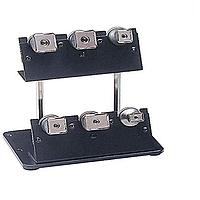
For example, the HAKKO FX951-55 is representative of a compact temperature-controlled station suited to regular bench work. For fine assemblies and compact rework tasks, models such as the JBC NASE-2D 2-Tool Nano Rework or the JBC CD-2BQF Precision Soldering illustrate how higher control and precision can be applied to delicate electronic components. In workflows that require hot air support, items like the Proskit 9SS-968B-HG Heat Gun or the WELLER 51504899 Nozzle Stand serve a clear supporting role rather than replacing the main station itself.
How to choose the right soldering station
The most practical starting point is the type of workpiece. For routine PCB repair and assembly, a mid-power station with a usable temperature range and reliable recovery is often enough. If the work includes small pads, fine leads, or heat-sensitive components, better accuracy and stable idle performance become more valuable than raw power alone.
Users should also consider the duty cycle. A station used occasionally in maintenance has different requirements from one used all day in production or training. In continuous operation, factors such as tip-to-ground characteristics, ESD-safe design, easy tip replacement, and comfortable handpiece balance can have a direct impact on repeatability and operator fatigue.
Where multiple tools are needed on one bench, a larger platform may be more efficient than separate standalone units. The PACEWORLDWIDE MBT360 Multi-Channel Soldering and Rework Station is a good example of a system approach, allowing a broader rework setup for service or production environments. If your process also includes component removal, a complementary review of desoldering stations can help define the best bench configuration.
Brands commonly selected for professional electronics work
Several established manufacturers in this category are known for different strengths in electronics assembly and repair. HAKKO is frequently chosen for dependable bench soldering and straightforward operation, while JBC is often associated with precision thermal control, compact rework capability, and advanced station features for demanding applications.
PACEWORLDWIDE is relevant when the requirement extends beyond a single iron to a broader multi-channel rework setup. Proskit and WELLER also appear in this category through supporting tools and accessories that help complete an electronics workstation. The right brand choice usually depends less on name recognition and more on how closely the platform matches the intended process, maintenance routine, and operator skill level.
Important features to compare before buying
When comparing stations, it helps to look beyond headline temperature range. Temperature stability, recovery speed, tool compatibility, and grounding performance are often more important in real use. For electronics manufacturing and service benches, ESD-safe operation is also a key requirement, particularly when working with sensitive semiconductors or control boards.
Connectivity and expandability can matter as well. Some advanced stations support PC communication, profile management, or external control functions. In specialized setups, accessories such as pedals, dedicated holders, or compatible hot air tools can improve process control and workflow efficiency. That is why accessory items should be evaluated as part of the system, not only as add-ons.
When to move beyond a standard soldering station
A conventional station is ideal for many assembly and repair jobs, but some tasks call for a more specialized setup. Fine-pitch SMD rework, compact component removal, and thermally sensitive boards may benefit from nano rework or controlled hot air rather than a standard iron alone.
For more complex board-level work, engineers and repair teams may also need solutions related to BGA rework, especially when dealing with area-array packages or advanced SMT assemblies. Choosing the correct equipment path early can reduce rework time and improve process consistency.
Building a practical soldering workstation
A productive workstation is usually built around the actual workflow rather than a single product specification. Basic benches may only need one reliable station and the right tips, while higher-level setups often combine soldering, hot air, extraction, tool stands, and process accessories in a coordinated layout.
Items such as the HAKKO 374 self feeder, the JBC P-405 Pedal, or a nozzle holder from WELLER show how supporting components can streamline repetitive work and improve handling. When selected with the main station in mind, these accessories help create a more efficient and safer bench for repair, assembly, or training.
Choosing from this category is ultimately about matching the station to the job, the operator, and the production environment. Whether the need is a dependable bench unit for everyday repair or a more advanced platform for precision rework, a well-selected soldering station supports cleaner joints, steadier process control, and a more reliable electronics workflow over time.
Get exclusive volume discounts, bulk pricing updates, and new product alerts delivered directly to your inbox.
By subscribing, you agree to our Terms of Service and Privacy Policy.
Direct access to our certified experts