Carbon dioxide (CO2) is a normal part of the atmosphere and is produced by everyday biological and combustion-related processes. Because it is colorless and odorless, however, its presence cannot be assessed reliably by sight or smell. In enclosed or controlled environments, CO2 may accumulate without obvious warning, making CO2 monitoring an important part of an organized air-safety approach.
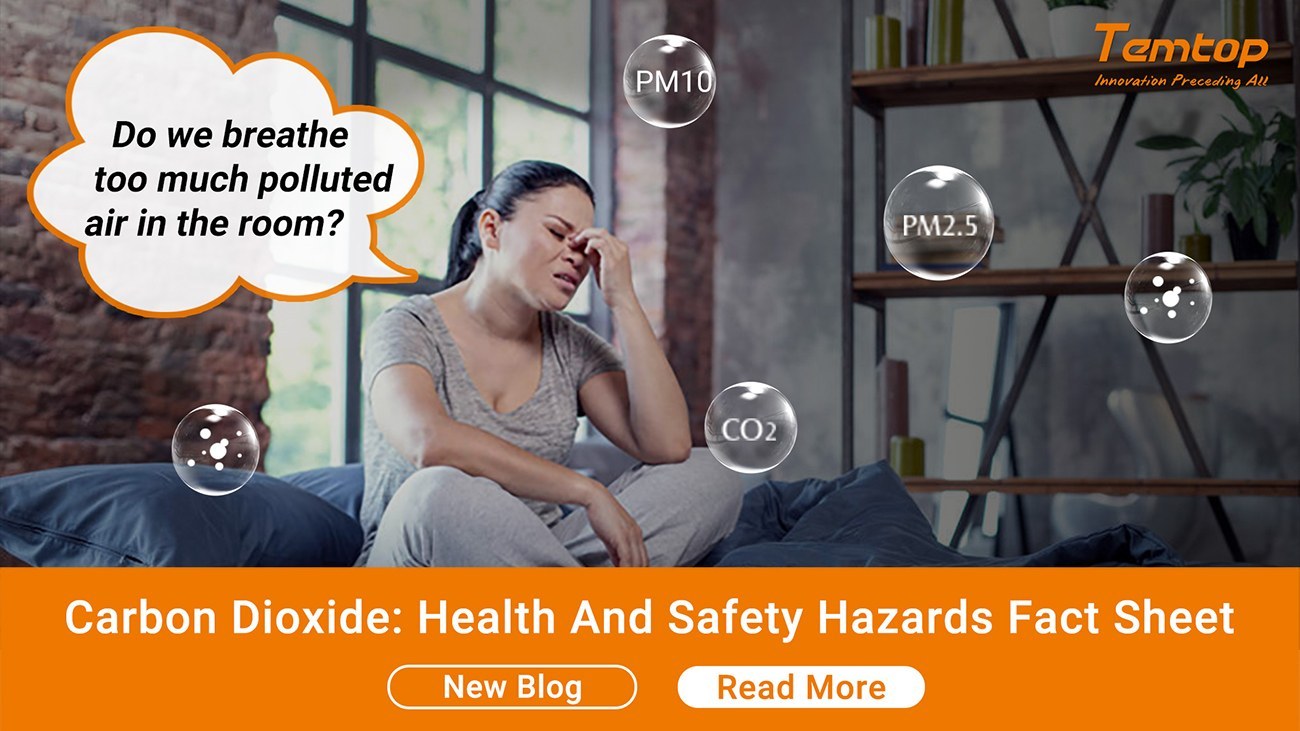
Why carbon dioxide requires attention indoors
CO2 is naturally present in outdoor air at approximately 400 ppm (0.04%), according to the supplied product information. It is also associated with aerobic respiration, the decomposition of organic material, fuel combustion, volcanic activity, and geothermal features. In a space with limited ventilation or changing occupancy and process conditions, these sources can contribute to an increase in concentration.
Carbon dioxide has an important role in plant photosynthesis, but its accumulation in enclosed areas presents a different consideration. The source material describes CO2 as an asphyxiant gas rather than a toxic gas: at elevated levels, it can displace oxygen in the air. This distinction is important for facilities that need to consider both air quality and the conditions that may affect occupants in restricted spaces.
Potential health effects of elevated CO2
Exposure effects depend on concentration and conditions. The supplied information notes that CO2 concentrations above 1% may be associated with drowsiness and mild shortness of breath. At levels between 7% and 10%, the described effects become more serious and can include dizziness, headaches, sensory disturbances, and loss of consciousness over a short period. These effects are referred to as hypercapnia, a form of asphyxiation.
These considerations reinforce why an odorless gas should not be managed through subjective observations alone. A monitoring process can provide measurable information for evaluating conditions and supporting timely decisions under an organization’s applicable safety procedures.
The role of continuous CO2 monitoring
Continuous measurement helps turn an otherwise invisible condition into data that can be reviewed in real time. For confined spaces, refuge stations, and other controlled environments, a CO2 monitor can support regular awareness of changing air conditions. This is especially relevant where people, equipment, or processes may affect the surrounding atmosphere.
A monitoring device is one component of a broader safety program. It does not replace site assessment, ventilation planning, operating procedures, or emergency measures. Instead, it can help teams observe CO2 trends and respond according to the controls and requirements established for their environment.
NDIR sensing for CO2 measurement
The supplied Elitech information identifies non-dispersive infrared (NDIR) sensors as the CO2 measurement technology used in the Temtop Series of air quality monitors. This technology supports real-time CO2 readings for environmental monitoring applications. When selecting an instrument, users should match the available measurements to the air-quality indicators relevant to the area being assessed.
Air-quality indicators beyond CO2
CO2 may be only one part of an indoor air-quality review. The M100 Air Station and M2000 Detector are described in the supplied data as devices designed to measure CO2 along with PM2.5, PM10, TVOCs, and HCHO. Viewing multiple indicators can provide a broader picture of the environment than a single measurement alone.
The Temtop Series, including M100 Air Station, M2000 Detector, and P20C, is described as being designed to measure carbon dioxide levels in a given environment. For quality control and inspection activities, the practical value of these readings is improved when measurements are reviewed consistently and documented within the facility’s own monitoring process.
Practical considerations for air-quality monitoring
- Identify enclosed or controlled areas where CO2 could accumulate.
- Use a monitoring approach that provides current readings for the conditions being observed.
- Consider whether additional indicators, such as particulate matter, TVOCs, or HCHO, are relevant to the space.
- Review readings as part of established workplace safety and air-management procedures.
- Maintain clear response steps for conditions that require attention.
Supporting safer environmental oversight
Carbon dioxide is a familiar atmospheric gas, but its lack of odor and color can make elevated levels difficult to recognize without measurement. Continuous CO2 monitoring provides visible data for evaluating enclosed-air conditions and supports proactive environmental oversight. By combining suitable air-quality monitoring equipment with well-defined site procedures, organizations can make more informed decisions about indoor and controlled-space conditions.