Stockpile-inventorying Equipment
Accurate stock volume data is essential wherever bulk materials are stored, transferred, or audited. In coal yards, mines, ports, power plants, and other heavy industrial sites, the right Stockpile-inventorying Equipment helps reduce manual estimation, improve inventory visibility, and support safer, faster decision-making.
This category focuses on systems designed to measure stockpiles with higher consistency and less dependence on manual surveying. Depending on the site layout, material flow, and required mobility, users may choose portable, stationary, or UAV-based solutions to capture pile geometry and calculate volume with practical field efficiency.
Why stockpile measurement matters in industrial operations
Bulk material inventory is often tied directly to production planning, procurement, logistics, and financial reconciliation. When stockpile data is delayed or based on rough visual estimates, it can affect dispatch schedules, yard management, and reporting accuracy across the operation.
Modern inventorying systems are used to create a more repeatable measurement process. Instead of relying only on manual point checks, these solutions can scan or map pile surfaces and convert field data into usable volume information, which is especially valuable in large yards or sites with frequent stock movement.
Main equipment types used for stockpile inventorying
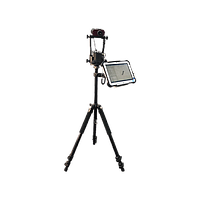
This category includes several practical approaches to stockpile measurement. Portable laser equipment is suited to sites that need flexible deployment across multiple piles or different storage areas. It can be useful when mobility is more important than fixed installation.
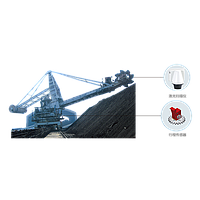
Stationary laser systems are commonly selected for fixed-yard monitoring where regular measurement is required and consistent installation conditions are available. These systems are often chosen for routine volume checks in established stockyards.
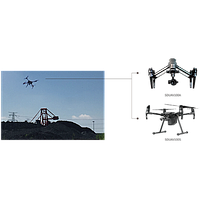
UAV-based inventorying systems add another option for larger or harder-to-access areas. By capturing aerial data, they can support stock measurement across broad yard coverage while reducing the need for personnel to enter complex pile zones. For operations that also require upstream material quality control, related solutions such as mineral sampling systems may be relevant in the wider bulk handling workflow.
Representative solutions from Sundy
This category features equipment from Sundy, including portable, stationary, and UAV-based configurations for different stockyard conditions. The range allows buyers to compare measurement methods based on access conditions, response speed, environmental exposure, and the level of automation required.
The Sundy SDLM300 Portable Stockpile-inventorying Equipment is aimed at field use where operators need to move between locations and perform on-site volume checks. For fixed-position scanning, the Sundy SDLM1250 Stationary Laser Stockpile-inventorying Equipment is suited to continuous or recurring yard measurement tasks. UAV options such as the Sundy SDUAV100A and Sundy SDUAV100S Unmanned Aerial Vehicle Stockpile-inventorying Systems provide an aerial approach for broader coverage and efficient data collection over large piles.
How to choose the right system for your site
The first selection factor is measurement scenario. If your team measures different stockpiles across changing locations, a portable solution may be easier to deploy. If the yard layout is stable and regular measurement is needed, a stationary installation may provide a more structured workflow. If the stockyard is large, irregular, or difficult to access safely, a UAV-based system may be more practical.
The second factor is environment. Outdoor industrial sites may face wind, rain, dust, and large temperature swings, so operating conditions matter when comparing systems. It is also important to consider the expected accuracy range, scan coverage, processing time, and protection level in relation to your actual inventory process rather than selecting only on headline specifications.
Finally, think about the downstream use of the data. Some users need simple volume confirmation for routine checks, while others need faster reporting to support production, loading, or reconciliation. If your process includes other utility equipment around the yard or plant, adjacent categories such as industrial water cooler/chiller systems may also be part of the broader site infrastructure, although they serve a different function.
Key practical benefits of modern stockpile-inventorying equipment
One major benefit is improved consistency. Whether using laser-based or UAV-based methods, the goal is to reduce variation between operators and obtain more repeatable inventory data over time. That makes trend tracking and comparison between reporting periods more reliable.
Another benefit is field efficiency. Large stockyards can be time-consuming to survey manually, especially when access is restricted or safety conditions are challenging. By using purpose-built equipment, operators can complete measurements more quickly and with less disruption to site activity.
There is also a clear safety advantage in many use cases. Reducing the need to climb, approach unstable pile edges, or move through busy loading zones can help lower operational risk. In this sense, inventorying equipment supports not only stock accuracy but also safer working practices.
Portable, stationary, or UAV: which approach fits best?
A portable system is often preferred when budgets, site layouts, or workload patterns require flexibility. It can be shared across multiple storage points and is suitable for operations that do not need permanent installation. This approach is practical for periodic checks or facilities with several separated stock areas.
A stationary system makes sense when inventorying is part of a regular operating routine. Fixed installation can simplify repeat measurements and help standardize the process. This is especially relevant for facilities handling large material volumes with predictable pile zones.
UAV solutions are particularly attractive when aerial perspective improves efficiency. They are useful for wide stockyards, difficult terrain, or situations where a fast scan of multiple piles is needed. Compared with purely ground-based methods, they can improve accessibility and shorten time spent in the field, provided the site can support safe drone operation.
Points to review before purchasing
Before selecting equipment, it is worth confirming the material type, pile size range, and yard dimensions. These factors influence whether portability, scanning range, or aerial coverage should take priority. You should also review how often measurements are performed and who will operate the system in daily practice.
Integration into the existing workflow is equally important. Buyers should consider data processing speed, reporting expectations, maintenance access, and the training level of operators. In industrial environments where several process-support systems work together, understanding the broader equipment ecosystem can prevent mismatches in deployment and long-term use.
Support more reliable inventory control with the right measurement method
Choosing suitable stockpile inventorying technology depends less on a single specification and more on how the system fits real operating conditions. Portable, stationary, and UAV-based options each address different site constraints, measurement frequencies, and safety requirements.
By comparing the available solutions in this category, buyers can identify an approach that supports more dependable volume measurement, better yard visibility, and a smoother inventory workflow. For operations handling bulk materials at scale, that can make stock data more useful across planning, reporting, and daily site management.
数量割引、まとめ買い価格の更新、新製品情報をメールでお届けします。
登録することで、当社の利用規約およびプライバシーポリシーに同意したものとみなされます。
認定専門家へ直接アクセス