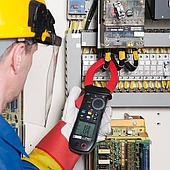
In practice, this is the type of clamp meter commonly carried along for quick on-site checks, instead of using multiple separate measuring devices.
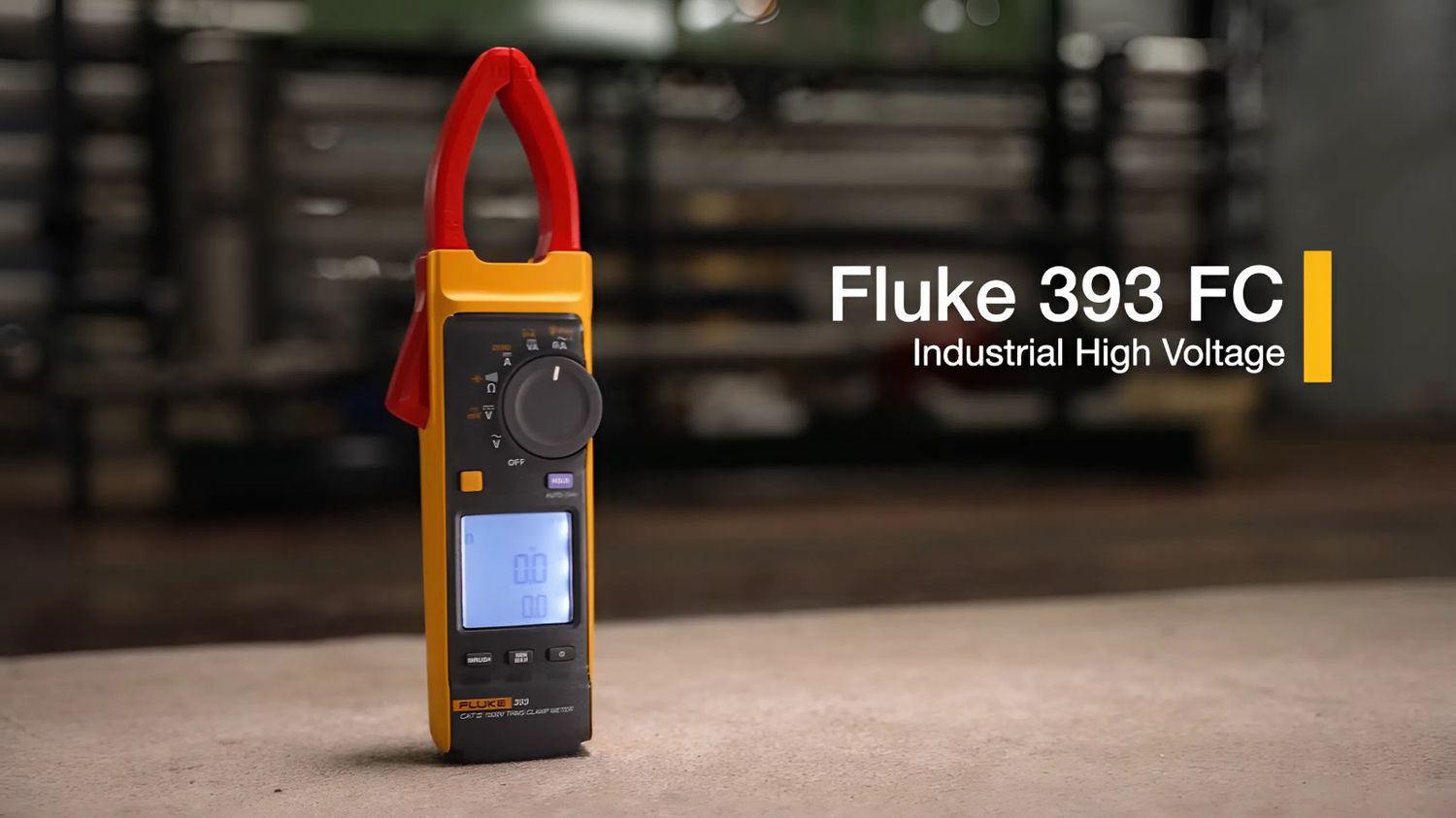
What can be measured with the Fluke 393 FC?
The device allows for the measurement of DC voltage, AC current, and DC current via clamps. It can also display power based on the measured voltage and current values.
This enables quick monitoring of the operating status of each point in the system without manual calculations.
When is True RMS technology needed?
In real-world environments, electrical signals are not always stable. Noise or abnormal waveforms can lead to inaccurate measurement results.
True RMS helps maintain the stability of measurement results in such situations, and is therefore often used for field testing rather than under ideal conditions.
The Fluke 393 FC's slim clamp design allows it to fit into confined spaces such as electrical cabinets or areas with dense wiring.
In more difficult-to-access situations, the iFlex flexible current probe can be used to take measurements in locations where direct clamping is not possible.
Why is it necessary to monitor power consumption during testing?
Measuring voltage or current alone is sometimes insufficient to assess operating conditions. With additional power information, comparisons between battery strings or branches become clearer.
This helps to quickly identify areas of unstable operation.
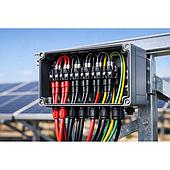
This device is commonly used in high-DC voltage environments such as solar power systems, large-scale power farms, energy storage systems, or areas requiring high-power DC electricity.
Finally, the Fluke 393 FC is suitable for measuring high DC voltage, current, and quickly observing power in the field. Its intuitive display makes testing easier to follow compared to traditional measurement methods.
Within EMIN's catalog, this is one of the models frequently chosen for solar and DC power applications.