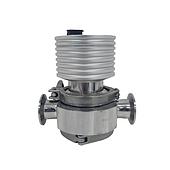
Hydrazine hydrate is used in industrial activities including chemical production, pharmaceutical intermediate synthesis, and water treatment. In these processes, concentration is a key operating variable: it can influence reaction conditions, product consistency, material use, and the ability to identify process deviations. For this reason, inline refractometers for hydrazine hydrate offer a practical approach where continuous concentration visibility is needed.
Unlike an offline approach based on manual sampling and laboratory analysis, an inline instrument is installed on the production line. It measures the process liquid directly and provides updated concentration information during operation. This helps teams observe changes as they occur rather than relying only on periodic sample results.
Why hydrazine hydrate concentration requires attention
Hydrazine hydrate, with the formula N₂H₄·H₂O, is described as a colorless, transparent liquid with reducing properties. It can absorb moisture and carbon dioxide from the air and has alkalinity. Its industrial uses include pharmaceutical intermediate production, the manufacture of blowing agents and antioxidants, and boiler-water deoxidation in water treatment.
Because concentration affects how the material performs in a process, it should be managed as part of normal process control. A concentration that is higher than intended may contribute to overly intense reactions and increased operational risk under certain conditions. A lower-than-required concentration may affect yield, product performance, or treatment results. The appropriate target and response procedures depend on the specific process.
Continuous measurement also gives operators information that can help reveal abnormal conditions. For example, unexpected concentration variation may be associated with a leak, inconsistent mixing, or another change in the process. The measurement itself does not identify the root cause, but it can provide a timely indication that the process should be reviewed.
How an inline refractometer measures concentration
An inline refractometer works from the relationship between a solution's refractive index and its concentration. As the hydrazine hydrate concentration changes, the solution's molecular density changes, which leads to a corresponding change in refractive index. The instrument measures this optical property and uses a preset concentration-to-refractive-index correlation to calculate a concentration value.
This measurement principle is useful when the correlation is established for the relevant solution and operating conditions. It converts an optical measurement into a concentration reading that can be observed during production. The result is a continuous view of process changes instead of a sequence of isolated laboratory measurements.
Benefits of continuous hydrazine hydrate monitoring
Faster visibility into process changes
Manual sampling and offline analysis take time. They may not reflect a change at the moment it occurs, and sampling can introduce potential issues associated with handling, volatilization, or contamination. An inline refractometer avoids the need to wait for each individual sample result, allowing concentration changes to be seen more promptly.
Support for stable product quality
In processes using hydrazine hydrate as a raw material, concentration can influence reaction behavior and downstream results. In pharmaceutical intermediate synthesis, even small concentration fluctuations may affect product purity. In blowing-agent manufacturing, concentration deviations may contribute to differences in foam performance or yield. A continuous measurement signal can support efforts to keep process parameters consistent.
Improved material-use decisions
Concentration data can help production teams manage addition rates more closely. This supports decisions intended to avoid excess dosing and material waste, while also reducing the risk of insufficient concentration that could require rework. The value comes from using the live measurement as one input within the wider process-control strategy.
CHNSpec CRN series for inline monitoring
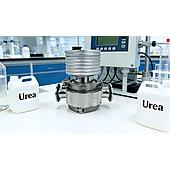
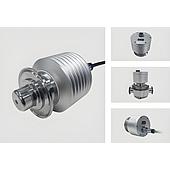
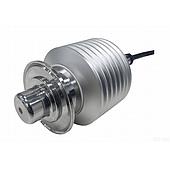
The CHNSpec Inline Refractometer CRN series is presented for hydrazine hydrate concentration detection in industrial applications. The series uses optical detection to capture changes in refractive index and support concentration measurement. It is also described as having environmental adaptability for production settings where temperature variation, vibration, and other disturbances may occur.
For operational use, the source information notes flexible installation based on pipeline layout, along with straightforward installation and maintenance. The CRN series also provides data display and transmission capabilities, allowing concentration data to be sent to control systems or display terminals. Operators can use this information to follow concentration trends and make process adjustments when appropriate.
Selecting an approach for the process
When evaluating an inline refractometer, start with the measurement objective: determine what concentration information is needed, where it should be measured, and how the result will be used in the operating workflow. The concentration–refractive-index correlation should be appropriate for the hydrazine hydrate solution being monitored. Pipeline layout, process conditions, and the required connection to displays or control systems should also be considered.
Inline refractometers provide a route to real-time hydrazine hydrate concentration monitoring by combining refractive-index measurement with a defined concentration correlation. In chemical, pharmaceutical, and water-treatment applications, this continuous visibility can support process stability, quality management, material-use control, and the review of unexpected process changes.