Phantoms
Reliable validation in medical imaging and device testing depends on having a repeatable physical reference. That is where phantoms become essential. They help engineering teams, researchers, service providers, and clinical support environments evaluate imaging performance, compare modalities, and verify whether a system behaves as expected under controlled conditions.
Within this category, users typically look for models that simulate tissue, bone, organs, flow, or anatomical structures for X-ray CT, ultrasound, and MRI workflows. This makes phantom selection less about a generic test block and more about choosing the right balance of anatomy, modality compatibility, and measurable material behavior for the intended application.
Why phantoms matter in imaging and medical device testing
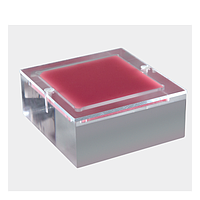
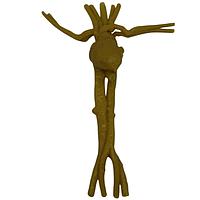
A phantom is a purpose-built test object designed to mimic selected properties of biological tissue or anatomy. Depending on the design, it may represent simple soft tissue regions, multi-layer structures, organ groupings, skeletal sections, or more specialized targets such as a Doppler phantom for flow-related evaluation. In practice, these tools support repeatability when live subjects are not appropriate or when controlled comparison is required.
For B2B buyers, that repeatability is often the main value. A well-matched phantom can support equipment setup, quality checks, training, method development, protocol comparison, and research validation. If your wider workflow also includes broader patient simulation tools, phantoms fit naturally into that testing ecosystem by providing stable physical targets for imaging and measurement.
Typical phantom types found in this category
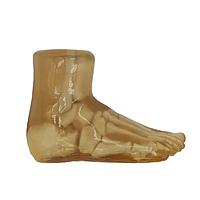
This category spans both anatomical and application-specific designs. Some models focus on a body region, such as newborn head, arm, or torso structures, while others represent animal anatomy for preclinical or translational imaging work. There are also modality-oriented options intended to support CT, ultrasound, MRI, or combinations of these methods.
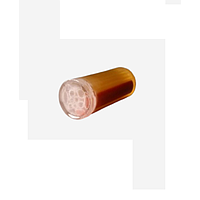
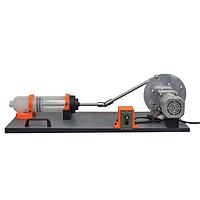
Examples from True Phantom Solutions illustrate that range clearly. The True Phantom Solutions DP-C01 Doppler Phantom For X-Ray CT, US, MRI is relevant when flow-related or vessel-style imaging evaluation is needed, while the RT-A02 Rat Phantom (Anatomical) For X-Ray CT, US and RT-C01 Rat Phantom (Cylindrical) For X-Ray CT, MRI show the difference between anatomical representation and a more simplified cylindrical format. For larger anatomy, the DG-A02 Dog Phantom For X-Ray CT, MRI provides a broader organ-and-bone style structure for cross-modality work.
How modality compatibility affects selection
One of the first practical filters is the imaging modality. Some phantoms are intended for X-ray CT and ultrasound, others for CT and MRI, and some are designed to work across all three. When comparing options, buyers should look at whether the phantom is meant to support attenuation behavior, density-related contrast, acoustic response, or MRI-related characteristics such as relaxation behavior where applicable.
This matters because a phantom that is suitable for one modality may not deliver useful information in another. For example, a newborn torso model built for X-Ray CT and US may be appropriate for sonographic training and CT visualization, while a CT and MRI version may better fit cross-platform protocol comparison. In broader verification programs, users may also compare these products with other phantom solutions to align anatomy and modality requirements with the test objective.
Material properties and simulated structures
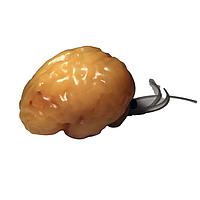
Many buyers in this category are not simply looking for shape. They need materials engineered to approximate relevant physical properties of bone, soft tissue, organs, skin, cartilage, or brain matter. In imaging applications, parameters such as density, attenuation, hardness, speed of sound, speckle behavior, and similar characteristics can influence how realistic or useful a phantom is for system evaluation.
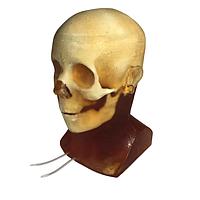
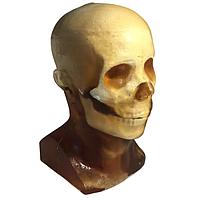
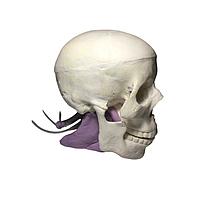
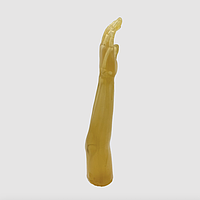
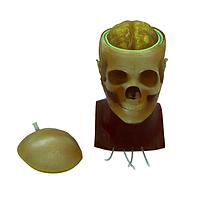
Several listed products highlight this distinction. The HD-N01, HD-N02, and HD-N03 newborn head variants are built around brain-matter and soft-tissue style structures, while the AM-S01 newborn arm introduces a simpler anatomy with cortical bone and soft tissue. The AN-N01, AN-N02, US-N02, and US-S02 newborn torso models extend this concept with organs that may include speckled and non-speckled regions, which can be useful when image texture and target differentiation are relevant.
Choosing between simple, anatomical, and advanced designs
A simple or cylindrical phantom is often useful when the goal is consistency, setup, or baseline comparison. These formats can make it easier to isolate one variable at a time, especially in research or repeated test cycles. Anatomical phantoms, by contrast, are typically chosen when spatial relationships, organ visualization, or realistic structure recognition are more important.
Advanced designs become more relevant when teams need a closer approximation of clinical or preclinical imaging conditions. For instance, the RT-C01 Rat Phantom (Cylindrical) is likely better suited to controlled geometry-driven evaluation, whereas the RT-A02 Rat Phantom (Anatomical) introduces a more lifelike internal structure. Similarly, the difference between newborn head models labeled simple, dynamic, or complex suggests different testing priorities, from basic imaging checks to more involved scenario development.
Applications across research, QA, and training
Phantoms are widely used in imaging system development, acceptance testing, periodic quality assurance, and operator training. In research settings, they support reproducible studies without the variability that comes with live tissue. In service and maintenance environments, they can help verify image consistency after calibration, repair, or method changes.
They are also useful in educational workflows where repeated scanning and hands-on practice are needed. Newborn anatomy phantoms, for example, can support training and demonstration for pediatric or neonatal imaging contexts, while animal phantoms may be more relevant in laboratory, veterinary, or preclinical environments. If your testing scope extends beyond imaging, related categories such as infusion device analyzers or electrosurgical analyzers may also be part of the same medical equipment validation process.
What to review before ordering
For procurement and technical evaluation, it is useful to start with a few core questions: which modality or modalities must the phantom support, what anatomy or tissue behavior needs to be represented, and whether the priority is training, research, or performance verification. Buyers should also consider physical size, handling, and how closely the phantom needs to match the intended imaging scenario.
Another practical point is whether the project needs simplified geometry, anatomical realism, or a specific functional target such as Doppler-style testing. A category like this can include compact pieces, newborn structures, animal models, and cross-modality options, so narrowing by use case will usually lead to a better fit than choosing only by product name.
Finding the right phantom for your workflow
This range of phantoms is designed for organizations that need controlled, repeatable imaging references rather than one-size-fits-all test objects. Whether the requirement is a newborn head model, a torso phantom, a limb section, a rat or dog anatomy model, or a Doppler-oriented design, the right choice depends on the test method and the level of anatomical realism required.
By focusing on modality compatibility, simulated tissue behavior, and the practical purpose of the test, buyers can identify a phantom that supports more meaningful imaging evaluation and more consistent results over time.
数量割引、まとめ買い価格の更新、新製品情報をメールでお届けします。
登録することで、当社の利用規約およびプライバシーポリシーに同意したものとみなされます。
認定専門家へ直接アクセス