
|
Maximizing Battery Life of IoT Devices By Minimizing Load Current Draw The Challenge of Measuring Low IoT CurrentsTo maximize battery life, your product current draw must be kept to an absolute minimum. This requires that you use low power components and efficient techniques to de-energize components when they are not in use. You need sensitive measurement instrumentation to measure current levels as low as nA. Determine the load current profileIt can be difficult to characterize the load current profile of a prototype IoT
To accurately capture these widely varying load current levels, you need an exceptional measurement solution that includes:
Keithley’s DMM7510 7½-digit Graphical Sampling Multimeter is well-equipped to meet these demands, as it offers:
Watch now to learn how to solve the IoT measurement challenges. Determine the Average Current of an IoT Device Simulate any battery typeHow low can the battery voltage drop before your IoT device turns off? Gauging battery performance at different stages of battery discharge is difficult, as it requires instrumentation that can accurately simulate battery performance. To address this, Keithley’s 2281S-20-6 Battery Simulator makes it easy to model any type of battery. It allows you to efficiently test prototype IoT devices in any battery state, with high repeatability to effectively estimate battery life. Combining a 2281S-20-6 Battery Simulator with a DMM7510 Graphical Sampling Multimeter will give you a complete solution for assessing power consumption and battery life of your IoT prototypes.
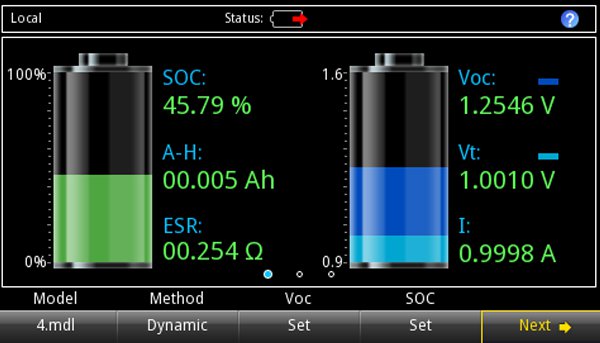
Program the battery simulator for any state of charge, such as near the completely discharged state, to determine how a product performs under a low battery condition and to determine the low battery shut-off voltage. Model any type of battery
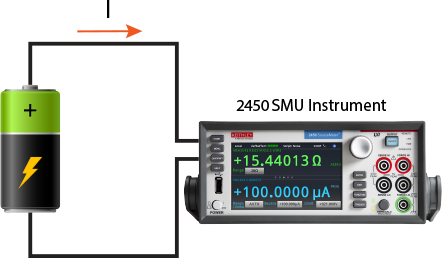
Create any battery model. The final piece of the puzzle is to create a model for the battery that powers your IoT device. Keithley’s 2450 or 2460 Graphical SourceMeter® Source Measure Unit (SMU) instruments make it easy to create the model for the battery used by your product. A battery model-generating script operates the SMU instrument as a controlled current load and derives the model parameters.
|
Maximizing Battery Life of IoT Devices By Minimizing Load Current Draw
2018年05月03日 09時54分49秒
The Challenge of Measuring Low IoT Currents To maximize battery life, your product current draw must be kept to an absolute minimum. This requires that you use low power components and efficient techniques to de-energize components when they are not in use. You need sensitive measurement instrumentation to measure current levels as low as nA.

関連ニュース
2026年10月24日 09時59分14秒
As we enter the 2026–2030 period, wide-bandgap (WBG) semiconductor materials such as Silicon Carbide (SiC) and Gallium Nitride (GaN) are transforming the power electronics, electric vehicle (EV/HEV), renewable energy, and AI data center industries. The shift from traditional silicon to SiC and GaN enables higher power density, smaller passive components, and improved overall system energy efficiency.
2026年10月23日 15時26分05秒
An all-in-one testing solution that complies with the international standard IEC 60364-6. It features a 5.7-inch color graphical display, supports Type B RCD testing, includes memory for 1,000 measurements, and is equipped with a Lithium-ion battery providing 30 hours of continuous operation

2026年10月22日 11時05分06秒
Deciphering optical phenomena such as specular and diffuse reflection, distinguishing between SCI and SCE measurement modes, and providing guidance on using a combined colorimeter and glossmeter to accurately isolate color defects from surface gloss defects

2026年10月21日 15時30分17秒
In the middle of the night shift, a batch of light-gray plastic emerged, streaked with debris. The machine operator took one look and did what came most naturally: he cranked up the screw speed and increased the back pressure to ensure the orange-colored pellets melted completely. By morning, the color was indeed more uniform. A few weeks later, the customer returned the entire shipment the products had become brittle, cracking at the slightest impact, and the color varied from one delivery to the next, failing to match the approved standard

2026年10月20日 16時35分05秒
Diagnosing the causes of plastic color variation, managing metamerism, distinguishing between SCI/SCE measurement modes, and applying Delta E standards for color deviation assessment in QA/QC
お得な情報を受け取る
数量割引、まとめ買い価格の更新、新製品情報をメールでお届けします。
登録することで、当社の利用規約およびプライバシーポリシーに同意したものとみなされます。
クイックサポート
認定専門家へ直接アクセス