Developing sunscreen formulas often involves repeated adjustments, screening steps, and decisions about which samples should move forward for additional evaluation. The CHN SPEC SPF-660 Series is designed for laboratory-based, in vitro sun protection testing to help research teams assess formula performance during development. It is positioned as a tool for supporting a more responsive workflow when sunscreen formulations are being refined.
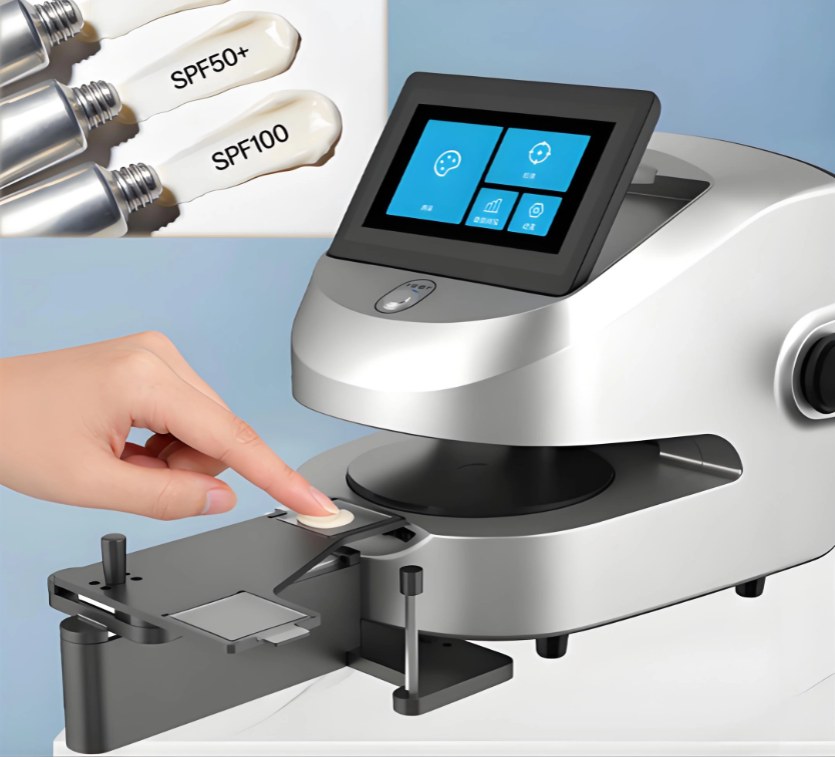
CHN SPEC SPF-660 Series for sunscreen research workflows
For sunscreen R&D teams, waiting for results after each formula adjustment can interrupt the development cycle. An in-house analyzer may support preliminary screening before samples are sent for further testing. This can help researchers compare formulations, identify samples that may not meet internal expectations, and focus subsequent work on the most promising candidates.
The CHN SPEC SPF-660 Series is presented for this preliminary laboratory stage. Following a formula adjustment, researchers can run a measurement and use the resulting information to guide the next iteration. The source material states that a single scan takes 1 second and that the system can provide data associated with SPF, UVAPF, and critical wavelength.
This role is especially relevant where teams want to keep formulation work moving while maintaining a structured approach to sample evaluation. Results from in vitro screening can inform development decisions, but laboratories should apply their own procedures when determining how data will be used in product development and evaluation.
Measurement and spectral capabilities
The series includes the models SPF-600, SPF-620, and SPF-660. According to the supplied product information, the available wavelength coverage across these models extends from 280–400 nm to 280–500 nm. The stated SPF determination range is 1–2000, providing a broad range for different sunscreen product research requirements.
Listed optical and measurement specifications include wavelength accuracy of ±0.1 nm, spectral resolution below 2 nm, and a 1 nm data interval. The analyzer uses a D/0 integrating-sphere optical structure. These stated characteristics are relevant when a laboratory needs detailed spectral data as part of its in vitro sun protection testing process.
Protection-related data points
The CHN SPEC SPF-660 Series is described as supporting evaluation related to SPF, UVAPF, critical wavelength, UVA/UVB protection, and high-energy visible light (HEVIS). Having these data points available within a single laboratory workflow may help teams organize formula comparisons more efficiently.
Different projects may prioritize different outcomes. A team developing a formula may focus on screening basic performance first, while another may need broader spectral information during research. The availability of multiple models in the series allows laboratories to consider the wavelength coverage that aligns with their testing scope.
Laboratory operation and connectivity
Practical operation matters when measurements are repeated throughout formula development. The supplied information lists a manual three-dimensional positioning platform for sample handling. It also lists USB and RS-232 interfaces, which can support connection requirements in a laboratory environment.
The optional AS01 reference plate set and AS02 test plate set are available for laboratories that need accessories suited to their measurement scenarios. Accessory selection should reflect the laboratory’s established testing process and the specific materials being evaluated.
Standards and compliance considerations
The source material states that the CHN SPEC SPF-660 Series is compatible with ISO, FDA, COLIPA, and Boots Star Rating sun protection testing standards, and references the Safety and Technical Standards for Cosmetics. For laboratories working with defined protocols or market-specific requirements, it is important to review the applicable method, product configuration, and internal validation needs before relying on any instrument output for a particular purpose.
In vitro screening can be a valuable part of a broader development program. It can help teams make faster decisions between formulation iterations and prepare samples for later stages of evaluation. However, the appropriate testing pathway depends on the intended product, applicable requirements, and the laboratory’s procedures.
Choosing the right SPF-660 Series configuration
When considering the CHN SPEC SPF-660 Series, begin by defining the required wavelength range and the types of data needed in the R&D workflow. The SPF-600, SPF-620, and SPF-660 models cover different needs within the stated 280–400 nm to 280–500 nm range. Teams should also consider accessory requirements, sample positioning practices, and how USB or RS-232 connectivity fits their laboratory setup.
For sunscreen developers, the key value of an in vitro analyzer is its potential to bring preliminary formula screening closer to the point of development. With rapid scanning, stated spectral capabilities, and support for several protection-related measurements, the CHN SPEC SPF-660 Series provides a laboratory-focused option for organizing sunscreen formula research and iteration.