What are radio waves?
Radio waves are a form of electromagnetic radiation in the electromagnetic spectrum, with wavelengths longer than infrared light. Similar to waves on a lake's surface, radio waves consist of a continuous series of repeating peaks and troughs. The entire series of waves before repetition is called the period, and wavelength measures the length of one period from one peak to the next.
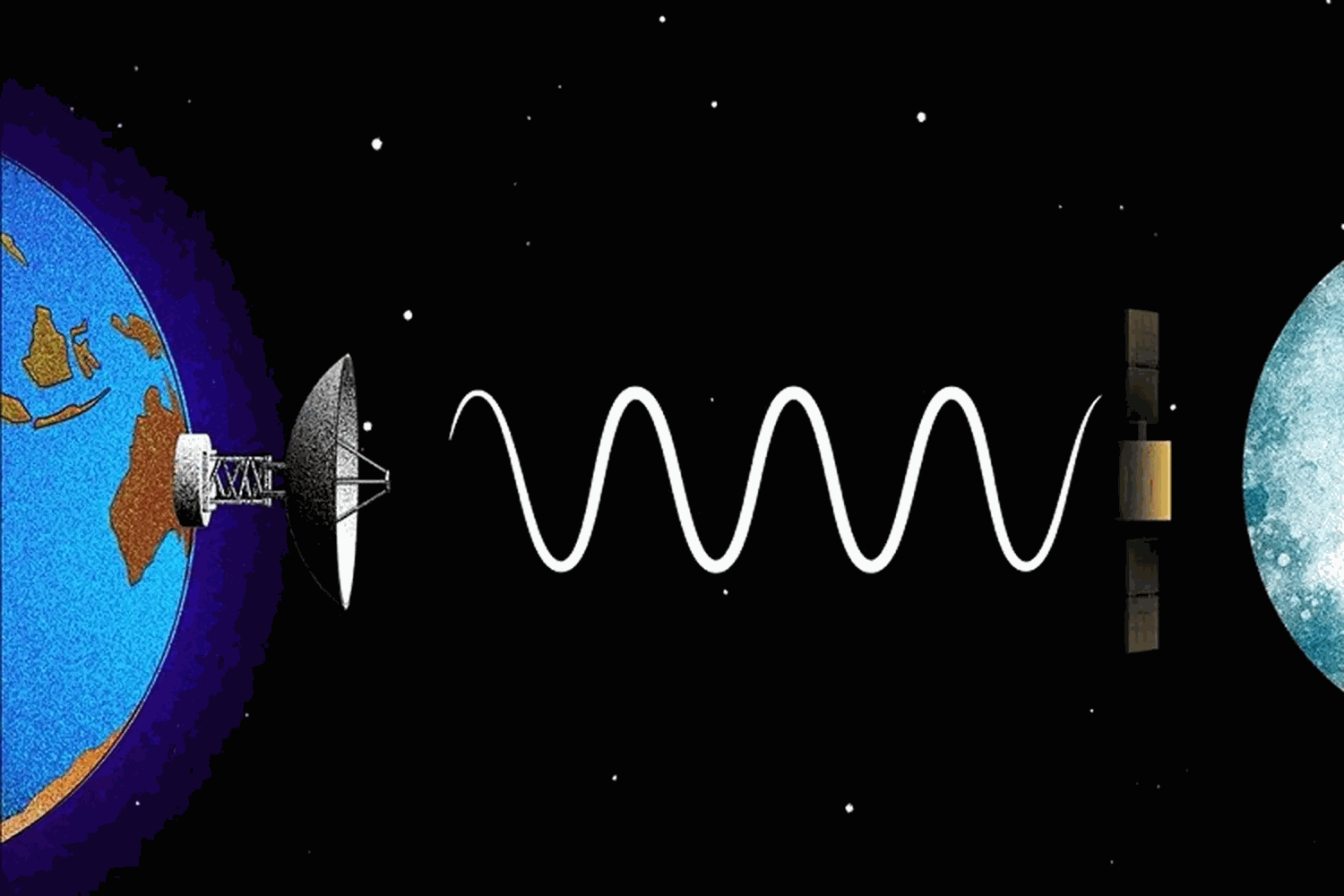
Frequency is the number of times a wave repeats per second, measured in hertz (Hz). The radio spectrum ranges from 3 kilohertz (kHz) up to 300 gigahertz (GHz). Radio waves are generated by transmitters and received by receivers via antenna systems. Transmitters convert electrical energy into radio waves and transmit them into space. Receivers receive signals from space and convert them back into electrical signals for data processing.
The history of radio wave development
The concept of radio waves first emerged through the prediction of James Maxwell, a Scottish mathematician, using the equations of electromagnetism. However, their actual existence was not proven until Heinrich Hertz conducted confirming experiments.
Radio waves were successfully implemented in practice by Guglielmo Marconi. He successfully transmitted information via radio waves and received the Nobel Prize for this scientific invention. Before being officially renamed radio waves in 1900, this type of wave was commonly known as Hertzian waves.
Types of radio waves
Radio waves are divided into two main types based on their propagation characteristics:
Long waves (ground waves): These can bypass obstacles and propagate over long distances, even crossing mountains along the Earth's contours. However, the signal may be attenuated when passing through the Earth's surface, which is not a perfect conductor.
Shortwave radio: Uses frequencies higher than the radio spectrum, including mid-frequency (MF) and high-frequency (HF) ranges from 1,800 to 30,000 kHz. The wavelength range is less than 200m.
The speed of radio waves traveling through the material medium follows the inverse square law. When signals travel long distances, they are susceptible to attenuation, leading to data loss. To overcome this, the relay transmission principle is used to amplify and retransmit the signal into the atmosphere.
The process of generating radio waves
Radio waves are formed when there is a rapid increase in electrical charge due to the movement or collision of materials. Objects and materials in the surrounding environment continuously emit radio waves, which is a characteristic of thermal radiation. Additionally, humans create artificial radio waves using transmitters specifically designed for frequency and power to transmit data or control equipment.
Diverse applications of radio waves
Radio waves are widely applied in modern society, from fixed-line communication to remote sensing and medicine.
1. Broadcasting and Television
Audio signals are modulated (AM/FM) and then encoded and transmitted through the air. The receiver tunes to the same frequency as the transmitter to extract the information.
2. Mobile Networks and Telecommunications
The ability of radio waves to penetrate solid materials like buildings makes them the foundation of mobile networks. To monitor signal density in residential areas, technicians often use the Tenmars TM-195 electromagnetic field meter to determine the intensity of high-frequency RF radiation from base stations or mobile phones, ensuring safe exposure.
3. RADAR (Radio Detection and Ranging)
Uses radio waves to detect the presence and location of objects. A RADAR device sends waves from its transmitting antenna and measures the time it takes for the waves to return after encountering an obstacle. Applications include aviation, maritime, and military.
4. Astronomy
Helps in the study of celestial bodies such as comets and planets. Radio waves are unaffected by fog or sunlight, providing accurate and continuous data.
5. Satellite Communication
Using satellites as relay stations to transmit information over long distances across continents, popularizing satellite television.
6. Remote Radio Communication
Used to track wildlife movement by attaching miniature transmitters to their bodies. Receivers display the results on a screen to aid in behavioral research.
7. Remote-Controlled Toys
The controller sends RF signals to the toy via the built-in transmitter, making it easy to operate cars, airplanes, or robots remotely.
8. Navigation and Air Traffic Control
Establishes a reliable communication network between aircraft and the ground via the VHF (Very High Frequency) band, maintaining a stable air-to-air connection.
9. Medical and Healthcare
Magnetic Resonance Imaging (MRI) is used to create detailed images of internal organs. In particular, radio waves assist in minimally invasive surgery. To ensure the safety of personnel operating low-frequency medical equipment, the Lutron EMF-827 EMF meter is a crucial device for identifying magnetic field leaks in the workplace.
10. Submarine Communication
Utilizing ultra-low frequency (ELF) allows for effective penetration into deep seawater without short-distance absorption.
Control of radio radiation in the workplace environment
Despite its many benefits, managing high-intensity RF radiation levels is a mandatory workplace safety requirement. Multifunctional devices like the Tenmars TM-190 radiation meter allow users to simultaneously check RF radio waves, magnetic fields, and electric fields. Having real-time readings helps establish safe operating distances for the equipment, avoiding concerns about the energy impact on the human body.
Hopefully, this article provides useful knowledge and helps readers gain a deeper understanding of radio waves. When radio waves are controlled using appropriate measuring equipment, they can become a powerful tool to support daily life and production.Hopefully, this article provides useful knowledge and helps readers gain a deeper understanding of radio waves. When radio waves are controlled using appropriate measuring equipment, they can become a powerful tool to support daily life and production.