What is manganese?
Manganese (Mn) is a pinkish-gray metal that looks quite similar to iron. It is hard but brittle, has a melting point much lower than other transition metals, and is susceptible to oxidation. Manganese only becomes magnetic when subjected to special treatment. In nature, Manganese is commonly found in mineral forms such as pyrolusite MnO2 or rhodochrosite MnCO3.
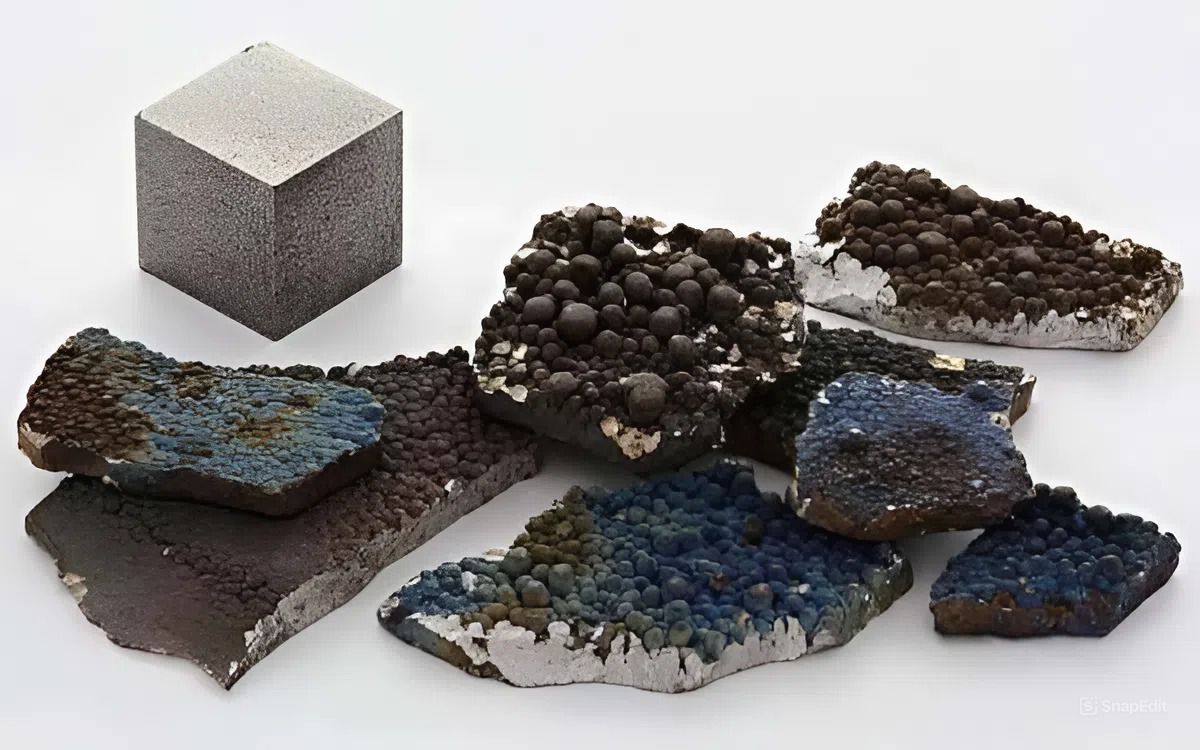
Physically, Manganese has a density of 7.44 g/cm³, melts at 1245 °C, and boils at 2061 °C. Chemically, it is a strong reducing metal. The most common and stable oxidation state of Manganese is +2.
Applications of Manganese in life
Manganese is an important element in both industry and agriculture due to its strong reducing properties and effective alloying ability.
- In metallurgy and steel production
This is the field that accounts for 90 percent of global Manganese production. When combined in Ferromanganese alloy, Manganese performs three main tasks:
+ Deoxidizing to remove excess oxygen to make steel less brittle
+ Desulfurization to neutralize, reduce the risk of cracking during hot working
+ Alloying to increase hardness, durability and wear resistance for steel products
- In energy and agriculture
Manganese Dioxide MnO₂ is used as anode material in alkaline batteries and carbon batteries, playing the role of accepting electrons to create electric current. In agriculture, Manganese in the form of salt MnSO₄ is an essential micronutrient for plants, especially important in the photosynthesis process.
- In water treatment and other fields
KMnO₄ potassium permanganate is a strong oxidizing agent, commonly used to remove dissolved iron and manganese, deodorize and disinfect water. In addition, manganese also appears in the production of ceramics and glass, where it is used as a colorant.
What about Manganese Sand?
Manganese sand is a water filtration material created by coating a layer of manganese dioxide MnO₂ on natural sand grains. This coating has strong oxidizing ability, usually brown in color, which helps increase treatment efficiency. Combined with the silica SiO₂ component of the base sand grains, the MnO₂ layer allows the removal of many impurities in water.

Thanks to this characteristic, Manganese sand is often used to treat well water, remove dissolved iron and manganese and deodorize domestic water. Its operating mechanism is based on the direct oxidation of iron and manganese ions when water comes into contact with the sand surface. These substances then turn into insoluble precipitates and are retained in the filter material layer, significantly improving water quality.
The impact of manganese in domestic water on health
Water containing manganese exceeding the threshold is often brown or black, easily causing an unpleasant fishy smell. When used for a long time, manganese accumulated in the body can affect the nervous system, digestion and some other functions. In addition, water contaminated with manganese also reduces the quality of daily life, clothes are easily stained after washing, pipes and tanks are clogged with sediment. According to the standards of the World Health Organization WHO, the concentration of manganese in drinking water should not exceed 0.4 mg/L. In Vietnam, the National Technical Regulation QCVN 01:2009/BYT also sets a similar limit for domestic water. When exceeding this number, the water is no longer safe for direct drinking or long-term use.
How to test manganese in water at home
Manganese-contaminated water can be detected with the naked eye. If after settling, the water is cloudy brown, leaving residue on the tank wall or yellow stains on clothes, it is likely that manganese has exceeded the allowable level. However, this method is for reference only because it does not give accurate results.
For more specific testing, you can use a quick manganese test kit or specialized measuring devices. Handheld manganese metersmanganese meters at EMIN such as HANNA HI97748C often give direct results in just a few minutes, suitable for families using well water or small units that want to control water quality regularly.
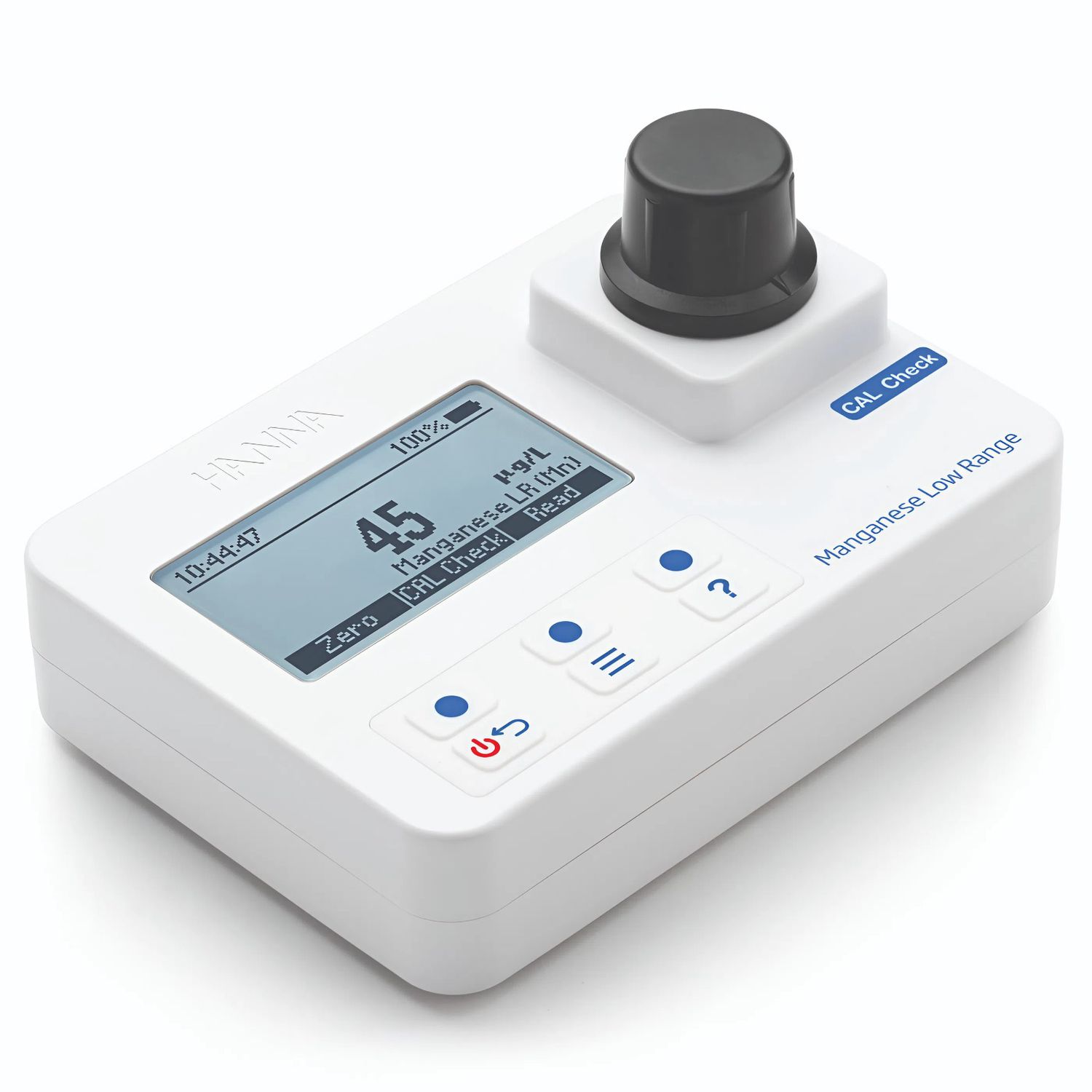
Above is the most basic and practical information about manganese, from its properties, applications, to its impact in domestic water. If you suspect that your water source contains manganese exceeding the threshold, you can refer to the measuring devices that EMIN is providing for accurate and quick testing. Understanding and proactively controlling manganese not only helps protect your health but also improves the quality of your daily life.