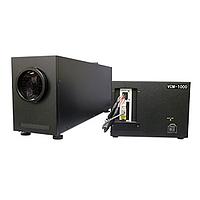
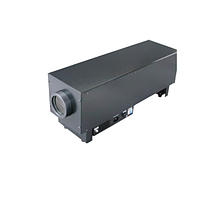
コリメーター
Precise optical alignment and repeatable image evaluation depend on a stable reference target. In inspection, lens testing, and camera-related measurement workflows, a collimator helps simulate a distant target so engineers can assess focus behavior, optical axis alignment, resolution patterns, and image quality under controlled conditions.
This category brings together collimator systems used in optical testing environments, especially where consistent luminance, known chart patterns, and defined focal conditions are important. Whether the task involves visible-light inspection or near-infrared evaluation, selecting the right setup starts with understanding the test distance simulation, light source characteristics, and the optical format required by the device under test.

What a collimator is used for in optical testing
A collimator is commonly used to present a target as if it were located at infinity or at a defined virtual distance. This makes it useful for checking how a camera, lens, or imaging module responds when focusing on distant objects without requiring a long physical test range. In practice, that helps save space while improving repeatability in lab and production environments.
In many workflows, the collimator is paired with a chart such as a Siemens star or other test pattern. This supports evaluation of focus accuracy, optical centering, contrast behavior, and general image sharpness. For broader imaging inspection setups, it may also be useful to review related camera tester solutions when building a more complete test station.
Typical configurations in this category
The products in this range include several optical configurations designed for different test conditions. Some models are intended for infinity-position testing, while others support adjustment from infinity to shorter working distances. Lens diameter and focal length also vary, which can affect the virtual image condition and suitability for specific imaging assemblies.
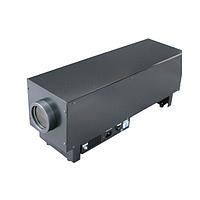
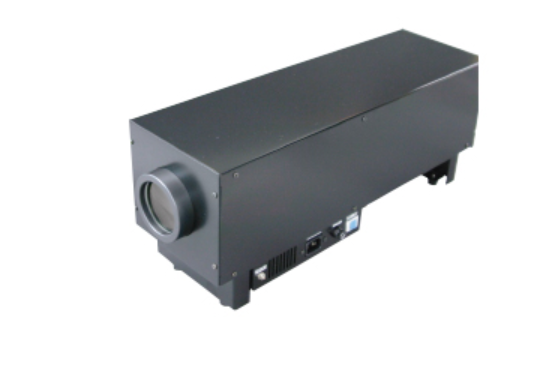
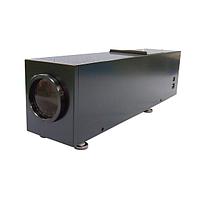
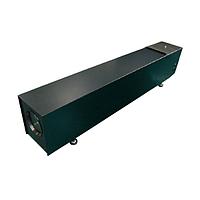
Light source selection is another practical difference. White LED-based units are relevant for visible-light camera and lens inspection, while near-infrared models support applications where IR sensitivity must be checked. A compact example is the Kyoritsu Electric VC-1200 Video Collimator, while models such as the VC-3200, VC-4200, and VCM-1000 provide other optical and brightness ranges for different evaluation needs.
Visible-light and infrared options
For standard imaging systems operating in the visible spectrum, white LED collimators are often the preferred starting point. They provide a controlled illuminated target for checking focus and image response under stable lighting conditions. Depending on the model, luminance ranges and optical dimensions differ, which can matter when matching the test setup to sensor sensitivity or lens characteristics.
Where the application involves IR-capable cameras or optical modules, a dedicated infrared unit is more appropriate. The Kyoritsu Electric VC-3800IR is an example in this category, using an 850 nm near-infrared source for evaluation beyond visible light. This is especially relevant when the device under test includes IR response functions that cannot be properly assessed with a standard visible-light target.
How to choose the right collimator
The first selection point is the intended test condition: infinity focus only, or a range that includes shorter virtual distances. If the application requires variable positioning, a model like the Kyoritsu Electric VCM-1000 may be more suitable than a fixed infinity configuration. This can be important for validating autofocus behavior, image module adjustment, or multi-distance inspection procedures.
Next, consider the optical side of the setup: chart format, lens size, focal length, and target brightness. A longer focal length configuration such as the VC-4200 may fit different evaluation scenarios than a more compact unit like the VC-1100 or VC-1200. If the broader test process also depends on illumination verification, a complementary light meter can help confirm brightness conditions around the inspection environment.
Kyoritsu Electric collimators in this lineup
Kyoritsu Electric is the featured manufacturer in this category, with a lineup that covers compact video collimators, standard visible-light collimators, and infrared variants. The range includes models with different lens assemblies, luminance characteristics, and physical sizes, which helps address both bench-top testing and more specialized optical inspection requirements.
Examples include the VC-1100 for compact visible-light testing, the VC-1200 Video Collimator with white LED illumination, the VC-3200 and VC-4200 for other focal configurations, and the VCM-1000 for applications needing an adjustable focus position from infinity to 300 mm. Rather than choosing only by model name, it is more effective to compare the intended optical task, working method, and compatibility with the target device.
Where collimators fit in a measurement workflow
Collimators are rarely used in isolation. In many facilities, they are part of a larger optical inspection process that may include chart evaluation, brightness measurement, color-related checks, and camera performance verification. When the goal is to build a more consistent optical bench, it can be useful to look at adjacent tools such as color sensors for additional feedback in light-sensitive applications.
This broader perspective is valuable for engineering teams working on imaging modules, lenses, sensor assemblies, or optical sub-systems. A well-matched collimator improves test repeatability, but the surrounding measurement environment also influences final results. Alignment method, illumination control, and the right target pattern all contribute to reliable evaluation.
Practical buying considerations
Before selecting a unit, review the type of source needed, the required target brightness or radiant output, the expected working distance simulation, and the physical footprint available in the test area. Power supply compatibility and interface requirements may also matter, especially if the collimator will be integrated into a semi-automated inspection process.
It is also worth checking whether the main need is routine visible-light focus inspection, IR evaluation, or a more flexible optical bench arrangement. That distinction often narrows the choice quickly and avoids over-specifying the setup. For production and laboratory users alike, the best result usually comes from matching the collimator to the actual measurement objective rather than selecting only by maximum specification values.
Conclusion
A suitable collimator system helps create a controlled and repeatable optical reference for focus testing, image evaluation, and alignment work. In this category, the available Kyoritsu Electric models cover several practical needs, from compact visible-light units to adjustable and infrared-capable configurations.
If you are comparing options, focus on the required virtual distance, light source type, optical configuration, and how the instrument will fit into the rest of your inspection workflow. That approach makes it easier to identify a collimator that supports reliable testing without adding unnecessary complexity.
数量割引、まとめ買い価格の更新、新製品情報をメールでお届けします。
登録することで、当社の利用規約およびプライバシーポリシーに同意したものとみなされます。
認定専門家へ直接アクセス