롤러 배양 장치
Consistent bottle rotation is a practical requirement in many cell culture and laboratory workflows, especially when uniform exposure, gentle agitation, and repeatable incubation conditions matter. Roller Culture Apparatus systems are designed for this purpose, helping laboratories handle suspension cultures, tissue culture bottles, and similar vessels in a controlled and scalable way.
Within this category, users typically look for more than simple motion. They need the right deck configuration, compatibility with bottle quantities, and an overall setup that fits available incubator space or existing culture processes. This page brings together roller culture equipment and related components suited to those needs.

What roller culture apparatus is used for
A roller culture system rotates culture bottles slowly and evenly to support mixing and surface wetting without the aggressive motion associated with high-speed shakers. This makes it useful in laboratory environments where cells, media, and culture vessels benefit from steady, low-impact movement over extended periods.
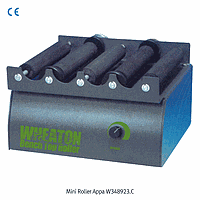
These systems are commonly selected for workflows involving multiple bottles processed at the same time. Compared with a general-purpose roller mixer, a roller culture apparatus is typically more application-specific, with deck-based layouts and configurations intended for organized bottle handling inside or alongside incubation setups.
Typical configurations in this category
One of the main differences between models is capacity. Some laboratories only need a compact unit for a few bottles, while others require multi-deck arrangements to support larger batch sizes or parallel culture runs. That is why this category includes both smaller and higher-capacity apparatus options.
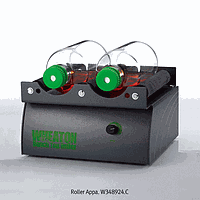
Examples include compact configurations such as the Wheaton WH.W348924.C roller apparatus with 1 deck for 2 bottles, as well as modular deck-based units like the Wheaton WH.WSBMR5010.C, WH.WSBMR5020.C, WH.WSBMR5060.C, and WH.WSBMR5070.C, which scale from 1 deck for 5 bottles up to 7 decks for 35 bottles. For users planning future expansion, components such as the Wheaton WH.W348930.CH additional deck kit can also be relevant within the broader system design.
Modular systems for changing laboratory needs
In many B2B laboratory settings, equipment is chosen not only for current throughput but also for how easily it can adapt. A modular system can be especially useful when production, research scope, or batch frequency changes over time. Instead of replacing an entire setup, users may prefer to add capacity in stages.
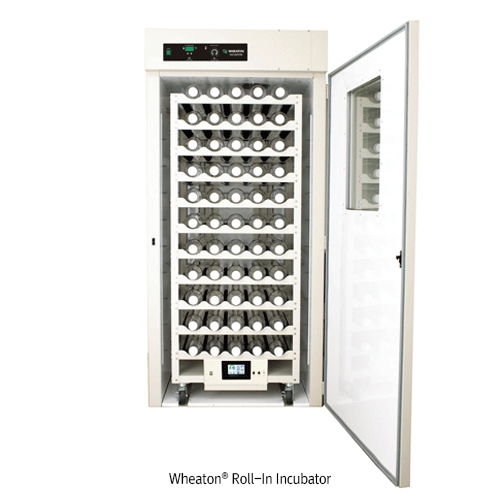
This is where solutions such as the Wheaton roller apparatus range become relevant. Products like the Wheaton WH.W348887 modular roller apparatus system and the Wheaton WH.W753684.C.E incubator roll-in 230vac suggest an ecosystem approach, where rotation hardware, incubation compatibility, and expansion accessories can work together as part of a coordinated lab arrangement.
Choosing the right roller culture apparatus
The first selection factor is usually the bottle count per run. A small research lab may only need a 1-deck system, while larger labs may prefer multi-deck apparatus to support higher sample volumes. Matching the number of decks to actual workflow helps avoid both underutilized equipment and capacity bottlenecks.
The second factor is installation context. Some users need a standalone roller unit, while others need equipment intended for incubator integration or roll-in use. Accessories such as the Wheaton WH.753685 incubator shelf may matter when building out a complete setup rather than purchasing only the main roller platform.
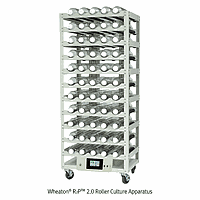
It is also worth considering whether a standard modular spacing layout or an R2P 2.0 type configuration is more suitable for the intended process. Models such as the Wheaton WH.WRBPR5010.C, WH.WRBPR5030.C, and WH.WRBPR5110.C illustrate how capacity and platform format can vary across the category.
How this category fits into the broader lab mixing workflow
Roller culture apparatus does not replace every form of laboratory mixing. It serves a specific role where bottle rotation and prolonged gentle movement are central to the process. For other sample preparation or agitation needs, laboratories may also evaluate equipment such as a digital rotator for controlled rotational motion or a vortex mixer for rapid tube mixing.
Understanding that distinction helps buyers choose based on application rather than on product name alone. If the workflow involves culture bottles, repeated runs, and stable low-speed rolling, this category is the more appropriate place to start.
Why deck layout and scalability matter
In routine laboratory operation, deck layout affects both usability and process consistency. A clear multi-deck structure makes it easier to organize bottles, monitor loading, and standardize runs between operators. This becomes more important as throughput increases or when multiple culture conditions are handled in parallel.
Scalability also matters for procurement planning. A laboratory may begin with a smaller platform such as a 1-deck or 3-deck unit, then move to larger arrangements like 6-deck, 7-deck, or 11-deck systems as demand grows. That progression can support better long-term equipment planning than treating each purchase as a one-off decision.
Common questions about roller culture apparatus
Is this category only for large-scale laboratories?
No. The category includes compact configurations for low bottle counts as well as higher-capacity systems for larger workflows.
Are accessories included here as well as main units?
Yes. In addition to primary roller apparatus models, this category may include supporting items such as incubator shelves or additional deck kits that help complete or expand an existing setup.
How is this different from a standard roller mixer?
A roller culture apparatus is generally oriented toward bottle culture workflows, with deck-based designs and configurations that better suit organized culture handling over time.
Find a setup that matches your workflow
Choosing the right roller culture equipment comes down to process fit: vessel type, required capacity, incubation arrangement, and room for future expansion. A well-matched system can simplify daily operation and provide more consistent handling across repeated culture runs.
Whether you need a compact unit for a few bottles or a larger multi-deck platform, this Roller Culture Apparatus category is intended to help narrow the options to systems and accessories that align with real laboratory use cases.
인증된 전문가에게 직접 연결