The Importance of Mobility in Data Management
The value of mobile barcode readers is the ability to process data right at the workplace, without having to carry the product back to a fixed station. This mobility completely solves the biggest problem of manual management: delays and errors.
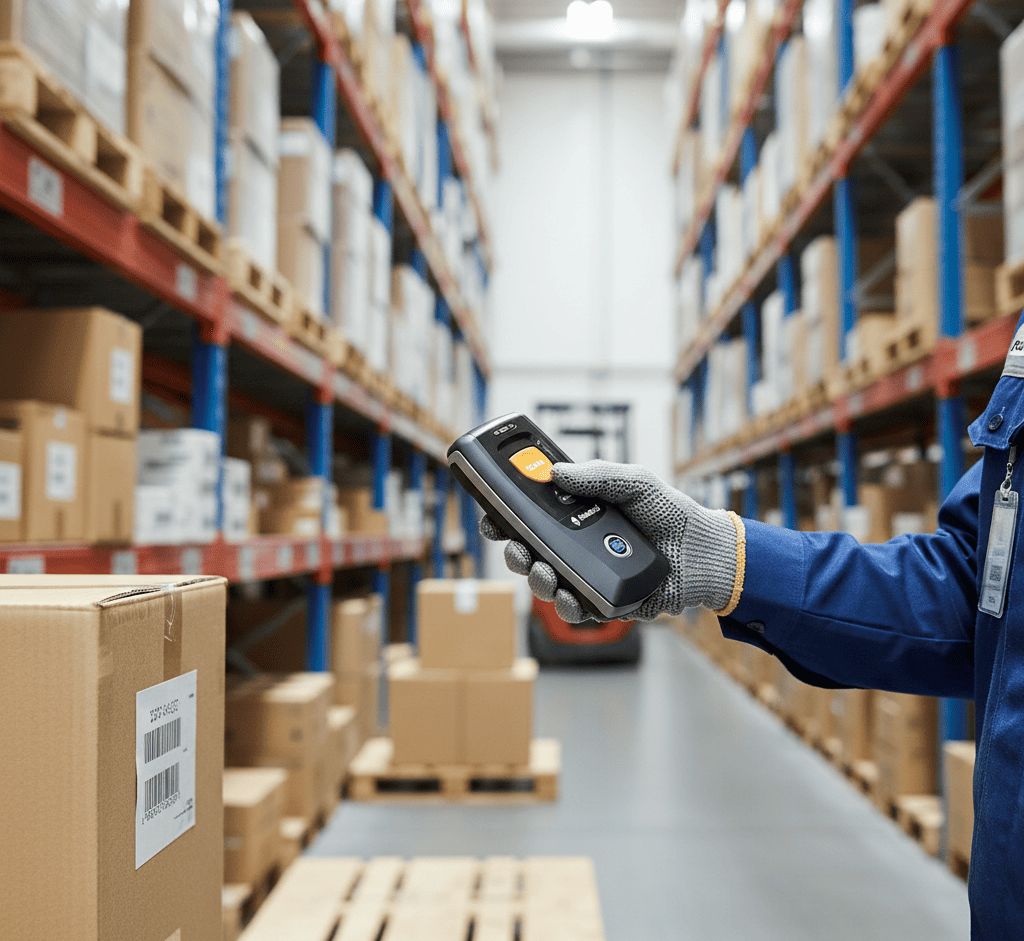
When warehouse staff use mobile devices to take inventory of goods, the scanning and quantity input operations will be stored and synchronized instantly with the warehouse management system (WMS) or enterprise resource planning system (ERP). Inventory data is always accurate and updated in real time. For the supply chain, eliminating data latency is a key factor in optimizing the flow of goods, making timely purchasing and shipping decisions, thereby saving costs and improving service quality.
Some applications of the machine:
Mobile barcode readers are present in many fields, playing an important role in creating a smooth operating process:
In Logistics and Distribution: This device is used to check the bill of lading, sort the package, verify the delivery location and record the status of the goods. When the delivery staff scans the barcode on the package, the information is sent to the center immediately, allowing customers to clearly track the package's journey.
In Retail and Inventory Control: In supermarkets, mobile devices are used to check prices and enter inventory data right at the shelves. This method reduces errors when entering manually and shortens inventory time from days to hours.
In Medicine and Health Care: At the hospital, mobile devices scan barcodes on patient wristbands, records, and medications. This helps accurately identify patients and medications, minimizing the risk of confusion during treatment.
Valuable Technical Criteria That Buyers Need To Guide
When considering a mobile barcode reader, focus on long-term value. The following factors are guiding factors for a sustainable investment:
- Physical Durability (Environmental Resistance): If the device operates in harsh environments (cold storage, outdoors), look for devices with IP65 or higher standards and MIL-STD-810G shock resistance standards. This ensures stable operation of the device, prolongs its life and reduces repair costs.
- Code Scanning: Most modern machines use 2D Area Imager technology. If you work in a large warehouse, consider models with Long-Range scanning. The ability to scan codes from a distance is a key factor in employee productivity when handling goods on high shelves.
- Operating System Platform: Choosing a device running an open operating system such as Android makes it easy to integrate with warehouse management software (WMS) or custom applications.
Related articles: The importance of desktop barcode readers, specifically how are they applied?