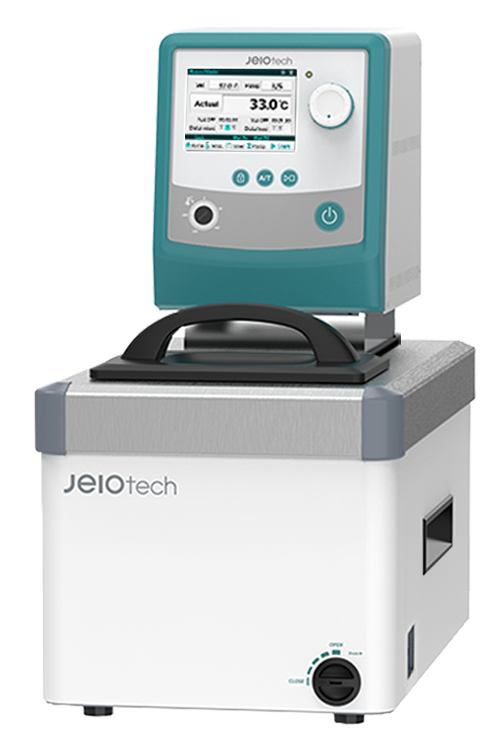
In laboratories, material research centers, and product quality testing facilities, high-temperature circulating baths are widely used to maintain stable thermal conditions over extended periods. While heaters and temperature controllers are essential components, the actual temperature performance of the system is also heavily influenced by the heat transfer fluid inside the bath.
Selecting an unsuitable fluid can lead to poor temperature uniformity, increased oxidation at elevated temperatures, deposits on heating elements, and even damage to circulation pumps. In contrast, a properly chosen fluid helps ensure stable operation, extends equipment life, and improves the accuracy of testing procedures.
The Role of Heat Transfer Fluids in Circulating Baths
In a circulating bath, the fluid acts as the medium that transfers heat from the heating element to the test sample or device being evaluated.
Compared with air, liquids have significantly higher heat capacity and thermal conductivity. This allows heat to be distributed more evenly throughout the bath, minimizing temperature variations between different locations.
For high-temperature applications, good heat transfer alone is not enough. The fluid must also remain chemically stable over long operating periods. When a fluid degrades or evaporates rapidly, heating efficiency decreases and operating costs increase.
Why Water Is Not Suitable for High-Temperature Applications
Water is the most commonly used heat transfer medium in standard water bath due to its low cost and excellent thermal properties.
However, water is only suitable for low- and medium-temperature applications. As temperatures approach or exceed 100°C, evaporation increases significantly, system pressure changes, and maintaining stable temperature control becomes more difficult.
In addition, prolonged use of water can contribute to corrosion of certain metal components. For applications requiring temperatures between 150°C and 300°C or higher, specialized heat transfer oils are generally the preferred solution.
Key Factors to Consider When Selecting a Heat Transfer Fluid
Operating Temperature Range
Every heat transfer fluid has a recommended operating temperature range. When exposed to temperatures beyond its specified limit, the fluid may oxidize or undergo thermal degradation, resulting in deposits and reduced heat transfer performance.
For example, many silicone oils can operate reliably between 250°C and 300°C, while some mineral oils are recommended only for temperatures below 200°C.
As a general guideline, the selected fluid should have a maximum operating temperature at least 20°C to 30°C higher than the intended operating temperature to ensure long-term stability.
Viscosity
Viscosity directly affects fluid circulation within the system.
If the viscosity is too high, the circulation pump must work harder, flow rate decreases, and temperature uniformity throughout the bath may be compromised.
Lower-viscosity fluids generally provide more efficient heat exchange and allow the system to respond more quickly to temperature changes.
Thermal Stability and Oxidation Resistance
During continuous operation, heat transfer fluids are constantly exposed to elevated temperatures and atmospheric oxygen.
Fluids with strong oxidation resistance retain their thermal properties for longer periods and are less likely to discolor, form deposits, or generate unpleasant odors during use.
Flash Point and Safety
Safety is always a critical consideration in high-temperature applications.
A higher flash point reduces the risk of fire. For operating temperatures above 200°C, it is advisable to select a heat transfer oil with a flash point significantly higher than the actual working temperature.
Common Types of Heat Transfer Fluids
Silicone Oil
Silicone oil is one of the most widely used fluids for high-temperature circulating baths, despite its relatively high cost.
It is commonly used in laboratories, material testing systems, temperature sensor calibration, and chemical research applications.
Its key advantages include excellent thermal stability, strong oxidation resistance, and a wide operating temperature range. Many silicone oils remain stable at temperatures exceeding 250°C.
Mineral Heat Transfer Oil
Mineral oil is widely used in industrial applications because of its lower initial cost compared with silicone oil.
It performs well in medium- and high-temperature systems but typically has a lower maximum operating temperature.
When exposed to elevated temperatures for extended periods, mineral oils tend to age more rapidly and may require periodic replacement.
Synthetic Heat Transfer Fluids
Synthetic fluids are specifically engineered for applications requiring exceptional thermal stability and extended service life.
Although their initial cost is higher, they can significantly reduce maintenance and replacement expenses over time.
These fluids are commonly found in advanced research laboratories and testing systems that operate continuously at elevated temperatures for several days.
Common Mistakes When Using Heat Transfer Fluids
Using a fluid outside its recommended temperature range is one of the most common causes of performance issues. Over time, the fluid may darken, form deposits, or produce smoke during heating.
Mixing different types of heat transfer oils should also be avoided. Incompatible chemical compositions can alter thermal properties or cause precipitation within the system.
Another common mistake is neglecting routine fluid inspections. As the fluid deteriorates, temperature control performance gradually declines even though the controller itself may continue to operate normally.
Selecting a Fluid Based on Operating Temperature
For circulating baths operating below 90°C, water or water-based solutions with additives remain an economical and effective option.
For temperatures between 100°C and 200°C, mineral heat transfer oils generally provide satisfactory performance.
When operating temperatures exceed 200°C, silicone oils or synthetic heat transfer fluids are typically more suitable due to their superior thermal stability and oxidation resistance.
Users should always consult the equipment manufacturer's technical documentation to ensure that the selected fluid is compatible with the circulating bath and recommended for the intended operating conditions.
Selecting the appropriate heat transfer fluid based on operating temperature range, viscosity, oxidation resistance, and safety requirements helps a Thermostatic Bath maintain stable performance over the long term while significantly reducing maintenance and replacement costs.