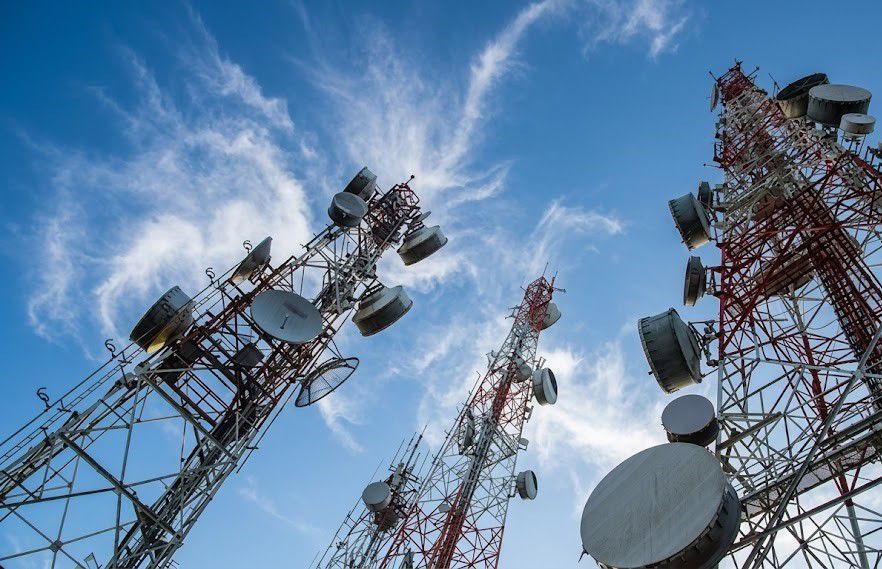
Seeing a new BTS (Base Transceiver Station) tower appear on a neighbor's rooftop or near a residential area, many people often have a common question: does living near a mobile phone base station for an extended period affect their health?
This concern is quite common, especially given the conflicting information surrounding electromagnetic radiation, 4G and 5G waves, and the risk of cancer. However, the majority of scientific conclusions over the years have presented a different picture.
What type of radiation is emitted from a BTS station?
The radio waves emitted by base transceiver stations (BTS) belong to the group of non-ionizing radiation, similar to WiFi, radio, or Bluetooth. The major difference between ionizing and non-ionizing radiation lies in the energy emitted.
Ionizing radiation, such as X-rays and gamma rays, can damage cell structures. In contrast, the radio waves from BTS stations do not have enough energy to cause this. The only observed physical effect is the generation of heat, but only at very high intensity.
Under normal living conditions, the energy level humans are exposed to is much lower than the threshold for causing harm.
What does the WHO say about the impact of BTS stations?
The World Health Organization (WHO) has compiled a series of studies spanning many years concerning electromagnetic fields and human health.
The conclusions published by the WHO are:
There is no convincing scientific evidence to prove that weak radio frequency signals from base stations have harmful effects on health.
The International Commission on Non-Ionizing Radiation Protection (ICNIRP) also sets safe exposure limits for the frequency range from 100 kHz to 300 GHz, covering all current mobile technologies. These limits are being applied by many countries, including Vietnam.
Do houses located directly beneath BTS base stations receive the strongest radiation?
Conversely, this location has a relatively low electromagnetic field intensity.
The antennas of the BTS (Base Transceiver Station) mainly transmit horizontally to extend the signal range. The energy is not concentrated at the base of the tower.
Therefore, households located directly below or close to the station receive significantly lower electromagnetic field levels compared to areas a few tens of meters away that are directly in the direction of the signal.
This surprises many people, as the common intuition is that the closer to the station, the greater the danger.
What are the actual radiation levels in large residential areas?
In Vietnam, QCVN 8:2022/BTTTT stipulates the electromagnetic field exposure limits for BTS (Base Transceiver Station) towers.
The limit for electromagnetic fields in the common frequency band is approximately 27.5 V/m.
Meanwhile, many measurements in residential areas show that the actual intensity usually only fluctuates around:
- 0.0008 V/m
- 0.001 V/m
- 0.002 V/m
These figures are thousands to tens of thousands of times lower than the permissible limit. Because of this significant difference, health and telecommunications experts assess that the exposure level from typical BTS towers is within the safe range.
How does Vietnam manage BTS (Base Transceiver Station) towers?
Before being put into operation, each BTS station must undergo inspection according to regulations of the Ministry of Science and Technology and the Ministry of Information and Communications. Only facilities that fully meet national standards are allowed to operate.
The SAR level regulated in Vietnam is 0.4 W/kg, which is considerably stricter than:
+ ICNIRP: 2 W/kg.
+ European Union: 2 W/kg.
+ Japan: 2 W/kg.
+ USA and Australia: 1.6 W/kg.
This shows that the safety requirements for telecommunications infrastructure in Vietnam are quite stringent.
Is 5G more dangerous than 4G?
This is a question that has been searched extensively in recent years. Essentially, 5G waves still belong to the non-ionizing radiation group, just like 2G, 3G, or 4G.
Higher frequency doesn't necessarily mean more dangerous. The important factors are the transmission power level and exposure limits.
The 2020 ICNIRP guidelines cover 5G technology and have not found any scientific evidence showing that 5G waves affect health when used within the specified limits.
Is it possible to measure the electromagnetic field around a house yourself?
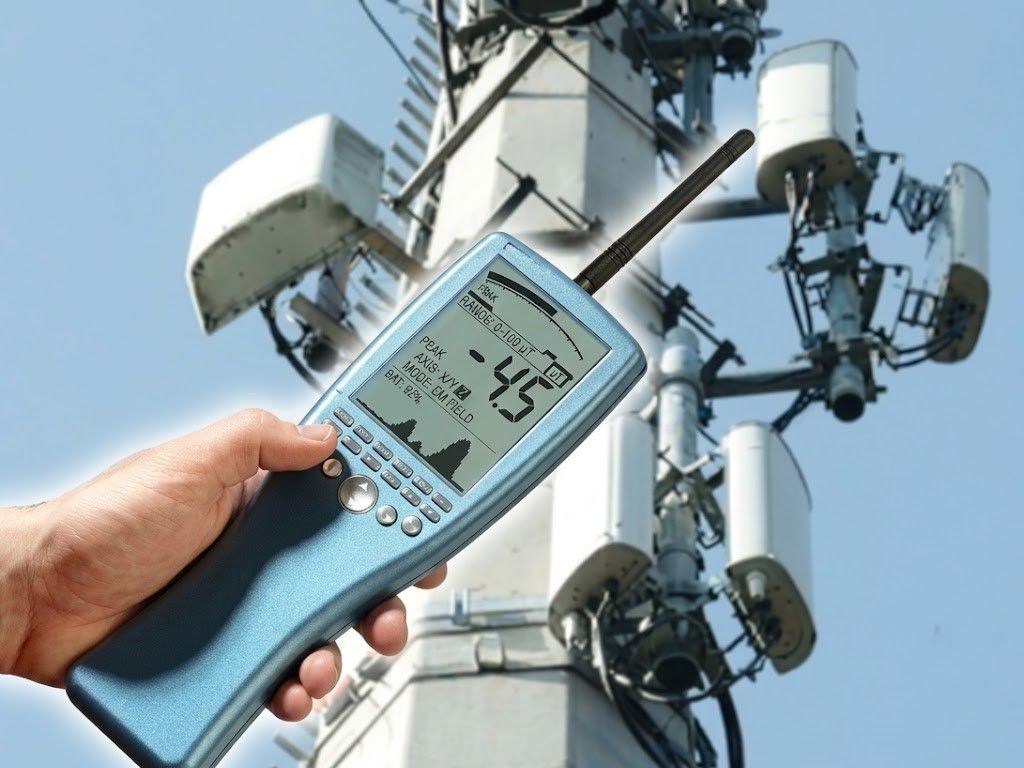
Absolutely. At testing facilities, research centers, or telecommunications companies, surveying electromagnetic field levels often utilizes specialized equipment such as:
Lutron EMF-839 Electromagnetic Field Meter
Tenmars TM-190 Electromagnetic Field Meter
These devices allow for the determination of electric field strength, magnetic field strength, and power density at specific locations. Actual measurement results often provide far more objective answers than information circulating on social media.
See the full details at EMIN Magnetic Field Measurement Equipment
Should you be overly worried about living near a BTS station?
After decades of research and thousands of scientific studies worldwide, there is no strong evidence to prove that base transceiver stations (BTS) harm human health when operating according to standards.
Most concerns stem from the feeling of "seeing the transmission tower," leading to the association with some unseen danger.
In reality, the electromagnetic fields that humans are exposed to daily from WiFi, mobile phones, internet routers, and other electronic devices all fall within the same group of non-ionizing radiation.
If you still have concerns about your surrounding environment, the most reliable solution is always to measure using specialized equipment and compare the results with national standards or recommendations from the WHO and ICNIRP, rather than relying on intuition or unverified rumors.