Indoor fluorescent lighting
Fluorescent lamps produce light through the phenomenon of electric discharge between two electrodes in a gas environment containing mercury vapor. The alternating current passes through a circuit with a starter and ballast, ionizing the gas and emitting ultraviolet rays, then the fluorescent powder inside the tube converts it into visible light.
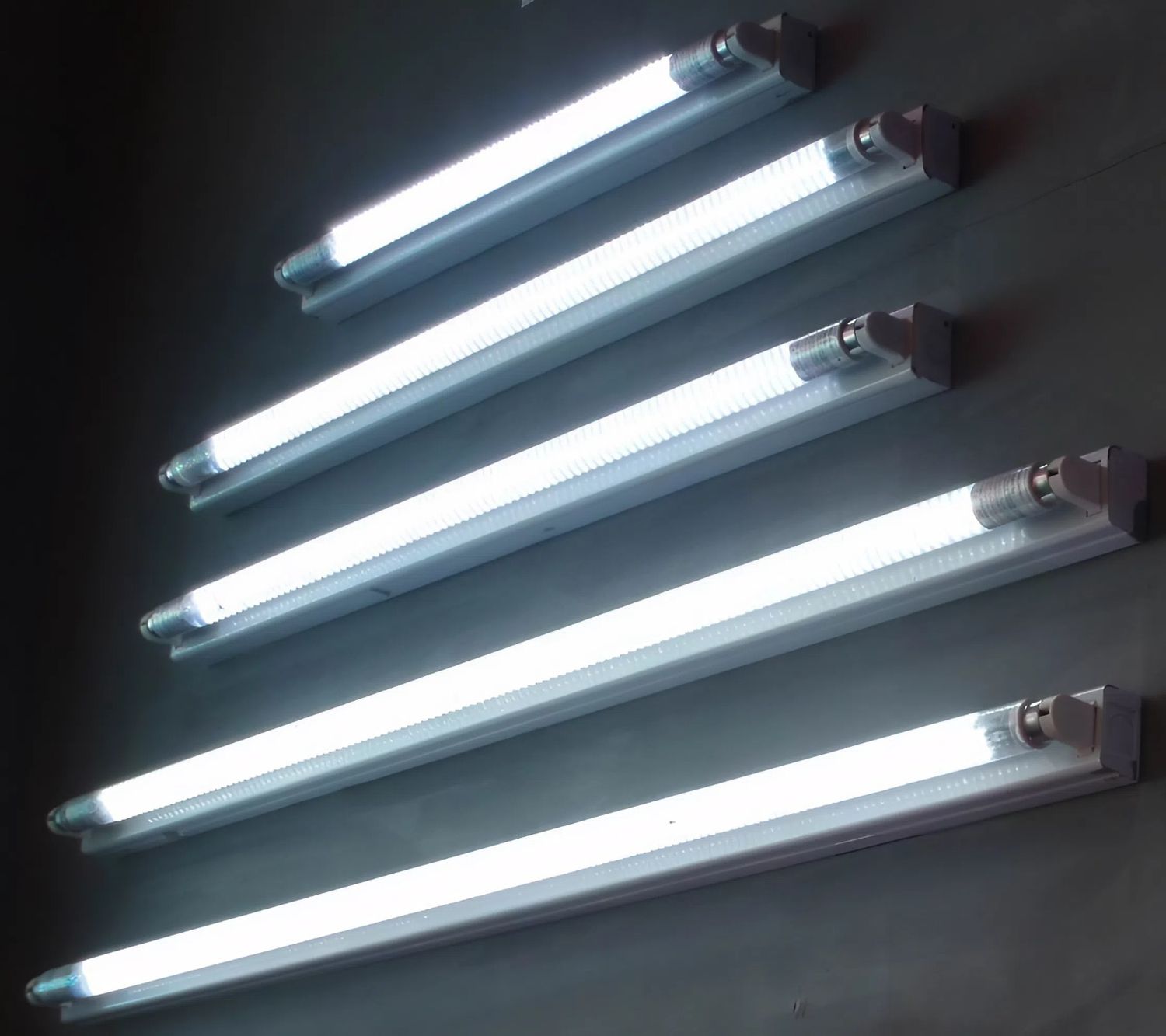
This type of lamp is often installed in production areas with moderately high ceilings, where wide and even light is needed. However, the disadvantage is that the lamp is prone to flickering if the ballast is degraded, emits a small amount of heat and contains mercury, which must be handled properly when replacing.
In terms of cost, fluorescent lamps are average, easy to replace, but require regular maintenance to ensure stable lighting.
LED lights in factories
LEDs emit light based on the electroluminescence phenomenon of semiconductor materials. The current running through the diode releases energy in the form of photons, creating almost instantaneous, flicker-free light. The electronic control circuit in the lamp helps maintain a stable light intensity and can customize the light color according to the working environment.
LEDs have a lifespan many times longer than traditional lamps, consume less electricity and generate almost no significant heat. Thanks to their superior luminous efficiency and the ability to save 50 to 80 percent of electricity, LEDs have become the top choice for factories that need continuous lighting, especially in sophisticated production areas or warehouses that operate 24/7.
Halogen lamps in factories
Halogen lamps belong to the improved incandescent lamp group, operating based on the reaction between tungsten filament and halogen gas (usually iodine or bromine). The electric current heats the filament to more than 2500°C, creating bright and concentrated white light.
The advantage of halogen is strong brightness, faithful reproduction of object colors, suitable for areas requiring spot lighting, such as product quality inspection areas or small part processing areas. However, low luminous efficiency, high power consumption and high heat emission make this type of lamp less suitable for closed environments or areas requiring energy saving.
In addition, halogen life is short, usually only a few thousand hours, so it needs to be replaced periodically.
Overall technical comparison
The three types of lamps, fluorescent, LED and halogen, have distinct differences in luminous efficiency, lifespan and energy consumption.
Lighting efficiency: LEDs produce the most light per watt, at around 90 to 150 lumens per watt. Fluorescents come in second at 40 to 70 lumens per watt, while halogens only produce 10 to 20 lumens, making them better suited for spot lighting rather than general area lighting.
Lifespan of lamps: LEDs can operate from 30,000 to more than 100,000 hours, many times longer than fluorescent (7,000 to 15,000 hours) and completely superior to halogen (2,000 to 3,000 hours). This gap clearly shows the advantage of LEDs in continuously operating factory environments.
Power consumption and heat dissipation: LEDs are the most energy efficient, using up to 50 to 80 percent less energy than fluorescent and halogen. Fluorescents are moderately energy efficient, while halogens consume a lot of energy and generate a lot of heat, which can be detrimental in enclosed spaces or areas with already high temperatures.
Light stability: LEDs maintain a steady light, do not flicker, and are less affected by voltage fluctuations. Fluorescents can flicker if the ballast is weak or the starter is worn out. Halogens are more stable than fluorescents, but they emit a lot of heat, causing the surrounding environment to heat up quickly.
Environmental impact: LEDs are the greenest option, containing no mercury and generating little heat. Fluorescents contain mercury vapor, which must be collected and treated separately when disposed of. Halogens do not contain heavy metals but consume a lot of energy, increasing the heat load on the factory's cooling system.
In addition to choosing the right fluorescent lamps, businesses should quickly equip themselves with electrical network measuring/testing equipment to ensure the lighting system operates stably. For example, EMIN currently distributes the SEW 2726 NA electrical network analyzer, which is capable of measuring voltage, current, and analyzing power quality to help detect electrical shock or light flickering early, thereby ensuring that the brightness of fluorescent lamps is not affected by weak storage or unstable power sources.
So what type of light is suitable for the factory?
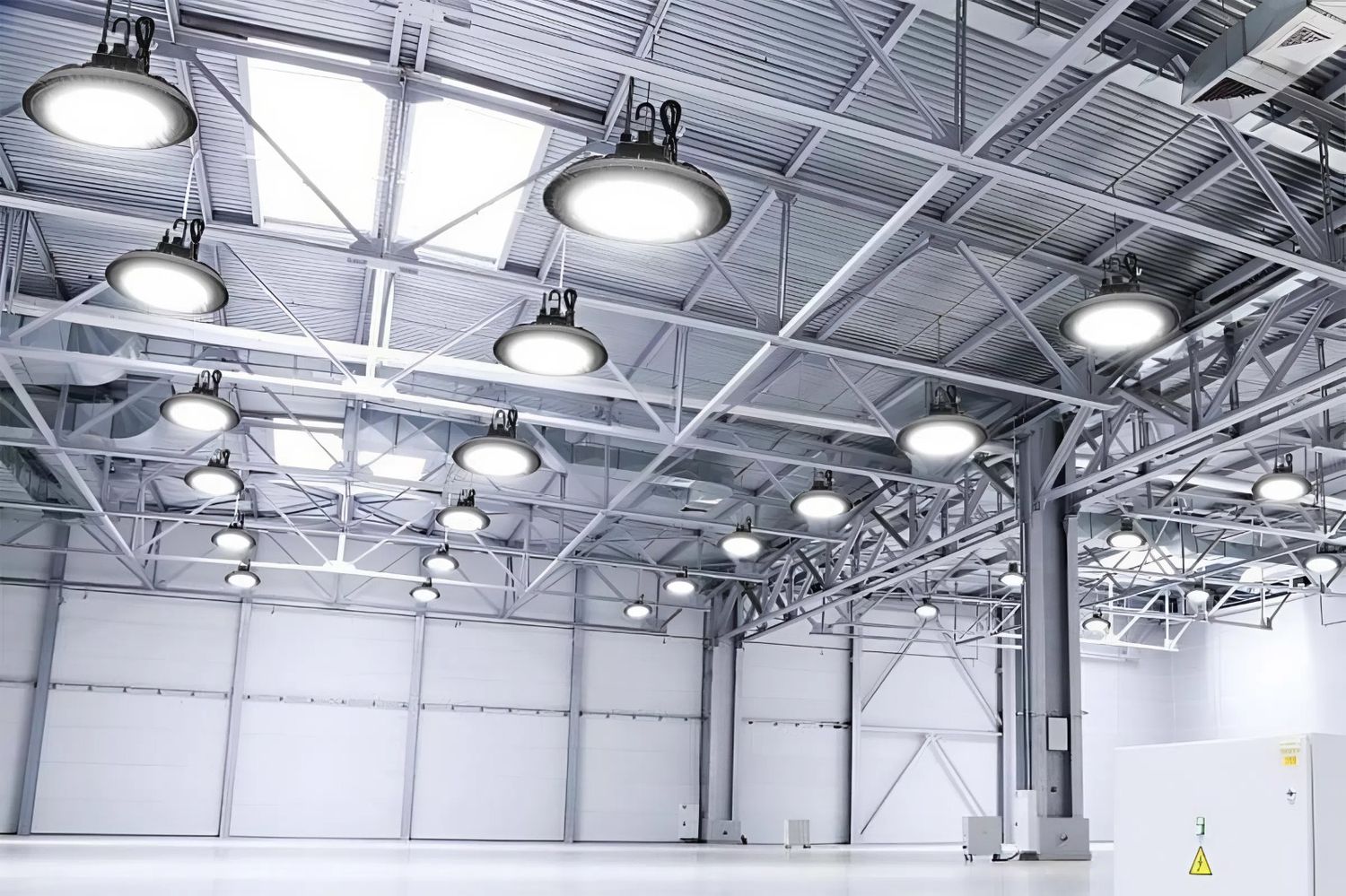
Based on the balance between investment costs, lighting efficiency and stability in industrial environments, fluorescent lamps are still the right choice for most medium and large-scale factories.
Fluorescent lamps spread light evenly, have wide coverage, create a comfortable working environment and limit shadows. The initial installation cost is low, components are easy to replace, easy to maintain and are especially suitable for areas that do not require 24/7 lighting. In addition, today's electronic ballast technology has significantly overcome flickering and increased the life of the lamp, helping fluorescent lamps operate more stably than before.
For specific areas such as inspection lines or areas requiring strong light, LED or halogen lamps can be used as a supplement, but overall, fluorescent lamps are still the best solution for balancing performance and maintaining stable light in the production environment.
In short, fluorescent lamps are still commonly used in many medium-sized factories where widespread light is needed at a reasonable cost. Halogen lamps are suitable for areas requiring strong, focused light and faithful color reproduction, but are rarely preferred for whole-plant lighting due to high power consumption.