The content below will help you better understand HCHO from a professional perspective, the potential risks of long-term exposure, and introduce air quality monitoring and surveillance solutions provided by EMIN, supporting users to proactively check their living and working spaces.
What is HCHO gas? Why is it often called the colorless killer?
HCHO, or formaldehyde, is a colorless organic compound with a distinctive, pungent odor that is easily recognizable as its concentration increases. In chemistry, it is the simplest aldehyde with the formula CH₄²⁻¹⁹ O₂. Under normal conditions, HCHO exists as a gas and evaporates quickly, belonging to the group of volatile organic compounds (VOCs).
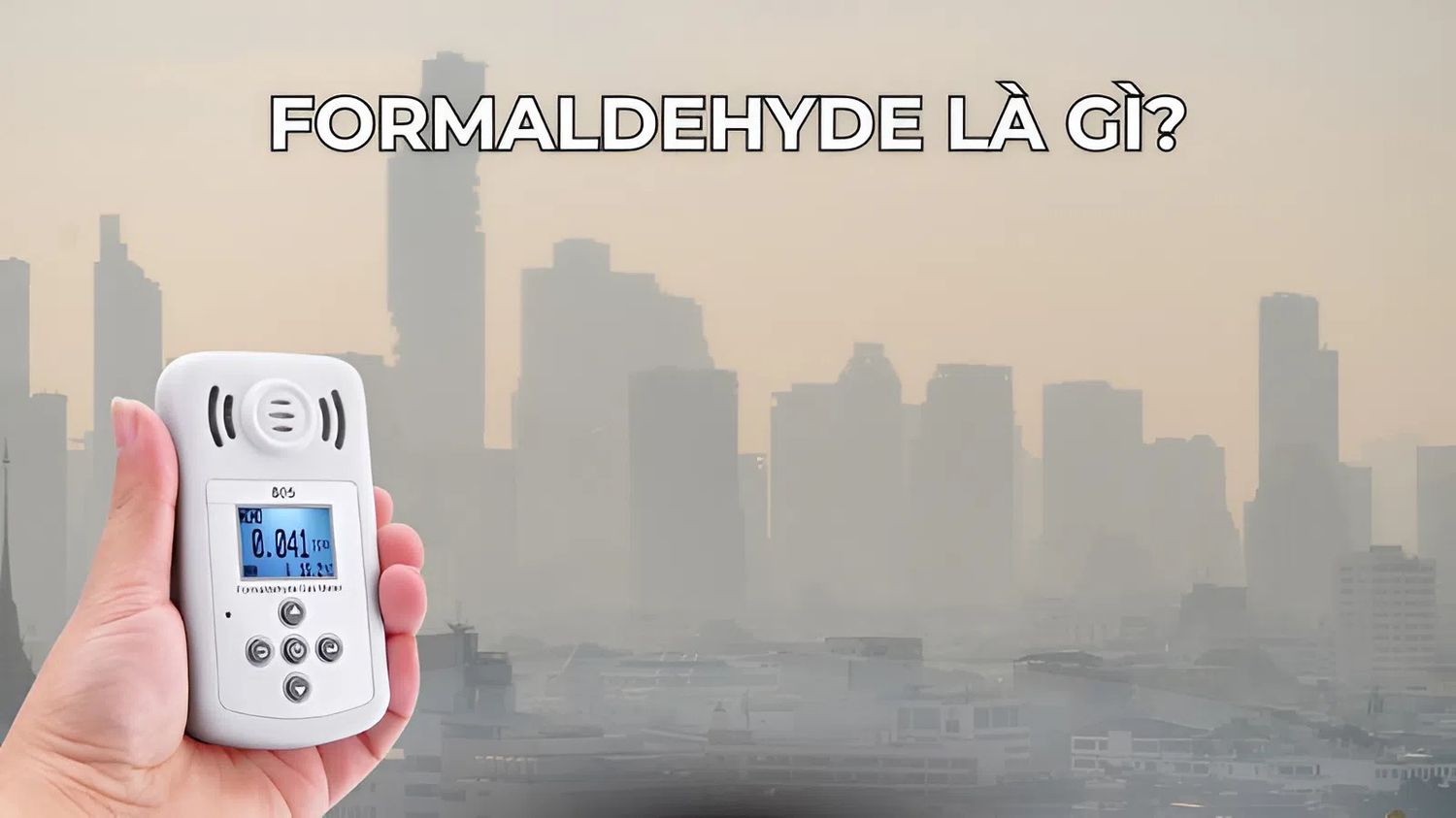
The unique aspect of formaldehyde is that it cannot be observed with the naked eye. However, when present in enclosed air, its pungent odor and eye irritation are enough for people in the room to be aware of its presence.
Why do HCHO appear in living spaces?
Many people have experienced stinging eyes or a strong odor when entering a newly completed apartment, a newly furnished office, or opening a newly purchased wooden cabinet. This is often caused by formaldehyde released from common household materials.
Sources of HCHO are quite diverse:
- Engineered wood such as MDF, HDF, and plywood often use formaldehyde-containing glue during production, making them a common and persistent source of emissions.
- Finishing materials such as wall paint, wallpaper, floor adhesive, and sealants also contribute to the release of certain amounts of the gas.
- New household items such as curtains, upholstered sofas, and carpets often carry a pungent odor during the initial period of use.
- Some inexpensive cleaning solutions, floor cleaners, or air fresheners can release formaldehyde during evaporation.
- Daily activities such as smoking, using gas stoves, or burning incense indoors also increase the presence of HCHO in the air.
Formaldehyde does not disappear quickly in a short period of time. This gas can escape from interior materials for many years, typically lasting from three to fifteen years, depending on the quality of the material and usage conditions.
How does HCHO affect health?
Formaldehyde has been classified by the World Health Organization as a substance linked to human cancer. This scientific classification helps professionals and users better understand the level of caution required when exposed to this substance over a long period.
Short-term effects
When the concentration of HCHO in the air exceeds the recommended level, usually below 0.1 milligrams per cubic meter or below 0.08 parts per million, the body may experience several noticeable reactions:
- Eyes may become irritated, red, and watery.
- Respiratory discomfort such as coughing, sore throat, or chest tightness.
- Skin may become itchy or develop a rash, especially in people with sensitive skin.
These symptoms usually appear quickly and subside upon leaving the environment with high HCHO concentrations.
Long-term effects
Prolonged exposure to low levels of formaldehyde over many years can cause undesirable changes in the body:
- Some studies have shown a link between formaldehyde and diseases such as nasopharyngeal cancer or leukemia.
- The reproductive system may be affected, especially in pregnant women in environments where formaldehyde is present for extended periods.
- The respiratory tract becomes more sensitive, exacerbating conditions such as asthma or chronic bronchitis, especially in young children and the elderly.
- The body's resistance tends to decrease, making it less able to fight off common illnesses.
EMIN's HCHO monitoring solution
At EMIN, HCHO and air quality monitoring devices are selected based on criteria such as ease of use, stable data, and suitability for a wide range of practical needs, from homes to offices and interior spaces. Below are some commonly used devices for monitoring HCHO in enclosed spaces.
Handheld HCHO meter
This group of devices is suitable for rapid measurements in specific areas such as bedrooms, cabinets, newly finished interiors, or newly installed flooring.
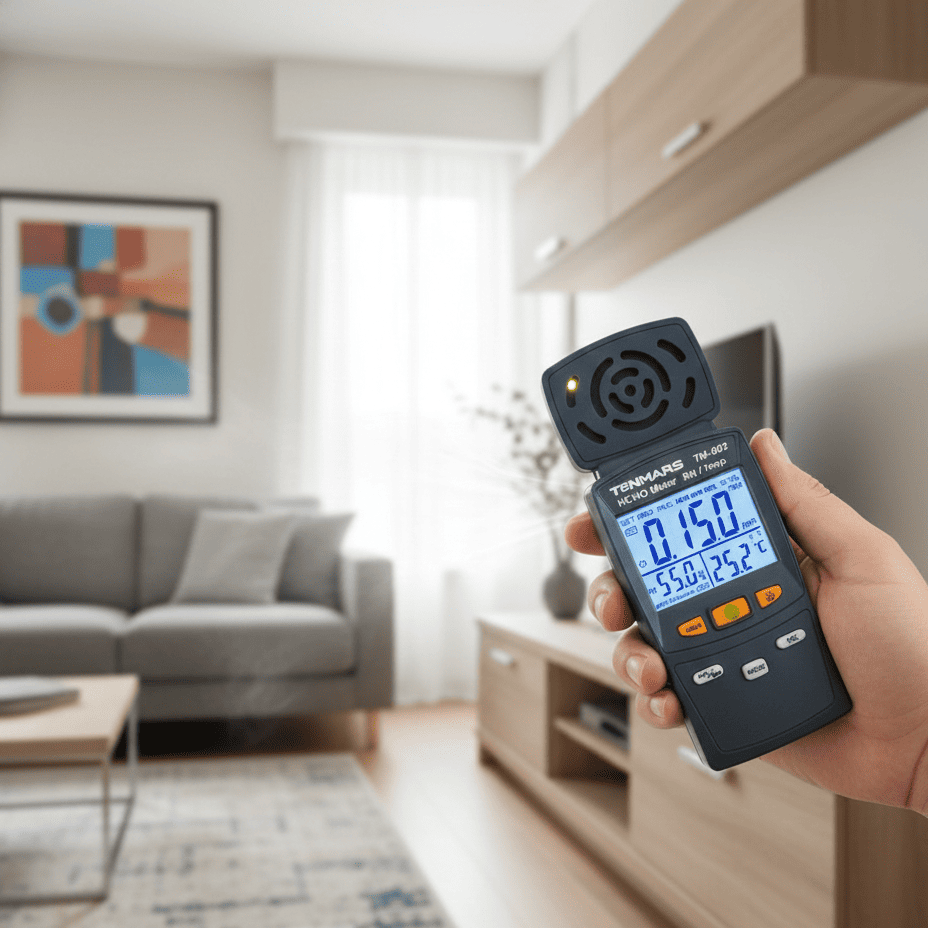
The Tenmars TM-802 Formaldehyde Meter has a compact design and uses an electrochemical sensor for fast response. It measures HCHO in the range of 0 to 3.00 mg per cubic meter or 0.01 to 5.00 ppm. Additionally, it monitors temperature from -20 to 50 degrees Celsius and humidity from 5 to 95 percent RH. Features include data hold, manual storage of 200 records, alarm settings, and support for TWA and STEL workplace safety monitoring.
Multifunctional air quality monitoring device
For continuous monitoring in living or working spaces, multi-parameter devices offer convenience by displaying multiple parameters simultaneously.
The Temtop LKC-1000S+ 2nd air quality detector allows simultaneous monitoring of PM2.5, PM10, HCHO, TVOC, AQI, temperature, and humidity. Suitable for fixed installation in living rooms, bedrooms, or offices, it operates continuously and emits audible and visual alerts.èn màu khi các chỉ số vượt mức cài đặt.
Check out our range of gas measurement solutions here: EMIN Single Gas Detectors
Conclude:
It's advisable to prioritize air purifiers that use HEPA filters combined with a thick layer of activated carbon. HEPA filters primarily trap fine dust, while the carbon layer absorbs HCHO and unpleasant odors in the air.
Clean air is the foundation for long-term health. Investing in an HCHO meter helps you better understand your living environment, allowing you to proactively adjust settings and create peace of mind for your entire family.
If you frequently experience fatigue or headaches without a clear reason, it's very likely that the air quality in your home is problematic. EMIN is ready to accompany you on your journey to creating a more airy and comfortable living space.