

Mechanical Engineering
In industrial environments, many people used to be reluctant to wear protective clothing because it was hot, heavy, and cumbersome to wear while working. In recent years, the design of protective clothing has changed significantly. Materials are more durable yet lighter, and the clothing is more streamlined to allow workers to move, climb, or operate machinery comfortably throughout their shifts.

It can be said that a 50-ton hydraulic jack is an indispensable “right-hand tool” in heavy machinery lifting projects, bridge and road construction, and production line maintenance.

Have you ever wondered why a magnet firmly attracts an iron bar but completely “ignores” a piece of aluminum or copper? This phenomenon originates from the magnetic properties of materials. Understanding the nature of magnetic metals is not only practical knowledge but also a critical foundation for engineers to select the right measurement equipment in manufacturing and quality control.

In the world of mechanical work and construction, a drill only truly “comes alive” when paired with the right drill bit. However, among hundreds of accessories available on the market, distinguishing between a compact standard drill bit and a heavy-duty masonry drill bit goes beyond size alone. You need to consider material composition, physical working mechanisms, and most importantly, the intended application.
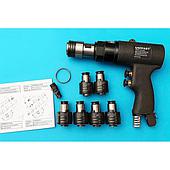
In precision mechanical processing, tapping might seem like a simple step, but it directly affects connection durability and structural safety. Even a minor error during the tapping process can result in threads not achieving the desired fit, leading to loose bolts or an inability to tighten them properly. Loose thread quality has thus become a common issue, even for experienced technicians.
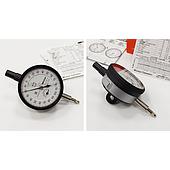
Dial gauges look quite simple, with an uncomplicated structure and few operating steps. However, in reality, many people still misread the results, sometimes quite frequently, even after using the device for a long time. The main reason often stems from very small, easily overlooked habits during daily use.
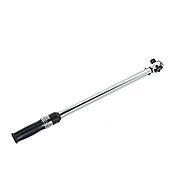
Bạn có bao giờ tự hỏi tại sao cờ lê lực Stanley loại nhỏ đang "hot" trở lại giữa thời đại xe điện bùng nổ? Đặc biệt với cờ lê lực Stanley như mẫu 73-589 hay 73-590, công cụ này không chỉ chính xác mà còn siêu tiện lợi cho việc sửa xe gia đình đơn giản.
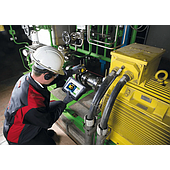
Shaft alignment is often considered a minor maintenance step, but in reality, it directly impacts equipment lifespan and operating costs. When two drive shafts are not aligned geometrically, the energy generated is not fully converted into power but is dissipated through vibration, heat, and mechanical friction. The consequences are subtle, long-lasting, and difficult to detect through visual observation alone.

RPM is a common indicator in many devices around us. It represents the number of revolutions per minute of an axle, wheel, or motor. Based on this indicator, users can assess the operating speed and performance of a device in specific applications.

Recently, the phrase "investing in HDPE is always a good idea" unexpectedly became a hot trend, appearing frequently on TikTok, Facebook, and various material industry groups. From a very ordinary answer, HDPE suddenly became a trending search term, not only out of curiosity about the trend but also because the material itself is already familiar in manufacturing and daily life.