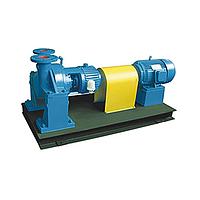
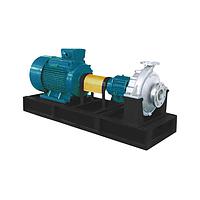
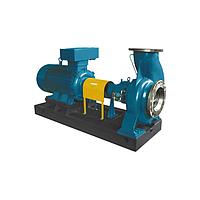
Chemical process pump
Handling corrosive fluids, elevated temperatures, or demanding process conditions requires more than a general-purpose pump. In chemical plants, petrochemical units, water treatment systems, and industrial process lines, pump selection directly affects safety, uptime, maintenance intervals, and product quality. This is why many buyers focus on chemical process pump solutions built for stable operation across a wide range of media and operating conditions.
On this page, you can explore chemical process pump options for transferring acids, solvents, petrochemical fluids, and other industrial liquids where material compatibility, hydraulic performance, and process reliability matter. The category is also useful for engineers comparing flow range, head, temperature resistance, and pressure capability before narrowing down to a specific design.
Where chemical process pumps are typically used
A chemical process pump is commonly selected for applications where the pumped medium may be corrosive, volatile, hot, or otherwise difficult to handle with standard utility pumps. Typical use cases include chemical manufacturing, petrochemical processing, fertilizer production, plating lines, pharmaceutical utilities, and industrial water treatment.
In these environments, the pump is not only moving liquid from one point to another. It also needs to support consistent process conditions, resist chemical attack, and work reliably as part of a broader plant system. For buyers comparing adjacent pump types, it can be helpful to review other industrial categories such as construction pumps or fire pump systems, which serve very different operating priorities.
What matters when choosing a chemical process pump
The right selection usually starts with the liquid itself. Buyers typically assess the medium’s corrosiveness, viscosity, solids content, operating temperature, vapor pressure, and whether the process requires continuous duty or intermittent transfer. From there, the required flow rate and total head help define the hydraulic window the pump must cover.
Beyond hydraulic performance, material compatibility is one of the most important considerations. A pump intended for aggressive chemicals may require different wetted materials or lining approaches than one used for general industrial liquids. Pressure rating, shaft sealing arrangement, maintenance access, and plant installation constraints also influence the final choice.
Control strategy should not be overlooked either. In many facilities, stable pump operation depends on proper start/stop logic, protection, and monitoring, which is why some projects also evaluate a matching pump control panel as part of the overall system.
Typical pump configurations in this category
This category covers several process-oriented centrifugal pump styles suited to different duties. Single-stage designs are often used for general transfer and circulation where moderate head and a straightforward layout are preferred. Multistage configurations are more suitable when the application requires significantly higher discharge pressure or higher head across longer piping systems.
There are also designs aimed at petrochemical service and pumps intended for corrosive media requiring enhanced chemical resistance. In practice, engineers often compare not just one model, but a broader Bangpu pump range to identify which hydraulic and material configuration aligns best with the process medium and operating envelope.
Representative products in this chemical process pump range
Several products in this category illustrate the breadth of applications covered. The Bangpu CZ Standard chemical process pump and Bangpu ZA Petrochemical process pump are relevant examples for process-duty service where broad flow range, head capability, and elevated medium temperature may be part of the requirement. These types are typically considered in chemical and petrochemical plants where stable operation under demanding conditions is essential.
For more general industrial liquid transfer, the Bangpu IH Single-stage chemical pump provides a useful reference point. Where the process involves corrosive media that may require a lined construction, the Bangpu IHF Lining fluorine chemical pump shows how pump selection may shift toward stronger resistance to aggressive fluids. For higher head requirements, the Bangpu BPMC Horizontal multistage chemical process pump represents a different configuration better suited to pressure-intensive duties.
Although the Bangpu AY Centrifugal oil pump is oriented toward oil-related service, it also highlights how process pumps are often selected around the actual medium and operating conditions rather than by pump name alone. In mixed industrial plants, that distinction is important when separating chemical-duty applications from hydrocarbon transfer or utility pumping.
Performance range and process considerations
The products listed in this category cover a wide operating range, including low to very high flow capacity, moderate to high head, and service temperatures extending from sub-zero conditions to very hot process media. This makes the category relevant for both utility-style transfer and more specialized process applications involving heat, pressure, or corrosive chemicals.
However, a wide performance envelope does not mean every pump is interchangeable. Operating point, suction conditions, fluid properties, and system layout all affect actual pump suitability. Buyers should review whether the duty is best handled by a standard process pump, a lined chemical pump, or a multistage design before comparing final options.
How to narrow down the right option for your system
A practical selection process begins with a few core questions: What liquid is being pumped? At what temperature? What flow and discharge pressure are required? Is the medium corrosive, clean, or prone to vaporization? These answers help define whether the application needs a general process pump, a petrochemical-oriented configuration, or a solution with enhanced corrosion resistance.
Installation details are equally important. Pipe routing, available NPSH, maintenance accessibility, seal support expectations, and whether the process runs continuously can all change the preferred pump design. For broader comparison, some users also review related categories like gas booster pumps when their process line includes both liquid transfer and pressure support equipment, although the application principles are quite different.
Why this category is useful for industrial buyers
For procurement teams, maintenance engineers, and project designers, this category provides a focused starting point for pumps intended for chemical-duty service rather than general-purpose water movement. That helps shorten the evaluation process when the application demands stronger attention to corrosion resistance, temperature capability, and process reliability.
It also makes it easier to compare product families within one technical context. Instead of reviewing unrelated pump types, buyers can assess models designed for similar industrial environments and then refine the shortlist based on hydraulic range, medium compatibility, and installation requirements.
Conclusion
Choosing a chemical process pump is ultimately about matching the pump to the real process conditions, not just selecting by size or name. Media characteristics, temperature, pressure, head, and corrosion risk all play a role in long-term performance. By comparing process-duty options such as single-stage, lined, petrochemical, and multistage designs, industrial buyers can move toward a solution that supports safer, more reliable plant operation.
If you are reviewing pumps for chemical transfer, circulation, or demanding industrial fluid handling, this category offers a solid basis for comparing suitable configurations and identifying the most appropriate next step for your application.
直接联系认证专家