So how can you be sure that your family's water source is contaminated? Is the process of collecting data samples complicated? And if the results are not guaranteed, what should you do?
The following article will help you better understand how to collect samples for testing at home, the signs to watch out for, and appropriate solutions to protect the health of your whole family.
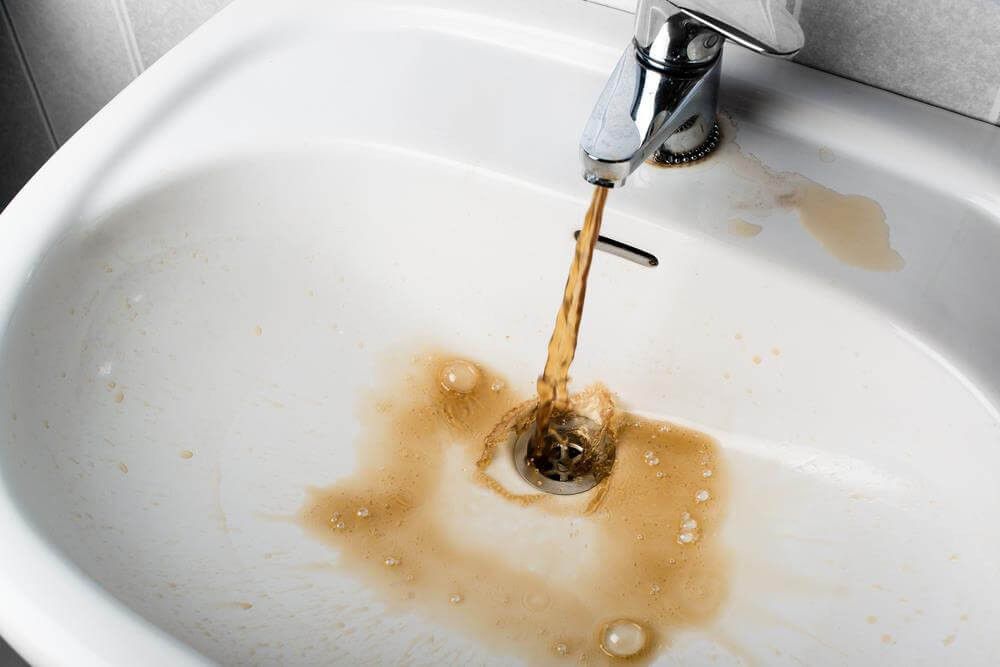
Signs that your water source may be contaminated
Many people often think that only when water has a bad smell or changes color, it is dirty water. In fact, there are many cases where the water is still clear and odorless, but when used, it causes dry skin, sore eyes, brittle hair or itching after bathing.
Some signs that are easy to notice at home:
Water left overnight has a thin film or white residue at the bottom of the pot.
Stainless steel appliances such as faucets and sinks are prone to yellowing or residue.
When boiling water, the bottom of the kettle or pot has a layer of opaque white precipitate that is difficult to scrub clean.
Hands become dry and itchy when washing vegetables or dishes with tap water.
All of the above phenomena are warnings that the water source being used may be contaminated with iron, manganese, heavy metals or chemical residues. Determining the exact level of contamination and what components are causing the impact will require sampling and testing the water according to the correct procedure.
When should you get your water tested at home?
You don't always need to test your water, but there are some times or signs that testing is necessary and should be done early.
Here are some common situations:
Just moved to a new place, especially a house near an industrial park, landfill, wastewater treatment plant or an area with an old water system.
There are signs of doubt about the water quality: such as water with a strange smell, scum, sediment after a long time, or causing itchy skin, hair loss, rash when used for a long time.
Families with young children or people with underlying diseases need to use absolutely safe water in their daily activities.
Before installing a water filtration system or a faucet filter: Testing a water sample helps determine the correct type of filter to use, avoiding waste and choosing the wrong technology.
Criteria to test when suspecting water pollution
When water sources are suspected of being contaminated, it is necessary to conduct tests on important indicators to assess the safety level. First, basic parameters such as pH, turbidity, total dissolved solids and conductivity should be checked to assess the overall water quality. Next is the group of heavy metals such as lead, mercury, arsenic and cadmium, which often appear due to industrial influences or ground pollution.

If there is a risk of microbial contamination, Coliform and E. coli tests should be performed to determine fecal contamination. In agricultural areas, nitrate, nitrite and ammonium should be tested for fertilizer or pesticide residues. The selection of indicators should be based on the water source and specific abnormalities, helping to guide the correct treatment method and ensure safety for users.
Simple steps to take water samples for testing at home with Global Water FSS200
You can take a water sample yourself for testing if you suspect that your domestic water source is having problems with the following steps:
1. Prepare a suitable sampling tool
Use a clean 500ml plastic bottle that has been rinsed thoroughly if you are only doing a preliminary test.
However, in residential areas near sources of pollution such as landfills, industrial zones or old water treatment plants, you can consider using the Global Water FSS200 water sampler, which is a device distributed by EMIN that allows automatic sampling, accurate quantification and avoids cross-contamination between samples.
2. Take samples properly
Open the faucet or the place where the water needs to be tested, drain the water for about 2 minutes to clean the pipe.
If using the FSS200, just set the sampling schedule by hour or by event, which is very useful when needing to monitor water quality fluctuations by hour.
3. Record & preserve samples
Record information such as: date and time, location (well, faucet, tank), water type.
Close the lid tightly, store in the refrigerator, and bring it for testing within 24 hours.
After water testing, what should you do next?
Water test results are an important basis for you to evaluate the safety level of the water source you are using every day. However, many people after getting the results do not know how to continue to handle it properly and effectively.

1. Read the results selectively
You don't need to understand all the technical indicators, just focus on the indicators that directly affect health such as:
PH (usually should be at 6.5–8.5)
Coliform/E.coli index (must not be present in domestic water)
TDS – Total dissolved solids
Heavy metal content such as Arsenic, Lead, Iron...
2. Depending on the results, choose the appropriate treatment option.
If the results are safe: you should still check periodically every 6–12 months to prevent risks.
If the water is contaminated with microorganisms, coliform: you should install a sterilization filter system, such as UV lamp or RO filter.
If contaminated with alum, heavy metals: you should consider a specialized multi-layer filter, or change the water source if conditions allow.
3. Keep records & proactively check periodically
Keeping a record of your test results and noting the source of the sample, the time, and any readings that exceed the threshold will help you track trends in water quality over time. This will also serve as evidence if you need to request intervention from the authorities in your residential area.
4. Equip home monitoring equipment (if necessary)
If you live near a polluted area or have had substandard water results, you can proactively equip yourself with a quick water quality measuring device at home for regular testing.
Some products suitable for households can be referenced on the website emin.vn: such as handheld pH and TDS meters, residual chlorine meters, etc.
Conclude
Clean water is a prerequisite for ensuring the health of the whole family. However, clean water does not mean safe. Therefore, testing water sources periodically and having appropriate treatment plans after testing is something that everyone should do, especially in the context of the current increasingly volatile environment.