Understanding the limits of torque wrenches
Before working, it is necessary to check the hinge and cutting blade. The two jaws of the pliers must be closed tightly, without play or shaking. A pair of pliers with play at the joint will no longer transmit the force to the blade properly, making the cutting heavy and easy to slip. In an industrial environment, cleaning the iron dust and periodically lubricating is the simplest way to maintain stability.
Another important point is to choose the right length of the lever. Long levers provide stronger cutting force but are difficult to control in narrow spaces. Long-time users often choose pliers with a ratio suitable for the type of material and their working method, instead of chasing large sizes.
Safe posture and operation
Correct posture helps the user control the force and avoid injury. When cutting, the material must be placed deep in the blade so that the force is evenly transmitted. Hold both hands firmly at the end of the lever, and lean the body slightly forward so that the force goes in a straight direction. Avoid rotating the wrist or cutting off the side, as this can easily cause the hinge to be off-center.
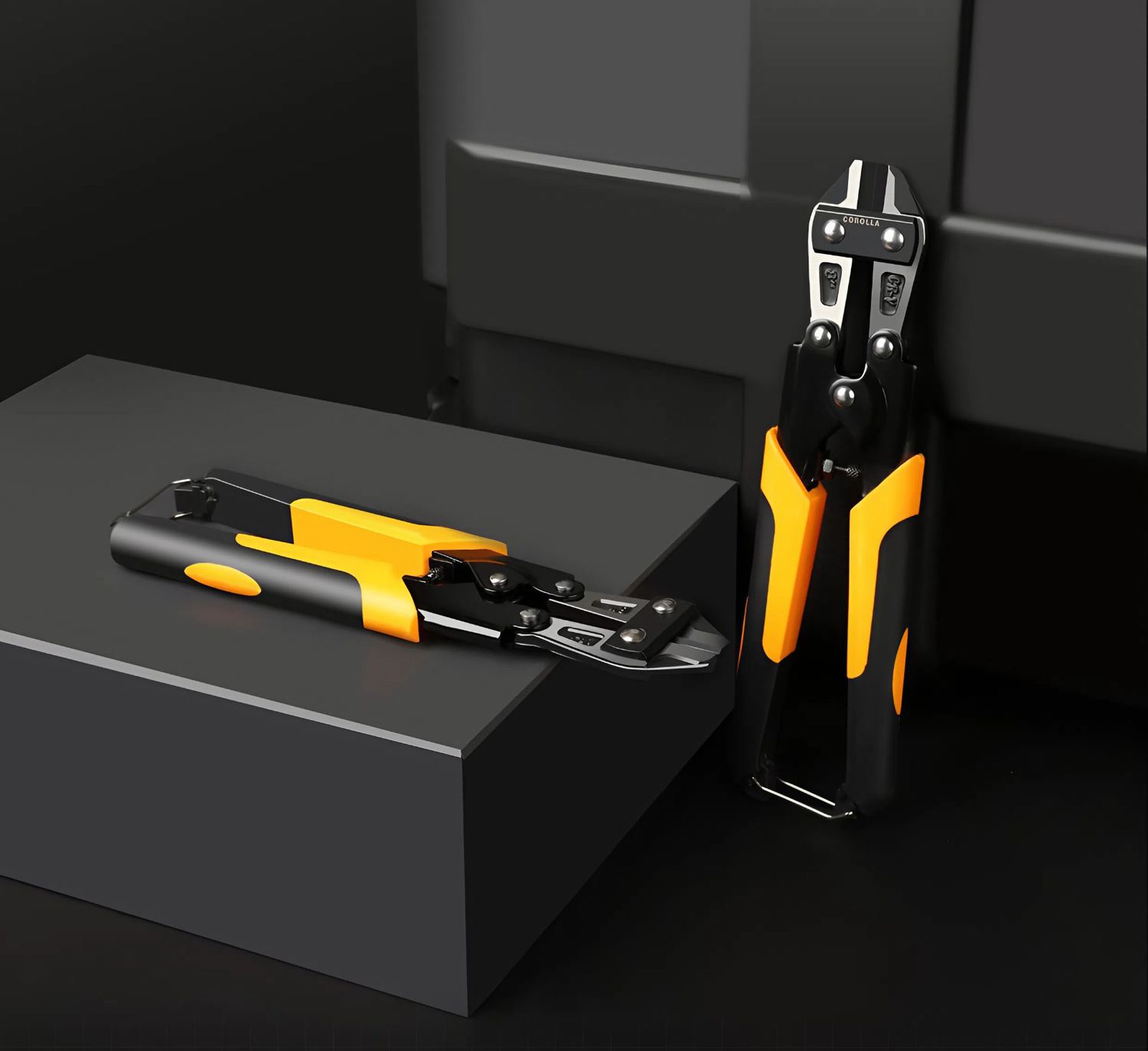
If the cutting force feels too heavy, do not force it. Stop, re-check the material, or switch to a type of pliers with a longer lever. Excessive pressure causes the blade to wear quickly and the user to lose control when the force rebounds. Experienced people often recognize the difference between the pliers working properly or being overworked just by feeling the hand.
During extended work, gloves should be worn to prevent sweat from slipping and reduce back pressure. Rubber grips provide some assistance and are not a substitute for a firm grip. Stability is always more important than speed.
Related articles: Some common applications of torque pliers
Bảo dưỡng sau khi sử dụng
After each working day, it is necessary to clean the blade and hinge surface. Metal is susceptible to oxidation, especially when working in humid environments or with a lot of metal dust. A thin layer of oil helps prevent rust and keeps the mechanism running smoothly for a long time.
When detecting small chips in the blade, do not sharpen it with a normal stone. The cutting blade has been tempered, if sharpened at the wrong angle, it will change the hardness and make the blade dull quickly. The correct way is to send it to a specialized tool repair unit or replace the blade. For mechanics, proper maintenance is as important as choosing a good pair of pliers.
The hinge is the part that bears the most force and needs to be checked regularly. If the pin is loose or bent, it should be replaced immediately. A hinge that is only a few percent loose will cause the entire force to be dispersed, leading to quick blade damage and unsafe operation.
In the mechanical industry, long-time users often prioritize brands that have proven the stability of the lever mechanism and the durability of the cutting blade. KTC, STANLEY or YATO torque pliers are widely used in factories, construction sites and garages thanks to their large load capacity, smooth operation and low maintenance requirements.
When to replace torque pliers
Pliers do not fail suddenly but wear out over time. The most obvious sign is that the cutting feeling is no longer decisive, requiring more force than usual. The blade may still be sharp but the hinge has loosened, causing the two jaws to not fit completely. This is the time to replace the pliers instead of trying to continue using them.
If the pliers have been dropped hard or the lever arm is bent, it is absolutely not recommended to temporarily repair them for reuse. The metal structure may have micro-cracks, and when subjected to heavy loads, they will suddenly break. Experienced professionals always keep a spare set of pliers for timely replacement.
A good pair of pliers can last for years if properly maintained. However, no matter how good they are, they are still mechanically loaded tools. Proactively replacing them when necessary not only protects the tool but also the user.
Refer to the product in the EMIN Torque Pliers Category