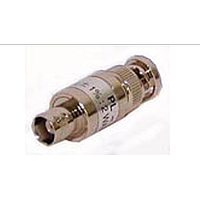
Telecommunication components
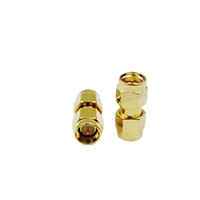
Reliable RF and fiber links depend on more than test instruments alone. The passive and active parts placed between ports, cables, antennas, analyzers, and transmit paths often determine how accurately a system behaves in the lab, on the production line, or in field deployment. This page brings together telecommunication components used to build, adapt, protect, and fine-tune signal paths across telecom and measurement environments.
Within this category, buyers typically look for parts that help manage insertion loss, isolation, phase behavior, impedance matching, signal routing, and calibration workflow. That can include everything from attenuators and adapters to couplers, filters, terminations, and switching elements, depending on the architecture of the RF or telecom setup.
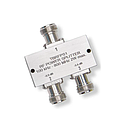
Where telecommunication components fit in a measurement chain
In practical telecom work, components are rarely selected in isolation. They are part of a larger signal path that may include a signal generator, a device under test, cables, switching hardware, and a receiving instrument. Each component influences loss, reflection, bandwidth, and repeatability, so category-level selection should focus on the role each part plays in the overall chain.
For example, attenuators are used to control power levels and protect sensitive inputs, while couplers and power dividers help distribute or sample signals. Filters and isolating elements can improve signal integrity, and calibration tools support more stable and trustworthy measurement results over time.
A broad component ecosystem for RF and telecom applications
This category covers a wide range of building blocks for telecom and microwave systems. Common functions include signal attenuation, splitting and combining, switching, phase adjustment, bias insertion, detection, and termination. In many applications, engineers combine several of these parts to create a stable and application-specific test or communication path.
The range is relevant for bench testing, system integration, maintenance, and network-related troubleshooting. When paired with instruments such as a signal analyzer, these components help users characterize gain, loss, spectral behavior, mismatch effects, and response across different operating conditions.
Attenuators as a representative product group
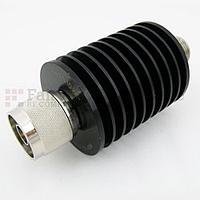
Among the best-known telecom components, attenuators are widely used to reduce signal level in a controlled way without changing the rest of the system architecture. They are valuable when protecting measurement inputs, improving level matching between stages, or simulating expected path loss during verification and troubleshooting.
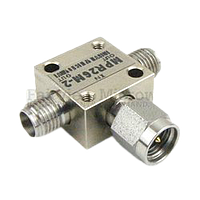
This category includes representative examples such as Analog Devices HMC305ALP4ETR Attenuators, HMC346G8TR Attenuators, HMC941A Attenuators, and the HMC273MS10GETR 1 DB LSB GAAS MMIC 5-BIT DIGITAL ATTENUATOR, 0.7 - 3.8 GHZ. These examples illustrate that attenuation can be implemented in different formats, including digitally controlled RF components for more flexible level setting inside compact systems.
Connector-style and application-specific attenuation solutions are also represented by products such as Amphenol M3933/25-01S, M3933/25-16N, M3933/25-15S, and M3933/25-14S Attenuators. For optical telecom contexts, the ANRITSU MN9605C FC type highlights how attenuation may also be relevant in fiber-oriented signal handling and test setups.
How to choose the right component for your application
The first step is to define the signal path objective. Are you trying to reduce level, isolate stages, split power, block DC, inject bias, trim phase, or terminate an unused port? A clear answer narrows the category quickly and helps avoid selecting parts that solve only part of the problem.
Next, consider operating frequency range, connector compatibility, impedance requirements, power handling, and whether the part is intended for bench measurement or embedded integration. In telecom work, even a small mismatch between connectors or performance expectations can lead to reflection, added uncertainty, or unstable results.
It is also useful to think about the rest of the setup. If the component will be used around antennas or feed lines, related tools such as a cable and antenna analyzer can help verify line condition, matching behavior, and installation quality after assembly.
Manufacturer options and sourcing context
Different manufacturers contribute to this category from different angles. Amphenol and related interconnect-focused brands are commonly associated with RF connectivity and telecom hardware, while Analog Devices is well known for RF and microwave semiconductors used in compact and integrated designs. ANRITSU appears in contexts where telecom measurement and optical handling are closely linked.
Other supported manufacturers in the broader catalog include 3M, 3M Electronic Specialty, Adafruit, Advantech, AMP Connectors - TE Connectivity, Amphenol RF, and ams OSRAM. For B2B buyers, this variety is useful when comparing mechanical formats, integration approaches, and sourcing preferences across test, telecom, and electronic system projects.
Common use cases in labs, production, and field service
In development labs, telecommunication components are often used to assemble repeatable test fixtures, manage interconnections between modules, and reproduce real-world signal conditions. This is especially important when validating RF subsystems, front ends, and transmission paths before release.
In production environments, these parts support standardized test stations, calibration procedures, and pass/fail verification. In field work, they help technicians adapt interfaces, isolate suspected issues, and replace worn or application-specific pieces without redesigning the full system.
For return loss and matching checks in RF paths, a VSWR analyzer may be used alongside the appropriate telecom components to identify whether the issue comes from the device, the cable assembly, or the passive network around it.
What to review before placing a B2B order
For procurement teams and engineers, the most efficient buying process starts with confirming the exact component function and interface standard. In telecom assemblies, parts that look similar may serve very different purposes, so project documentation, test plans, and maintenance records should be aligned before ordering replacements or spares.
It is also helpful to check whether the component is intended for permanent installation, repeated lab use, or calibration support. Mechanical durability, mating cycles, and handling requirements can matter just as much as the electrical role, especially in service organizations and high-throughput test environments.
Supporting more consistent telecom system performance
Choosing the right telecom component is often about creating a cleaner, safer, and more predictable signal path. Whether the need is attenuation, routing, coupling, matching, or interface adaptation, these parts help connect instruments and subsystems in a way that supports meaningful measurement and reliable operation.
By reviewing component function in the context of the full RF or telecom chain, buyers can shortlist more appropriate options and reduce integration risk. This category is intended to support that process with practical access to components used across telecom measurement, system development, and technical maintenance workflows.
Get exclusive volume discounts, bulk pricing updates, and new product alerts delivered directly to your inbox.
By subscribing, you agree to our Terms of Service and Privacy Policy.
Direct access to our certified experts