
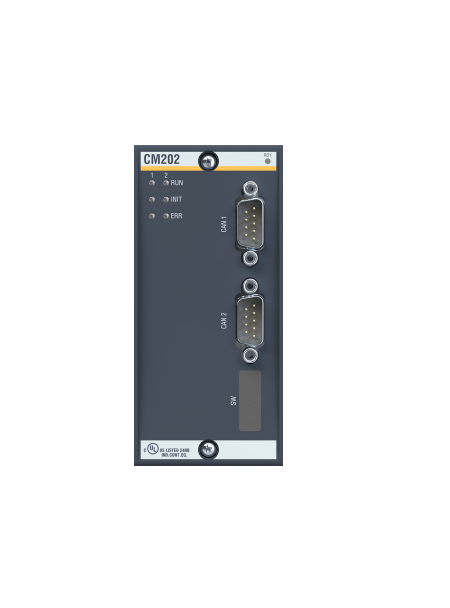
Bachmann CM202 CAN-Bus Modules (2x CAN/CANopen, 1 Mbit/s)
CAN fieldbus manager module
2x CAN/CANopen; up to 1 Mbit/s; manager/server configurable; CANsync; isolated
System environment
Max. number of modules: 4 per M200 controller
Max. number of CAN networks : 2 per module, 8 per controller
Max. number of addresses: 127 per CAN network
Protocols: CANopen, SAE J1939, NMEA 2000
Power consumption: 320 mA / 5 V DC
CAN Interface
Baud rate: 10 k to 1 MBaud
Bus length: Max. 5000 m
Connection: 2x 9-pin D-sub sockets
Pin assignment: In accordance with CiA DS 102 / 4
Signal level : In accordance with CiA DS 102 / 4
Galvanic isolation from the system: 500 V
CANopen
CANopen manager: Yes
CANopen server: Yes
Extended boot-up: No
Minimum boot-up: Yes
Configuration: SolutionCenter configurator creates DCF from EDS files
Process data: Max 128 TxPDOs + 128 RxPDOs per network
Variable PDO mapping : Yes
PDO transmission modes: Value change with inhibit time; cyclic or acyclic synchronous; RTR
Process data access: PLC process image, PLC library functions, C/C++ functions
Service Data (SDO) access: PLCopen function blocks, C/C++ functions, Simulink blocks, Graphical monitor in SolutionCenter
Emergency messages:
Operation as NMT manager: producer and consumer
Operation as NMT server: producer
Emergency message access: Access to message list via function blocks, C/C++ function; Graphical monitor in SolutionCenter
Network monitoring : Node guarding and/or Heartbeat protocol with individual limits per node
Device profile : 301, 302, 405
Diagnostics
System variables: Bus load and peak load in %, Frame counters, Error counters, controller
status registers
Telegram logging : Built-in protocol sniffer for operation via device console, export of logs to
file; configured start of logging from power-up
Get exclusive volume discounts, bulk pricing updates, and new product alerts delivered directly to your inbox.
By subscribing, you agree to our Terms of Service and Privacy Policy.
Direct access to our certified experts