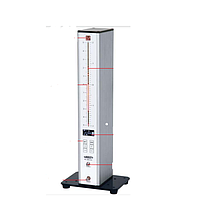
Digital Pressure Calibration Gauge
Pressure verification work often happens in places where speed, readability, and repeatable accuracy matter just as much as the measurement itself. In maintenance workshops, field service, utilities, and process plants, a Digital Pressure Calibration Gauge helps technicians check transmitters, gauges, switches, and pressure instruments with more confidence than a basic indication-only gauge.
Compared with conventional mechanical gauges, this type of instrument is designed for calibration and reference measurement tasks. It combines digital display clarity, selectable engineering units, and higher accuracy levels that are useful when documenting test results, troubleshooting drift, or confirming whether an installed device is still within tolerance.
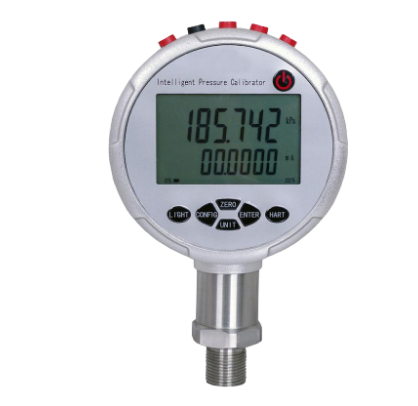
Where digital pressure calibration gauges fit in industrial work
These instruments are commonly used as reference gauges during commissioning, preventive maintenance, and instrument inspection. They are especially practical when a technician needs a portable device for comparing actual line pressure with the reading from a field gauge, pressure switch, or transmitter.
They also sit naturally within a broader calibration workflow. For users who need to generate or stabilize pressure during testing, pairing a gauge with pressure calibration pumps can create a simple and effective field setup. For higher-level lab or workshop requirements, other methods such as benchtop pressure calibrators may be more suitable.
Key selection points before choosing a model
The first factor is the pressure range. A gauge selected too close to the process operating point may limit usable resolution or overload margin, while an oversized range can reduce sensitivity at lower pressures. Typical selection starts with identifying whether the job involves vacuum, low pressure, medium pressure, or high-pressure hydraulic calibration.
The second factor is accuracy. In this category, available examples range from practical field-grade performance up to tighter reference-grade accuracy. If the instrument will be used to verify production equipment or routine plant gauges, a moderate accuracy class may be enough. If it will serve as a transfer standard or support tighter tolerances, higher accuracy becomes more important.
Connection type, display format, and available engineering units also matter. In real applications, technicians often move between bar, psi, kPa, MPa, or mmH2O depending on process standard, customer documentation, or plant conventions, so unit flexibility can simplify daily work.
Examples from FLUKE and KDS
FLUKE is represented here by the FLUKE-700RG31 Pressure Gauge Calibrator, a model suited to high-pressure applications with a range up to 10000 psig. Its listed accuracy profile makes it relevant for demanding verification work where users need a digital reference instrument rather than a standard process indicator.
KDS provides several options across both low and high ranges. For lower-pressure or vacuum-related tasks, examples such as the KDS DPG100 series include versions covering 0~0.16 bar and -1~0 bar, with selectable units and backlit display. For higher-pressure work, the KDS DPC100 series extends into 250 bar, 400 bar, 600 bar, and 700 bar ranges, with variants offering 0.02% or 0.05% accuracy classes depending on calibration needs.
These examples show why category selection should begin with the application, not only the brand. A low-range vacuum check, a pneumatic process loop, and a hydraulic pressure test all place different demands on the gauge.
Low-pressure, vacuum, and high-pressure use cases
Low-pressure calibration requires stable readings and adequate resolution at the bottom end of the scale. Instruments such as the KDS DPG100 variants are better aligned with delicate pneumatic measurements, cleanroom utilities, gas systems, or low differential-style verification tasks where small changes matter.
Vacuum measurement introduces another consideration: not every pressure gauge handles negative pressure with the same performance characteristics. A model specifically covering -1~0 bar is more appropriate when confirming vacuum conditions or checking devices that operate below atmospheric pressure.
High-pressure calibration is a different environment entirely. Hydraulic systems, test benches, and heavy industrial maintenance may require a gauge that can safely cover several hundred bar or much more. In such cases, users may also explore complementary tools like a pressure comparator when controlled comparison against a reference device is part of the calibration method.
Why digital display and engineering units improve workflow
A major advantage of a digital calibration gauge is readability. A backlit numeric display reduces interpretation errors compared with an analog dial, especially in poor lighting or when the operator must record values quickly during a multi-point test.
Selectable engineering units are equally practical. Instead of manually converting from psi to bar or kPa, the operator can work directly in the unit required by the procedure or the customer report. This saves time and lowers the risk of documentation mistakes during calibration rounds.
Some models in this category also highlight how portability supports field use. A battery-powered instrument is easier to move between jobs, and accessories such as the FLUKE BP7235 NiMH Battery Pack play a supporting role in keeping mobile calibration equipment ready for use across long service shifts.
How to build a suitable calibration setup
A digital gauge is only one part of a reliable calibration chain. In field service, it is commonly combined with a hand pump, suitable fittings, and the device under test. The goal is to generate stable pressure, allow fine adjustment, and compare the applied pressure against the instrument being checked.
For applications requiring stronger traceability or finer primary reference methods, some users may move toward pressure deadweight testers. That approach is typically chosen when accuracy requirements, calibration hierarchy, or laboratory procedures go beyond what a portable field gauge setup is intended to handle.
In everyday plant maintenance, however, a portable digital calibration gauge remains one of the most efficient tools for spot checks, loop verification, and troubleshooting pressure-related measurement issues.
Practical buying considerations for B2B users
For procurement teams and maintenance managers, the best choice usually comes down to matching instrument capability with the actual job scope. Start with the working pressure range, then review required accuracy, available pressure connection options, display usability, and whether the instrument will stay in a workshop or travel with field personnel.
It is also useful to standardize around a small number of models instead of buying many overlapping ranges. This can simplify technician training, spare accessory management, and calibration scheduling. Where multiple plants or departments are involved, consistency in units and connection standards can reduce setup time and user error.
If your work includes both routine verification and higher-precision calibration, it may make sense to use a digital calibration gauge for daily service tasks and reserve more specialized reference equipment for periodic lab checks.
Conclusion
A well-chosen digital pressure calibration gauge helps bridge the gap between simple pressure indication and structured calibration work. Whether the requirement is low-pressure verification, vacuum checking, or high-pressure reference measurement, the right range and accuracy class will have a direct impact on usability and confidence in the result.
Within this category, options from FLUKE and KDS illustrate the practical spread from portable field support to higher-range calibration duties. Reviewing the application first, then the measurement range, accuracy, units, and accessories, is the most reliable way to select equipment that fits real industrial workflows.
Get exclusive volume discounts, bulk pricing updates, and new product alerts delivered directly to your inbox.
By subscribing, you agree to our Terms of Service and Privacy Policy.
Direct access to our certified experts