Temperature Calibrators
Reliable temperature measurement depends on more than a good sensor. In maintenance, quality control, laboratories, and process industries, instruments need to be checked against a stable reference so readings remain trustworthy over time. That is where Temperature Calibrators become essential, especially when verifying thermometers, probes, RTDs, thermocouples, and non-contact temperature devices across different operating ranges.
This category brings together equipment used to generate controlled thermal reference points for calibration work, from portable dry-well units for field service to blackbody sources for infrared verification and compact temperature calibration sets for routine checks. Whether the goal is bench calibration, on-site troubleshooting, or periodic instrument verification, the right calibrator helps improve traceability, repeatability, and confidence in measurement results.
Where temperature calibrators fit in practical measurement work
Temperature calibration is a common requirement in manufacturing, pharmaceuticals, food processing, energy, HVAC, and laboratory environments. Sensors can drift, controllers may display offsets, and portable thermometers can gradually lose accuracy after repeated use. A stable calibration source allows users to compare the device under test against a known temperature condition and identify deviations before they affect product quality or process performance.
Compared with broader multifunction calibration equipment, this category is focused on thermal verification tasks. That makes it especially relevant when users need a dedicated solution for temperature-only work, whether for contact probes, infrared devices, or compact handheld instruments used in the field.
Main types of temperature calibration equipment in this category
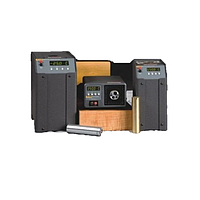
Different calibration methods are suited to different sensor types and working conditions. Dry-well calibrators are widely used for contact temperature probes because they offer a stable heated or cooled insert with defined bore sizes. They are practical for service engineers and technicians who need portability without setting up a full liquid bath system.
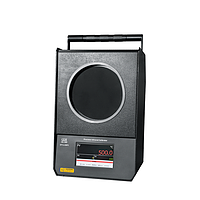
Blackbody calibrators are typically selected for infrared thermometers and thermal imaging devices. Instead of inserting a probe into a block, they provide a controlled radiating surface with known emissivity, making them appropriate for non-contact temperature verification. For users comparing options, the dedicated blackbody calibrator range is useful when infrared applications are the main priority.
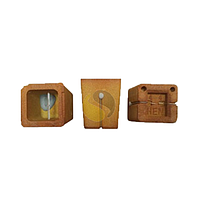
There are also compact temperature calibration sets and accessory-style solutions intended for simpler checks, reference comparison, or integration with other measuring workflows. These products may be suitable when users need a lightweight setup for routine confirmation rather than a full high-capacity calibration station.
Representative product examples and what they are suited for
For portable dry-well work, the Fluke (Calibration) 9102S-256 is a good example of a handheld unit designed for low-temperature to moderate-temperature probe verification. With a compact form factor and removable inserts, it suits technicians who need to calibrate sensors at different diameters while keeping the setup easy to transport. Users working specifically with field-ready thermal references may also want to explore the Fluke (Calibration) brand page for related calibration solutions.
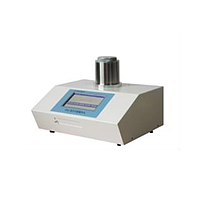
At higher temperatures, the PCE DBC 650 illustrates how dry-block style equipment can support more demanding thermal ranges. This kind of calibrator is relevant for checking industrial probes used in furnaces, process lines, or elevated-temperature applications where heating performance and stability matter as much as portability.
For infrared calibration, OMEGA blackbody models such as the BB702, BB703, BB704, and BB-4A show the range of possible operating windows, from near-ambient verification up to high-temperature non-contact calibration. These are particularly useful when users need a controlled radiating target for IR sensors and thermal cameras rather than direct immersion or insertion of a probe.
More compact sets from KERN, including the DBS-A01, DAB-A01, DLB-A01N, and MLB-A11, fit a different role in the ecosystem. Rather than replacing a dedicated calibrator in every scenario, they can support routine checking, reference comparison, or measurement tasks where a simple temperature calibration set is sufficient.
How to choose the right temperature calibrator
The first selection factor is the required temperature range. A calibration task near ambient conditions calls for a different device than one intended for several hundred degrees Celsius. It is also important to match the calibrator to the sensor type being tested. Contact probes such as RTDs and thermocouples are commonly paired with dry-well or dry-block systems, while infrared thermometers require a blackbody source.
The second factor is stability and usable accuracy in the real workflow. In many industrial settings, repeatability and stable setpoint control are more important than simply reaching a maximum temperature. Warm-up time, cooling time, insert format, well depth, target size, and interface options can also affect productivity, especially when the equipment will be used frequently or moved between sites.
Portability is another practical consideration. A handheld or compact unit may be ideal for maintenance teams, while a larger bench setup may better suit calibration labs. If the work extends beyond thermal measurement, some users may also compare these instruments with a pressure calibrator or other specialized calibration tools as part of a wider verification program.
Applications across industry and laboratory environments
In process industries, temperature calibrators are used to verify transmitters, indicators, controllers, and sensor assemblies installed on lines, vessels, ovens, or utility systems. Regular calibration helps reduce process uncertainty and supports more consistent control of heating and cooling stages. This is especially relevant where temperature deviations can affect yield, safety, or compliance.
Laboratories and QA departments often use temperature calibration equipment to confirm the performance of measurement devices before test work begins. In service and maintenance environments, portable calibrators help technicians diagnose suspected sensor drift without sending every instrument back to an external lab. For facilities managing mixed instrumentation, a dedicated thermal calibrator provides a practical complement to broader calibration and testing workflows.
Why manufacturer and product format matter
Brand choice often reflects application needs rather than preference alone. OMEGA is frequently associated with blackbody calibration options for non-contact temperature work, while Fluke (Calibration) is commonly considered for portable dry-well applications. PCE and KERN provide additional options that may fit users looking for particular operating ranges, compact formats, or straightforward calibration sets.
The important point is not to choose by brand name alone, but by the calibration method, temperature span, sensor compatibility, and working environment. A portable handheld dry-well, a higher-range dry-block unit, and a blackbody source all solve different problems, even though they sit within the same category.
Building a more reliable temperature verification workflow
A well-selected calibrator helps standardize routine checks, shorten troubleshooting time, and improve consistency between technicians or sites. When calibration intervals are planned properly and the reference source matches the actual instrument type, temperature-related issues are easier to detect before they become process or product problems.
This category is intended for users who need practical solutions for thermal verification, from compact sets and handheld dry-wells to blackbody sources for infrared instruments. By focusing on application type, temperature range, and required level of stability, it becomes much easier to narrow down the right temperature calibration equipment for the job.
Get exclusive volume discounts, bulk pricing updates, and new product alerts delivered directly to your inbox.
By subscribing, you agree to our Terms of Service and Privacy Policy.
Direct access to our certified experts