Industrial Power
Stable power is a basic requirement for reliable automation, test systems, communication hardware, and control panels. When engineers source components for these environments, they usually need more than a simple power source—they need the right combination of conversion, regulation, protection, and system integration. Industrial Power products support that need across control cabinets, rack systems, factory equipment, and network-connected devices.
Where industrial power products fit in automation systems
In industrial environments, power architecture affects uptime, signal stability, thermal performance, and serviceability. A well-matched power solution helps equipment operate consistently under changing load conditions, varying input supply, and demanding installation constraints. That is why this category spans more than one device type and supports both machine-level and infrastructure-level applications.
Typical use cases include powering PLC cabinets, instrumentation, embedded systems, communication equipment, and test benches. In many projects, industrial power devices also work alongside industrial controllers and other automation hardware, where clean DC output and predictable behavior are essential for dependable operation.
Key product groups covered in this category
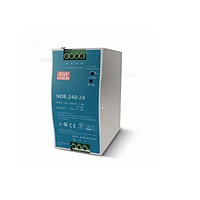
This category is relevant for buyers looking at AC/DC conversion, DC distribution, backup power strategy, and power delivery for connected devices. Depending on the application, the focus may be on DIN rail installation, rack deployment, modular expansion, or Ethernet-based power delivery to endpoint devices.
For example, high-density systems may use open rack or rack-mount power platforms, while compact control enclosures often require space-efficient regulated supplies. Other applications may center on Power over Ethernet, isolated conversion, or conditioned input power to support sensitive electronics and industrial communications.
Representative products and practical selection context
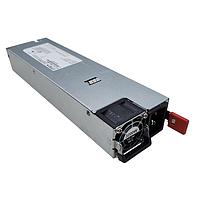
Several products in this range illustrate the breadth of industrial power requirements. The Advanced Energy FCM33K-SHF-L-W-T Open Rack Power Shelf is suited to applications that need high output capacity in a rack-oriented format, while the Advanced Energy UX4C00 and CX10S series AC to DC converter modules reflect a more modular approach to system design. These types of products are often selected when engineers need scalable power architecture rather than a single fixed-format supply.
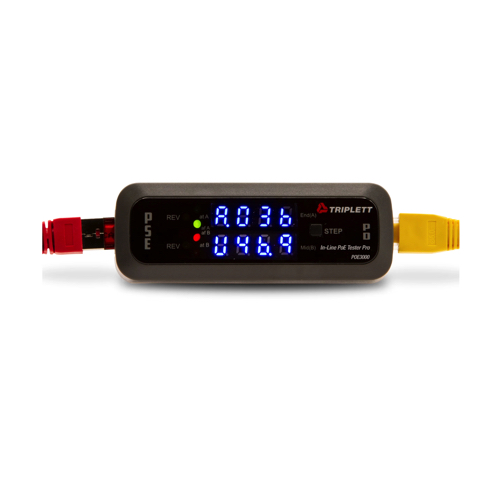
For bench, development, or low-power integration work, models such as the Agilent E3631A Stabilized DC power supply and Agilent E3643A Programmable DC power supply show the importance of controlled, regulated output in validation and support tasks. In Ethernet-powered systems, devices like the Analog Devices LTC4292IUJ#PBF and LTC4291IUF-1#TRPBF are relevant where power and data must be delivered efficiently through the same network infrastructure.
Where manufacturer preference matters, buyers often explore options from Advanced Energy, Agilent, and Analog Devices based on the required form factor, control method, and integration level.
How to choose the right industrial power solution
A practical selection process usually starts with the electrical basics: input source, required output voltage, current demand, and total power budget. From there, engineers should consider installation method, environmental conditions, acceptable ripple, regulation needs, and whether the design must support redundancy or future load expansion.
It is also important to match the product type to the application. A modular converter may make sense in configurable systems, while a rack power shelf is better suited to centralized high-power deployments. If the installation includes motors, switching loads, or electrically noisy equipment, related protection components and circuit protection products may also play an important role in overall system reliability.
Common applications across industry
Industrial power products are used in factory automation, communications infrastructure, embedded computing, laboratory setups, and OEM equipment. In control cabinets, they help supply stable DC power to automation electronics and interface devices. In networked environments, PoE components can simplify cabling and device placement by combining power delivery with data communication.
They are also relevant in testing and instrumentation workflows, where repeatable output and controlled operating conditions are necessary. In some systems, power devices support adjacent technologies such as machine vision and sensing, especially where electronics must remain stable under continuous operation. For broader system builds, this can naturally overlap with areas such as cameras and accessories or counting and monitoring equipment.
Why power architecture matters beyond wattage
Many buyers initially compare products by output power alone, but long-term performance depends on more than a headline rating. Engineers often need to evaluate voltage regulation, thermal limits, mounting constraints, EMC behavior, and service access. These details influence whether a power subsystem remains stable in real operating conditions, not just in ideal specifications.
This is especially true in distributed automation systems, where power quality can affect communication, sensor readings, and controller behavior. Choosing the right format—such as modular, DIN rail, rack mount, or PoE-related hardware—helps align the electrical design with maintenance strategy and cabinet layout. In complex deployments, a good power design reduces troubleshooting time and simplifies future upgrades.
Supporting both new designs and replacement sourcing
This category is useful not only for new project design, but also for maintenance, retrofit, and replacement purchasing. Engineers may be searching for a compatible converter module, a stabilized supply for service work, or a power platform that fits an existing rack or enclosure arrangement. In those cases, form factor, electrical compatibility, and installation context can be just as important as nominal output values.
Because industrial systems often combine legacy hardware with newer automation layers, buyers benefit from reviewing power products as part of a wider equipment ecosystem. Looking at the broader application helps ensure the selected device supports both immediate operation and future integration requirements.
Find the right fit for your industrial power setup
Choosing from an industrial power range is ultimately about matching electrical performance to the realities of the application. Whether the need is high-density rack power, modular AC/DC conversion, regulated bench supply capability, or PoE-related design support, the right product depends on installation method, load profile, and system architecture.
By comparing device roles, output needs, and integration constraints, buyers can narrow the selection more effectively and build a more reliable automation system. This category is designed to support that process with products suited to industrial control, testing, communications, and power distribution environments.
Get exclusive volume discounts, bulk pricing updates, and new product alerts delivered directly to your inbox.
By subscribing, you agree to our Terms of Service and Privacy Policy.
Direct access to our certified experts