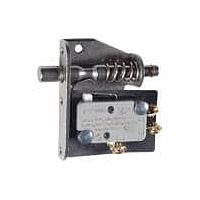
Interlock Switches
In machine safety and guarded access points, the switching device is often just as important as the mechanical barrier itself. When a door, cover, or movable guard needs to be monitored, interlock switches help verify position and support safer machine operation by signaling whether access points are properly closed before equipment can run.
Used across packaging lines, conveyors, robotic cells, assembly stations, and process equipment, these switches are a common part of industrial safety circuits. This category brings together devices designed for guard doors and enclosure monitoring, with options from established manufacturers such as Omron Automation and Safety, Honeywell, Eaton, Banner Engineering, and C&K.
Where interlock switches are used in industrial systems
Interlock switches are typically installed wherever access to a hazardous area must be controlled. Common examples include hinged guard doors, sliding panels, removable covers, inspection hatches, and service access points on automated machinery. Their role is to detect the state of the guard and communicate that condition to the control system.
In practice, this helps reduce the chance of machine motion continuing when a guard is opened. Depending on the machine architecture, the switch may be part of a broader safety circuit that works with relays, controllers, contactors, and emergency stopping devices. For systems that also require operator-initiated shutdown, related options such as emergency stop switches are often considered alongside interlock devices.
How interlock switches support machine guarding
The basic function is straightforward: the switch changes state when the guard is opened or closed. That signal can then be used to inhibit machine start, stop hazardous motion, or confirm that guarding is in place before operation resumes. In many industrial environments, this makes interlock switches a practical interface between the physical guard and the electrical control system.
Selection depends on how the guard moves, how often it is accessed, and how the machine is operated. Some applications prioritize compact installation on small doors, while others need robust hardware for repeated use, vibration, dust, or washdown-adjacent environments. The right choice is usually determined by the machine design, risk assessment, and required integration with the existing control scheme.
Key factors to consider when selecting an interlock switch
For most buyers, the first consideration is the type of guard being monitored. A small enclosure door may need a compact device, while a large industrial gate may require a switch arrangement better suited to alignment changes and heavier-duty operation. Mounting position, actuator approach, and available installation space also matter.
Electrical compatibility is another important point. Engineers typically review contact arrangement, switching logic, wiring method, and how the device will interface with relays or controllers already used on the machine. If the wider panel design also includes operator controls, related categories such as control switches may help when standardizing hardware across the same project.
Environmental conditions should not be overlooked. Exposure to dust, oil mist, vibration, temperature variation, or frequent cleaning can influence the preferred switch construction. In production environments where uptime and maintainability matter, it is often beneficial to choose components from familiar industrial brands with established support and documentation.
Manufacturer range and sourcing considerations
This category includes products from well-known automation and switch manufacturers, giving buyers flexibility when matching a switch to plant standards or OEM preferences. Brands such as Honeywell, Eaton, Banner Engineering, PANASONIC, and C&K are commonly recognized in industrial control and switching applications, while TE Connectivity-related lines may also be relevant where connectivity and integration are part of the broader design approach.
For B2B procurement teams, sourcing from a category page like this can simplify comparison across manufacturers without losing technical context. Instead of reviewing only brand by brand, buyers can evaluate interlock switch options by application need, installation constraints, and compatibility with the rest of the machine safety architecture.
Interlock switches within a broader switch ecosystem
Although interlock switches are closely associated with safeguarding, they are only one part of the larger industrial switching landscape. Machines often combine multiple switch types for isolation, control, indication, and emergency intervention. Understanding that broader context helps engineers build systems that are easier to operate and maintain over time.
For example, equipment may use disconnect devices for power isolation during maintenance, interlocks for guard monitoring during operation, and dedicated safety devices for emergency stopping. In applications involving perimeter protection or long conveyor runs, cable pull switches may also be relevant as part of a more complete safety strategy.
What to review before placing an order
Before selecting a device from this category, it is worth confirming several practical details: the guard style, required switching behavior, installation geometry, electrical interface, and the expectations of the safety design. These checks help narrow the list more effectively than comparing part names alone.
It is also useful to align purchasing decisions with maintenance and replacement planning. Standardizing on a smaller number of trusted switch families can reduce spare-part complexity and make troubleshooting easier for plant teams. Where multiple machine platforms are involved, consistency across operators’ controls and guard monitoring hardware can save time during commissioning and service.
Finding the right fit for your application
Interlock switches are a practical category for machine builders, panel integrators, and maintenance teams that need dependable guard monitoring within industrial equipment. Whether the priority is compact installation, compatibility with existing controls, or alignment with preferred manufacturers, the most effective choice usually comes from matching the device to the real operating conditions of the machine.
By reviewing application type, safety logic, and installation constraints together, buyers can make more informed selections and build a more consistent switching strategy across their equipment. If your project involves adjacent safety and operator control functions as well, exploring related industrial switch categories can help create a more complete and maintainable solution.
Get exclusive volume discounts, bulk pricing updates, and new product alerts delivered directly to your inbox.
By subscribing, you agree to our Terms of Service and Privacy Policy.
Direct access to our certified experts