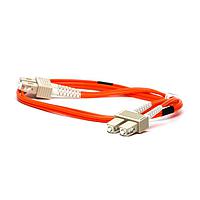
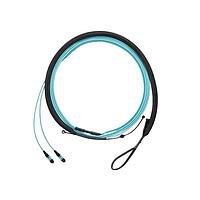
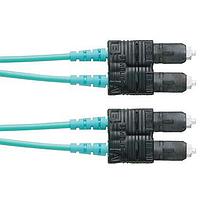
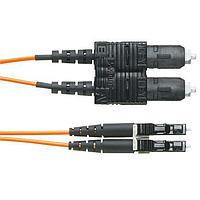
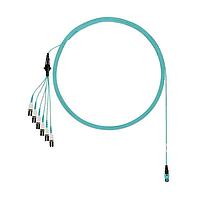
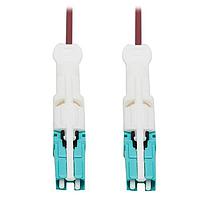
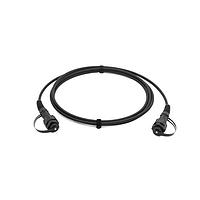
Fiber Optic Cable Assemblies
Reliable optical links depend on more than fiber type alone. In real-world installations, termination quality, connector compatibility, routing conditions, and loss control all have a direct impact on network stability, signal integrity, and long-term maintenance. That is why many engineers and buyers look for ready-to-deploy Fiber Optic Cable Assemblies when building telecom, industrial, data, and instrumentation connections.
This category brings together pre-terminated fiber solutions designed to simplify deployment and reduce installation variability. For B2B sourcing teams, system integrators, and technical buyers, the main advantage is consistency: assemblies help shorten build time, support cleaner cable management, and make it easier to match connectors, fiber formats, and application requirements across a project.
Where fiber optic cable assemblies fit in a system
A fiber optic cable assembly is typically used to create the physical optical path between active devices, patch panels, enclosures, or field equipment. Because the cable and end terminations are prepared as a complete unit, assemblies are often selected when repeatable connection quality and faster installation matter more than doing on-site terminations.
These products are common in structured cabling, control cabinets, telecom infrastructure, machine communication, and optical test environments. Depending on the installation, a buyer may need to consider not only the cable route but also mating interfaces, bend handling, insertion loss expectations, and the surrounding ecosystem of fiber optic connectors and related hardware.
Why pre-terminated assemblies are often preferred
In many projects, pre-assembled fiber links help reduce the risk of inconsistent field termination quality. This can be especially important in installations where uptime, controlled loss performance, and repeatable service procedures are priorities. Instead of sourcing cable, connectors, and termination work separately, teams can select an integrated assembly aligned with the intended interface and route.
Another practical benefit is deployment efficiency. Pre-terminated products can support quicker installation during plant expansion, data infrastructure upgrades, and retrofit work, particularly where access is limited or installation windows are short. For organizations managing multiple sites, this can also support more standardized maintenance practices and easier spare planning.
Key selection points for technical buyers
Choosing the right assembly starts with the application environment. Cable length, connector style, and routing path are obvious factors, but buyers should also think about how the assembly will be handled during installation and service. Tight spaces, repeated connections, vibration, or panel density can all influence what is most suitable.
It is also useful to evaluate the assembly as part of the wider optical link. In some builds, the best choice may depend on compatibility with fiber optic cables already specified elsewhere in the project, or with passive devices used to manage signal levels. When attenuation must be controlled in a more deliberate way, related products such as fiber optic attenuators may also be relevant.
Typical application areas
Fiber optic cable assemblies are widely used wherever low-loss, high-speed, or electrically isolated transmission is needed. In industrial and commercial settings, that can include communications backbones, equipment interconnects, rack-to-rack links, panel connections, and infrastructure supporting sensors, controllers, or network equipment.
They are also relevant in environments where electromagnetic interference makes optical transmission attractive compared with copper-based alternatives. In those cases, a properly selected assembly can help maintain stable communication while supporting cleaner separation between devices and subsystems. The exact construction still depends on the installation context, so selection should be tied to the intended routing, interface, and maintenance method.
Manufacturer options in this category
This category may include solutions from recognized suppliers such as AMP Connectors - TE Connectivity, Amphenol, Belden, Broadcom, Coherent, and Commscope, among others represented in the broader fiber connectivity ecosystem. Each manufacturer may serve different integration needs, from connector-oriented compatibility to cabling infrastructure and application-specific optical interconnect requirements.
For procurement teams, brand selection is usually less about name recognition alone and more about fit with existing standards, approved vendor lists, and the surrounding hardware already deployed on site. A practical comparison should focus on connector ecosystem compatibility, installation constraints, and how the assembly aligns with the broader bill of materials.
How cable assemblies relate to adjacent fiber categories
On many projects, cable assemblies are only one part of the optical path. Buyers may also need standalone cable for custom routing, connector components for specific termination workflows, or development tools for evaluation and lab work. Understanding these adjacent categories helps avoid mismatched parts and supports a more complete purchasing process.
If your team is building or validating optical links from the ground up, it can also be useful to review fiber optic development tools for setup, testing, and evaluation tasks. This is particularly relevant when assemblies are being integrated into a new design, qualification workflow, or pilot installation rather than a like-for-like replacement.
What to check before placing an order
Before ordering, confirm the mating interfaces on both ends of the link, the installation length needed in practice, and the physical route the assembly must follow. It is also worth checking whether the assembly will be used in a permanent installation, a frequently reconfigured setup, or a service environment where quick replacement matters.
For larger purchases, consistency across multiple assemblies is often just as important as the individual item itself. Standardizing on the correct interface family and application fit can reduce replacement complexity later and help maintenance teams manage inventory more effectively. When fiber infrastructure is part of a larger industrial or communications system, this planning step often prevents costly compatibility issues downstream.
Conclusion
Well-chosen fiber optic cable assemblies help bridge the gap between optical design requirements and practical installation needs. For engineers, integrators, and sourcing teams, the value lies in dependable connectivity, cleaner deployment, and better alignment with the rest of the fiber infrastructure.
When comparing options in this category, focus on application fit, connector compatibility, routing conditions, and how the assembly will be used over time. A careful selection process makes it easier to build optical links that are not only functional on day one, but also easier to maintain as systems expand.
Get exclusive volume discounts, bulk pricing updates, and new product alerts delivered directly to your inbox.
By subscribing, you agree to our Terms of Service and Privacy Policy.
Direct access to our certified experts