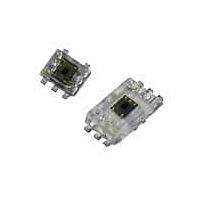
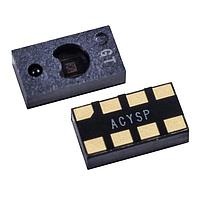
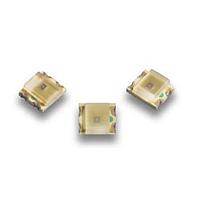
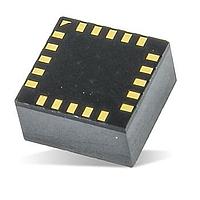
Ambient Light Sensors
Light level data is now built into far more products than simple display dimming. In industrial equipment, portable electronics, building controls, and smart sensing nodes, accurate measurement of surrounding illumination helps improve usability, reduce energy consumption, and support more responsive system behavior. That is where Ambient Light Sensors become especially useful.
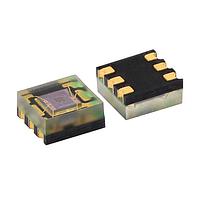
On this category page, buyers can explore devices designed to detect visible light intensity and convert it into an electrical signal that can be processed by a controller, embedded platform, or larger automation system. Whether the goal is adaptive brightness control, environmental monitoring, or optical feedback in compact electronics, choosing the right sensor starts with understanding how these devices fit into the wider optical sensing landscape.
Where ambient light sensors are used
Ambient light measurement is relevant anywhere a product needs to react to changing illumination conditions. Common examples include display backlight control in handheld devices, lighting management in smart buildings, brightness compensation in operator interfaces, and low-power sensor nodes that monitor indoor or outdoor conditions.
In B2B and industrial design contexts, these sensors may also be selected for HMI panels, control cabinets, smart luminaires, consumer devices, and connected products where stable optical input improves system efficiency. Compared with broader optical detection methods, ambient light sensors are typically chosen when the target is general incident light level rather than beam interruption, object counting, or high-sensitivity photon detection.
How these sensors work in practical designs
An ambient light sensor detects light in a way intended to approximate useful illumination data for the application. The output may then be read by a microcontroller, analog front end, or digital interface depending on the device architecture. In practical terms, the sensor helps the system determine whether the environment is dark, moderately lit, or brightly illuminated, and respond accordingly.
For example, a control system can reduce display brightness in low-light conditions to improve readability and save power, then increase brightness when the surrounding environment becomes brighter. In connected electronics, this same signal can support adaptive behavior without the complexity of a full imaging system. When engineers need related optical components for different sensing methods, categories such as photodiodes or phototransistors may also be relevant.
What to consider when selecting ambient light sensors
The right part depends on how the sensor will be integrated into the final product. One of the first considerations is the expected lighting environment: indoor, outdoor, mixed lighting, or rapidly changing exposure. Response behavior, usable measurement range, and how closely the sensor tracks human visual perception can all influence performance in the finished design.
Engineers should also review interface requirements, package constraints, power consumption, and how the device will be positioned relative to the product enclosure. In compact systems, mechanical placement can affect shadowing, angle of incidence, and contamination from nearby light sources. If the design requires broader environmental awareness rather than only illumination tracking, it may be helpful to compare with other optical sensing options inside the same ecosystem.
Ambient light sensors within the optical sensor ecosystem
This category sits within a wider family of optical detectors used for different measurement tasks. While ambient light sensors focus on general light intensity, other devices serve distinct purposes. For instance, photoresistors are often associated with simple light-dependent resistance behavior, while photomultipliers are intended for extremely sensitive light detection in specialized systems.
Understanding these distinctions helps buyers avoid overengineering or under-specifying a design. An ambient light sensor is often the right fit when the application needs compact, repeatable, and system-friendly illumination feedback rather than a general-purpose optical component selected without a clear measurement objective.
Common manufacturer options in this category
This category includes solutions from recognized suppliers in optoelectronics and semiconductor sensing, such as ams OSRAM, Analog Devices, Broadcom, ROHM Semiconductor, Silicon Labs, and STMicroelectronics. These manufacturers are commonly considered in professional design workflows where long-term sourcing, integration support, and product consistency matter.
Depending on the application, buyers may also evaluate devices from Banner Engineering for industrial sensing environments or other established component manufacturers listed on the site. The best choice is usually not about selecting the most familiar brand name, but about matching sensor behavior, electrical compatibility, and package format to the real operating conditions of the project.
Typical integration questions from engineering teams
Should the sensor be placed behind a cover lens?
It can be, but the optical properties of the cover material should be considered carefully. Tinted or diffused covers may change the amount and spectral quality of light reaching the sensor, which can affect calibration and control response.
Is an ambient light sensor the same as a photodiode?
Not exactly. A photodiode is a broader optical detection component, while an ambient light sensor is typically designed and characterized for measuring surrounding light in a way that is more directly usable for illumination-aware systems.
Are these sensors only for consumer electronics?
No. They are also relevant in industrial interfaces, smart lighting, building systems, portable instruments, and embedded devices that need automatic brightness or environmental light feedback.
Choosing the right category for your application
If your requirement is to measure surrounding illumination for adaptive control, power optimization, or environmental awareness, ambient light sensors are usually the most direct starting point. They help simplify design decisions by providing optical input tailored to real-world light level detection rather than more specialized optical tasks.
As you compare available parts, focus on the application context: mounting conditions, electrical interface, response expectations, and operating environment. A well-matched sensor can improve both user experience and system efficiency, while the broader optical detector categories on the site make it easier to evaluate alternative technologies when the sensing objective is different.
Get exclusive volume discounts, bulk pricing updates, and new product alerts delivered directly to your inbox.
By subscribing, you agree to our Terms of Service and Privacy Policy.
Direct access to our certified experts