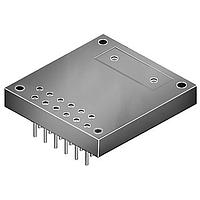
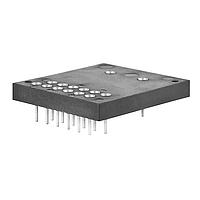
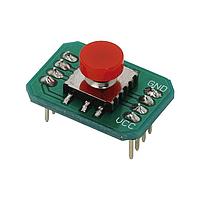
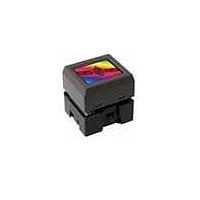
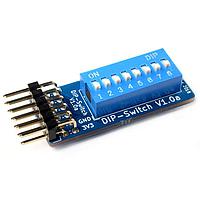
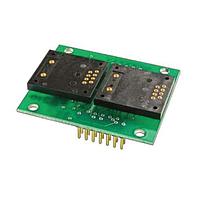
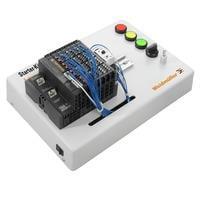
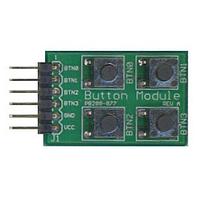
Switch Development Tools
When evaluating a switch design, engineers often need more than the switch itself. Development platforms, training hardware, test interfaces, and prototyping tools help shorten validation time, reduce wiring errors, and make it easier to compare switching behavior in a controlled setup. That is where Switch Development Tools become useful for lab work, design verification, education, and early-stage product development.
In this category, the focus is on tools that support the practical use, testing, and demonstration of switching concepts in electronics and control environments. These products are especially relevant for teams building prototypes, teaching switching fundamentals, or integrating switch functions into larger embedded and industrial systems.
Where switch development tools fit in the engineering workflow
Switch-related development hardware is typically used before a final design is locked down. It can support quick proof-of-concept work, user-interface testing, signal routing experiments, or classroom and bench-top demonstrations. Instead of committing immediately to a production-ready assembly, engineers can work through switching logic, electrical behavior, and operator interaction with more flexibility.
This makes the category relevant across several use cases: evaluating manual input methods, building control panels, testing signal transitions, and verifying how a switch interacts with downstream electronics. In many projects, these tools sit alongside related hardware such as solid state switching solutions or conventional mechanical switching components, helping teams compare architectures before moving into final integration.
Typical applications in prototyping, education, and test setups
One of the most common use cases is rapid prototyping. During early development, teams may need to simulate operator inputs, confirm control logic, or create a temporary interface for firmware testing. Development-oriented switch hardware can simplify this process by giving designers a more accessible platform for repeated experiments and revisions.
These tools are also valuable in technical education and training labs. Instructors and students often need hardware that makes switch behavior visible and easy to wire into broader experiments. In a teaching environment, the goal is not only to operate a switch, but also to understand signal paths, logic changes, and interaction with connected circuits or controllers.
In test environments, switch development tools can help validate response sequences, confirm compatibility with prototype boards, and support repeatable bench evaluation. This is especially useful when a project includes several switching methods or when a design must transition from a lab prototype to a more robust field-ready interface.
What to consider when selecting switch development tools
Selection usually starts with the intended development task. If the goal is educational or exploratory, ease of connection and visibility of the switching function may matter most. For embedded design work, compatibility with common development ecosystems, controller boards, or lab instruments may be more important than mechanical packaging.
It is also useful to think about the broader electrical context. Some projects involve low-power logic signaling, while others are closer to industrial control methods. In those cases, the switch development platform should match the evaluation environment as closely as practical. For higher-level system planning, engineers may also review adjacent categories such as safety switches or disconnect switches when the application extends beyond bench testing into machine or panel design.
Another key factor is how the tool will be used over time. Some teams need a quick one-time prototype aid, while others need a repeatable platform for demonstrations, training, or iterative product development. Choosing with that lifecycle in mind helps avoid replacing the setup too early.
Role within a broader switch and control ecosystem
Switch development tools are best understood as part of a larger design and evaluation ecosystem. They do not replace production switches or final control hardware. Instead, they help teams test assumptions, speed up experimentation, and improve confidence before a design moves into a more permanent form.
In many engineering environments, this category supports the gap between concept and implementation. A development tool may be used to explore interface behavior, study switching logic, or demonstrate an application concept to internal stakeholders. Once the design is validated, engineers can move toward application-specific hardware with clearer requirements and fewer unknowns.
This workflow is especially helpful in multidisciplinary projects where hardware, firmware, and user interaction must be aligned. A practical switch development setup can make communication easier between design teams by turning abstract behavior into something measurable and repeatable.
Manufacturer landscape and platform-oriented development
Several manufacturers in this category are relevant because they support prototyping, experimentation, and engineering education in different ways. Brands such as Weidmuller, NKK Switches, Digilent, Global Specialties, Mikroe, Parallax, and 1BitSquared may be considered depending on whether the project leans more toward industrial connection practices, electronics training, or embedded development workflows.
The right choice depends less on brand recognition alone and more on the type of development environment you are building. Some teams prioritize structured lab evaluation, while others need hardware that fits into open-ended prototype systems. In either case, the most useful tools are the ones that make testing clearer, setup faster, and iteration easier.
How this category supports better design decisions
Using dedicated development tools early in a project can reduce trial-and-error during later design stages. Teams can verify switching concepts, identify usability issues, and better understand electrical interactions before investing in custom assemblies or finalized control layouts. That can improve both development speed and documentation quality.
These tools are also valuable when comparing different switching approaches. For example, a project may begin with basic manual input testing and later branch into specialized requirements involving environmental response or accessory integration. In that situation, reviewing related options such as humidity switches or supporting switch accessories may help clarify the eventual system direction.
Choosing the right direction for your application
The most effective way to approach this category is to start from the task: prototyping, teaching, evaluation, or system integration planning. From there, consider how the switch function will be tested, what kind of signals are involved, and whether the setup is temporary or intended for repeated use. That approach usually leads to a more practical shortlist than filtering by product type alone.
For engineers, educators, and technical buyers, switch development tools provide a useful bridge between idea and implementation. With the right platform, it becomes easier to evaluate switching behavior, refine control concepts, and move toward a more reliable final design with fewer surprises later in the process.
Get exclusive volume discounts, bulk pricing updates, and new product alerts delivered directly to your inbox.
By subscribing, you agree to our Terms of Service and Privacy Policy.
Direct access to our certified experts