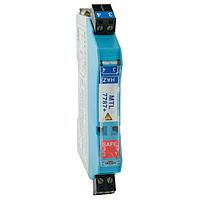
Safety Barrier
In hazardous process environments, signal integrity and electrical protection need to work together. When transmitters, loops, and control equipment are installed across safe and hazardous areas, the right Safety Barrier helps limit energy transfer while preserving reliable analog communication for monitoring and control tasks.
This category focuses on barrier devices used with current-loop instrumentation, especially 4-20 mA applications common in industrial automation. These products are typically selected to support intrinsically safe measurement and interface requirements in systems where pressure, flow, level, or other process signals must be brought back to the control side without compromising safety design.
Where safety barriers fit in industrial control systems
A safety barrier is generally used between field-mounted instrumentation in a hazardous area and equipment located in the safe area. Its role is to restrict voltage and current so that, under normal and fault conditions, the energy available in the hazardous zone remains within acceptable limits for the application.
In practical terms, these devices are often part of a larger instrumentation chain that may also include meters and indicators, PLC or loop control hardware, and other process control and monitoring devices. This makes correct barrier selection important not only for compliance, but also for stable signal transmission and maintainable panel design.
Common barrier types in this category
The products highlighted here reflect two widely used approaches: galvanic barriers and shunt-diode barriers. While both are intended to support safe interfacing between hazardous-area instruments and the control side, they differ in how isolation and energy limiting are implemented.
Galvanic barriers are often chosen when electrical isolation is a priority, helping separate circuits between the hazardous and safe sides. Shunt-diode barriers, by contrast, are commonly used in intrinsically safe loops where grounding strategy and loop design are already clearly defined. The right choice depends on the loop architecture, power arrangement, device compatibility, and site engineering standards.
Representative Dwyer safety barrier options
This category includes selected products from Dwyer, a familiar name in industrial instrumentation. Examples include the Dwyer KFD0-SCS-EX1.55 loop powered galvanic barrier for safe transmitters and the Dwyer MTL5541 galvanic barrier for hazardous-area applications, both designed for DIN rail mounting and 4-20 mA signal handling.
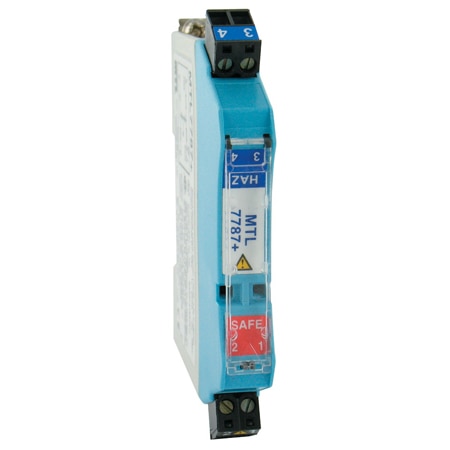
Also represented are intrinsically safe shunt-diode barrier models such as the Dwyer MTL7787 and Dwyer MTL7706. These examples illustrate how barrier selection may vary according to loop parameters such as allowable inductance, capacitance, supply conditions, and load characteristics. Rather than focusing only on model naming, it is more useful to evaluate how each device fits the intended transmitter, control panel, and hazardous-area design basis.
Key selection points for 4-20 mA applications
For many buyers, the first step is confirming the signal type. The products shown in this category are centered on 4-20 mA current loops, which remain a standard interface for industrial transmitters because of their noise resistance and suitability for longer cable runs. When adding a barrier, engineers should verify that loop voltage, allowable load, and response behavior still support the instrument and receiving device.
Installation format also matters. Several products here are designed for DIN rail mounting, which simplifies panel integration and replacement. Other practical factors include available supply voltage, ambient temperature range, terminal capacity, and whether the application calls for loop-powered operation or an externally powered interface.
For projects that involve broader panel integration, it can also be helpful to review related controller options and supporting control and monitoring accessories to ensure compatibility across the full system.
Why compliance and loop data matter
Barrier selection should never be based on form factor alone. In hazardous-area applications, details such as compliance markings, entity parameters, and permitted electrical values are central to determining whether a barrier can be paired with a specific field device. The sample products in this category reference approvals and compliance frameworks such as FM, UL, ATEX, and CE, depending on the model.
Just as important are the loop-side electrical characteristics. Output range, maximum load, response time, and power consumption can influence how well the barrier works in a live process environment. If the receiving system depends on fast signal changes or the loop operates near its voltage margin, these values become especially relevant during design review.
Typical use cases for safety barriers
Safety barriers are commonly applied wherever analog transmitters must communicate from potentially hazardous zones back to a safe-area control system. This may include process measurement points tied to pressure, flow, level, or similar instrumentation where a current-loop output is used for indication, alarming, or closed-loop control.
They are also relevant in retrofit work. When older field instruments are retained but control panels are upgraded, a compatible barrier can help bridge the interface requirements without forcing a complete redesign of the measurement loop. In these cases, the focus is often on maintaining safe operation, preserving signal quality, and fitting within existing DIN rail or cabinet layouts.
Choosing the right product for your installation
A good starting point is to define the field device type, hazardous-area classification method, loop power arrangement, and receiving equipment requirements. From there, compare whether a galvanic barrier or shunt-diode barrier is more appropriate, then review mounting style, electrical ratings, and environmental limits against the application.
If you are comparing models such as the Dwyer KFD0-SCS-EX1.55, MTL5541, MTL7787, or MTL7706, the most useful approach is to match the barrier to the loop design rather than choosing by series name alone. Paying attention to current-loop behavior, permitted load, and compliance details will usually lead to a more reliable and easier-to-maintain installation.
For buyers working on process instrumentation panels, this category provides a focused range of safety barrier solutions for hazardous-area signal interfacing. Reviewing the application requirements first will make it easier to narrow down the right device and build a safer, more consistent control architecture.
Get exclusive volume discounts, bulk pricing updates, and new product alerts delivered directly to your inbox.
By subscribing, you agree to our Terms of Service and Privacy Policy.
Direct access to our certified experts