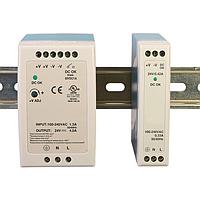
Control & Monitoring Accessories
Reliable measurement and control systems often depend on small supporting components that make installation cleaner, readings more stable, and device integration easier. In many industrial setups, accessories are not secondary items at all—they are the practical pieces that connect gauges, manometers, sensors, and monitoring devices to the actual process.
Control & Monitoring Accessories in this category support pressure measurement and related monitoring tasks across HVAC, ducts, air handling systems, utilities, and general industrial environments. These products are especially relevant when a project requires proper pressure pickup, tubing connection, mounting compatibility, or a durable interface between the process point and the instrument.
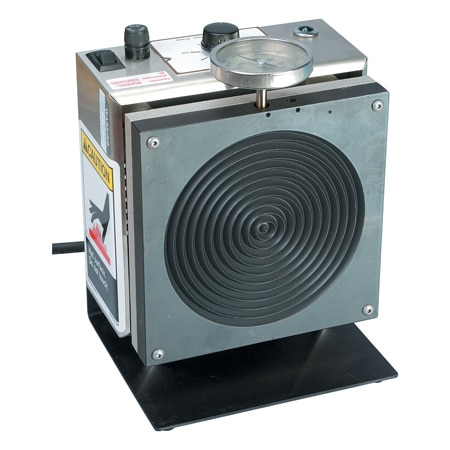
Why accessories matter in control and monitoring systems
Instrumentation performance is shaped not only by the main device, but also by how well it is installed. A suitable static pressure pickup, fitting type, insertion length, or tubing arrangement can help improve measurement consistency and reduce installation issues in field applications.
For users working with manometers, gauges, and related monitoring hardware, accessories can simplify commissioning and maintenance. They also help ensure that the pressure signal being measured is taken from the correct point in the system, which is especially important in ducted air systems and low-pressure monitoring applications.
Typical products found in this category
A large part of this range is centered on static pressure sensing accessories used with pressure instruments. Examples include the Dwyer A-301, A-302, A-305-SS, A-307-SS, and A-420A series, each designed to support pressure pickup and connection in different installation conditions.
Some models use compression fittings, while others use barbed connections or male NPT process connections. This gives buyers flexibility when matching the accessory to existing tubing, mounting style, and instrument connection requirements. In practice, the right choice often depends on the media path, mechanical durability, and how the pressure line is routed back to the measuring device.
Material, connection, and insertion length considerations
When selecting a pressure accessory, material compatibility is one of the first checkpoints. Several featured products use stainless steel construction, while others use combinations such as steel and brass, or include PVC and plastic elements where tubing support is part of the assembly. Material choice can affect corrosion resistance, mechanical strength, and long-term suitability for the environment.
Insertion length is another practical factor. In this category, examples range from short insertion styles to longer versions such as 6 in, 8 in, and 12 in. A longer insertion depth may be useful when the pressure pickup point needs to reach further into a duct or installation area, while shorter designs may suit more compact layouts or simpler connection points.
Connection style also matters. Barbed fittings are commonly used where flexible tubing is preferred, while compression fittings may be selected for a more secure mechanical connection. Male NPT styles can be useful when the accessory needs to integrate directly with threaded process points or existing hardware.
Representative Dwyer accessories for pressure applications
Dwyer is a key manufacturer in this category, particularly for static pressure accessories used alongside manometers and gauges. Models such as the A-301-A, A-301-B, and A-301-C illustrate how the same general product family can address different insertion depth requirements without changing the overall application focus.
For users who prefer stainless steel construction, A-301-SS and A-307-SS provide alternatives suited to installations where durability and material selection are important. The A-305-SS, with a male NPT connection style, is relevant for duct-oriented mounting situations, while the A-302F-A, A-302F-B, and A-302F-C offer barbed fitting options across multiple insertion lengths.
There are also accessory variants that support the broader installation ecosystem rather than acting only as the pickup element itself. For example, the A-306-A includes tubing-related components, making it useful in setups where the pressure line must be routed over distance. The A-420A stands out as an accessory with an electrical connection arrangement, which may be relevant where the installation calls for integration beyond a simple passive fitting.
How to choose the right accessory for your setup
The most effective selection process starts with the application rather than the part number. Consider where pressure is being measured, what instrument will receive the signal, and what type of connection already exists in the system. This helps narrow down whether a barbed, compression, tube, or threaded style is the better fit.
It is also useful to review the physical installation constraints. Duct access, available mounting space, insertion depth, and tubing routing can all affect which accessory will work cleanly in the field. In many cases, the correct accessory helps reduce adaptation work and makes the overall monitoring point easier to service later.
If your project also involves a broader instrument package, related categories such as meters and indicators or process control and monitoring devices may be useful for building out the complete measurement chain.
Applications across HVAC and industrial monitoring
These accessories are commonly used in air handling units, ventilation ducts, filter monitoring points, building services, and general plant environments where pressure must be observed or transmitted to an instrument. They can support routine measurement tasks such as static pressure pickup, duct pressure checking, and signal routing to local or panel-mounted devices.
In broader automation or facility monitoring projects, accessories like these are often part of a larger instrumentation stack that may also include controllers and display devices. Choosing compatible accessories early can make the rest of the control architecture easier to implement and maintain.
What buyers usually compare before ordering
For B2B purchasing, the main comparison points are usually connection type, material, insertion length, and how the accessory will be paired with the end instrument. Buyers may also look at whether the product is intended mainly for passive pressure pickup, tubing support, or a more integrated installation arrangement.
Another common consideration is standardization. If a site already uses a certain tubing size or fitting style, selecting matching accessories can simplify spare parts management and reduce installation variability across multiple assets or facilities.
Supporting accurate and practical system installation
Accessories may seem like small components, but they play an important role in turning a pressure instrument into a usable field measurement point. The right selection can improve installation quality, support better signal pickup, and help the overall monitoring system operate more predictably.
This category brings together practical accessory options for users working with pressure measurement and control systems, with strong representation from Dwyer and product variations suited to different connection and mounting needs. If you are building or maintaining a monitoring setup, reviewing these accessory details carefully is often the best way to avoid mismatches later in the project.
Get exclusive volume discounts, bulk pricing updates, and new product alerts delivered directly to your inbox.
By subscribing, you agree to our Terms of Service and Privacy Policy.
Direct access to our certified experts