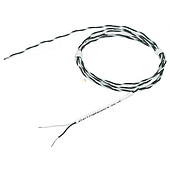
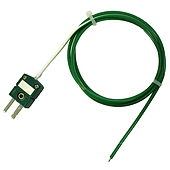
The smaller the diameter of a Type K thermocouple, the faster its response time is generally. A smaller sensing element has lower thermal mass and requires less heat to change temperature, allowing it to respond more quickly to changes in the surrounding environment.
However, diameter alone cannot determine measurement speed. The thermocouple junction type, protective material, installation method, and operating conditions also have a direct effect on response time.
Why Does a Thinner Type K Thermocouple Respond Faster ?
A Type K thermocouple generates an electrical signal based on the temperature difference between the measuring junction and the reference junction. When the ambient temperature changes, heat must first reach the measuring junction before the output signal changes accordingly.
A smaller sensing element generally has lower thermal mass. As a result, it requires less energy to reach a new temperature.
Low thermal mass → faster heat transfer → shorter response time.
This characteristic is useful when measuring air temperature, surface temperature, or processes in which temperature changes rapidly.
How Does Wire Diameter Affect Response Time ?
For wire-type Type K thermocouples, the diameter of the thermocouple element has a noticeable effect on response speed.
When other conditions are the same, a 0.5 mm wire has lower thermal mass than a 2 mm wire. When both are exposed to a new temperature environment, the thinner wire will generally reach thermal equilibrium faster.
The diameter of the sensing element is only one factor affecting the response time. The construction of the thermocouple and the way it is installed can also have a significant impact.
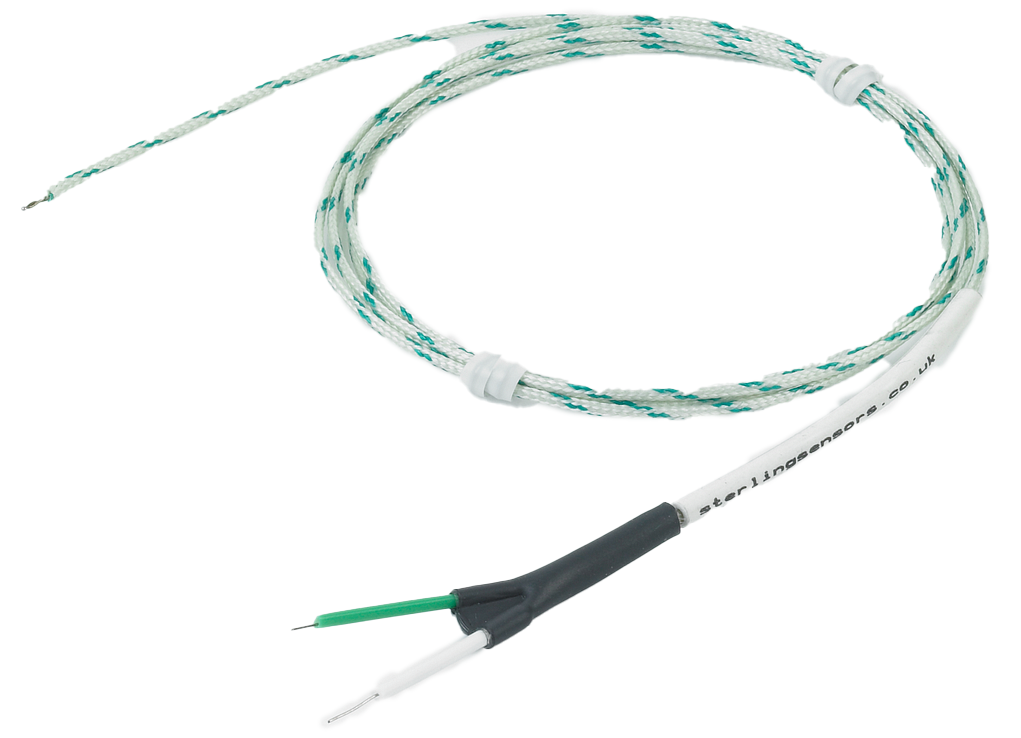
The Measuring Junction Affects Thermocouple Response Speed
A thin wire may still have a slow response if the Type K element is enclosed in a thick protective tube.
Type K temperature probe commonly use exposed, grounded, or insulated junctions. Each configuration has different characteristics.
An exposed junction is in direct contact with the measured environment, so it generally provides a faster response. It is suitable for applications where the probe needs to detect temperature changes within a short period.
A protected junction is enclosed by a sheath or insulating material. This construction increases the time required for heat to reach the sensing element but provides better protection against impact, dust, chemicals, and harsh operating conditions.
Therefore, a thermocouple designed for a fast response may require some compromise in terms of mechanical durability and protection.
A Thinner Type K Thermocouple Is Not Always the Best Choice
Ultra-thin Type K thermocouples offer faster response times, but they are not the optimal choice for every application.
In environments with vibration or mechanical stress, thin wires are more susceptible to deformation and damage. When measuring high temperatures, it is important to check the temperature limits of the wire, insulation, and protective materials rather than simply choosing the smallest diameter available.
The installation method should also be considered. A small thermocouple installed inside a thick protective tube may respond more slowly than a thermocouple with an exposed junction that is in direct contact with the measured environment.
A Fast-Response Probe Can Produce More Rapidly Fluctuating Signals
A fast response allows a thermocouple to detect small and rapid temperature changes. This is useful for monitoring heating, cooling, or surface temperature.
On the other hand, if the measured environment is constantly fluctuating, the output signal may also change rapidly. In systems that require a stable value for control or monitoring, this characteristic can sometimes result in greater fluctuations on the display.
A probe with a moderate response time may be more suitable when the main requirement is to monitor a stable temperature rather than detect every instantaneous change.
Choosing a Type K Thermocouple for the Application
If response speed is the priority, a thermocouple with a thin sensing element, exposed junction, and simple construction may be suitable. This configuration is commonly used for air temperature, surface temperature, or processes with rapidly changing temperatures.
An ultra-thin probe can provide a fast response but is more vulnerable to mechanical damage. If the application involves vibration, impact, or high temperatures, a more robust construction and suitable protective materials should be prioritized.
When selecting a Type K temperature sensor, consider the sensing element diameter, junction type, protective material, temperature range, and response time together.
A thinner Type K thermocouple generally has a shorter response time because of its lower thermal mass and faster heat transfer. However, response speed also depends on the junction type and the protective construction of the probe.