High Voltage DC power supply
When an application needs stable DC output at elevated voltage levels, choosing the right supply is about more than just a headline rating. Engineers and buyers typically need to balance output range, polarity, current capability, control requirements, mounting format, and the demands of the end process. This is where the High Voltage DC power supply category becomes especially relevant for laboratories, industrial systems, R&D environments, and specialist electronic equipment.
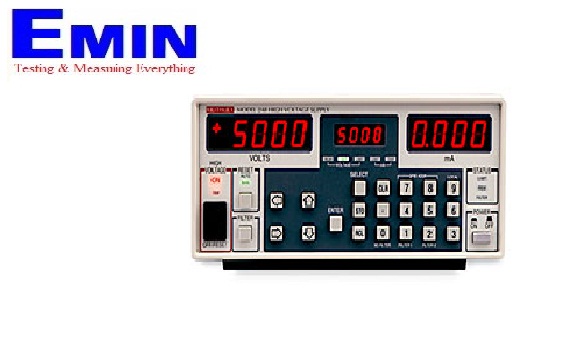
On this page, you can explore solutions designed for applications that require controlled high-voltage DC output, from compact lower-current systems to higher-power rack-mount platforms. The range is suitable for users comparing product architectures, planning integration, or narrowing down options within a broader power supply setup.
Where high voltage DC supplies are used
A high voltage DC source is commonly selected when equipment must deliver a precise electric field, controlled bias, or stable output under demanding electrical conditions. Typical use cases include test benches, electrostatic processes, detector biasing, research instruments, and industrial subsystems that depend on repeatable high-voltage performance.
Compared with general-purpose power products, these units are usually chosen with greater attention to voltage stability, output configuration, and system compatibility. In some projects, users may also compare them with high power DC supplies above 1 kW when the application is driven more by power delivery than by elevated voltage alone.
Key selection criteria for this category
The most important starting point is the required output voltage and current. Some applications need several kilovolts at low current for biasing or electrostatic control, while others call for lower voltage but much higher power in a rack-based system. Looking at both values together helps prevent oversizing or choosing a supply that fits one specification but not the real operating profile.
Polarity and configuration also matter. Certain systems require bipolar output for positive and negative voltage operation, while others only need a monopolar or positive-output design. Buyers should also review input requirements, mounting style, and whether a fixed-output platform or a more adjustable architecture makes better sense for the intended integration.
Product examples across different voltage and power needs
Within this category, the available examples show how broad the requirement range can be. For compact high-voltage work, the XP Power ESC series provides several options, including the XP Power ESC-2, ESC-3, ESC-4, ESC-5, ESC-HV10, and ESC-HVXP. These models illustrate how users may choose between different maximum voltage levels, current limits, and monopolar or bipolar configurations depending on the application.
For instance, the XP Power ESC-5 High voltage power system (5kV) suits applications where moderate high voltage with bipolar capability is needed, while the XP Power ESC-HVXP High voltage power system (15kV) addresses significantly higher-voltage requirements. If your project needs an overview of the broader supplier portfolio, the XP Power brand page is a useful starting point.
At the higher-power end, selected Advanced Energy systems demonstrate a different approach. Models such as the 73-958-0001, 73-958-0001S, 73-938-0300, and 73-959-0001L are rack-mount AC/DC supplies designed for applications where output power, installation format, and input configuration are central decision factors. These examples are especially relevant when the system requirement extends beyond small-current high-voltage biasing into more substantial power delivery.
Understanding configuration differences
Not every high voltage DC supply is intended for the same electrical role. A bipolar design can support both positive and negative output operation around a reference point, which is often useful in research, electrostatic control, or instrument biasing. Monopolar models, by contrast, may be sufficient when only one output polarity is required and system simplicity is preferred.
Another distinction is between compact dedicated systems and larger rack-mount platforms. Compact units are often selected for integration into instruments or specialized benches, while rack systems fit better in centralized test racks, process equipment, or industrial cabinets. In some cases, users comparing output behavior may also want to review a fixed-output AC/DC supply if adjustability is not a priority.
How to evaluate a power supply for integration
From a procurement and engineering perspective, the best choice usually comes from matching the supply to the real operating environment rather than the maximum specification alone. Consider the expected duty cycle, input power available at site, cabinet or rack space, and how the unit will connect with the rest of the system. This is especially important when comparing bench-oriented high-voltage solutions with industrial rack-mount equipment.
It is also helpful to think about the wider power architecture. Some projects combine multiple supply types for different stages of the same system, such as high-voltage DC for biasing and other regulated outputs for controls or auxiliary loads. In those situations, reviewing nearby categories like AC power supplies can help define a more complete solution.
Brands commonly considered in this segment
This category includes products associated with recognized names in specialist power electronics and test equipment. Advanced Energy and XP Power are directly represented by the featured products on this page, covering both compact high-voltage systems and larger rack-based AC/DC platforms.
Depending on the application context, buyers may also be familiar with manufacturers such as Stanford Research Systems, TREK, Genvolt, IdealTek, and PRODIGIT. The right brand choice often depends less on name recognition alone and more on whether the output profile, form factor, and control approach align with the actual engineering task.
Choosing the right path for your requirement
If your application is driven primarily by kilovolt-level output and controlled low-current operation, a dedicated high-voltage system may be the most practical fit. If the project instead requires substantial wattage, rack installation, and defined AC input conditions, a higher-power AC/DC platform may be more appropriate even when the output voltage is lower than specialized kilovolt units.
This category is intended to help users compare those options in a structured way. By focusing on operating voltage, current demand, polarity, integration method, and installation environment, you can narrow the shortlist more effectively and identify a supply that fits both the electrical requirement and the overall system design.
Whether you are sourcing for a lab setup, industrial equipment, or a custom test system, a careful review of the products in this High Voltage DC power supply range can make specification and procurement more efficient. Start with the output profile your application actually needs, then compare configuration, form factor, and power architecture to arrive at a solution that is technically appropriate and easier to integrate.
Get exclusive volume discounts, bulk pricing updates, and new product alerts delivered directly to your inbox.
By subscribing, you agree to our Terms of Service and Privacy Policy.
Direct access to our certified experts