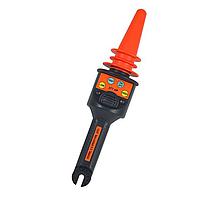
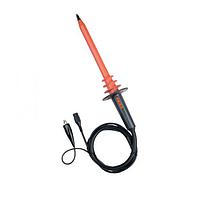
High Voltage Testers
Working around energized conductors demands fast indication, clear visibility, and equipment matched to the actual voltage range of the task. In maintenance, utility work, panel verification, and overhead line inspection, High Voltage Testers help technicians check the presence of voltage before proceeding with switching, isolation, or troubleshooting steps.
This category brings together handheld and wearable detection tools used for medium- and high-voltage environments, including non-contact detectors, live-part detectors, voltage alarms, and phase testing instruments. The focus is not only on detection range, but also on practical factors such as working distance, indication method, portability, and suitability for overhead line or field use.
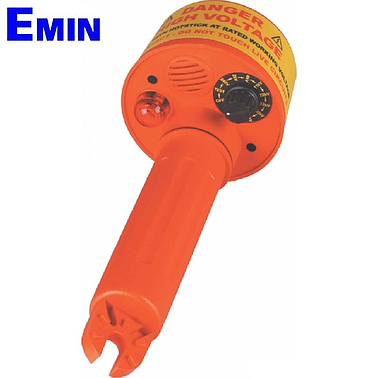
Where high voltage testers are used
These instruments are commonly selected for electrical safety checks in substations, distribution networks, industrial plants, building power systems, and outdoor utility maintenance. In many workflows, the tester is used as a first-line verification tool to identify whether a conductor, busbar, terminal, or live part is energized before deeper measurement or service work begins.
Different jobs call for different detector formats. Some applications need a compact portable unit for close-range confirmation, while others require a detector mounted on an insulating stick for higher-voltage work and safer stand-off distance. Wearable alarm types are also useful when personnel are working near energized overhead lines and need an immediate warning as they approach a hazardous zone.
Main product types in this category
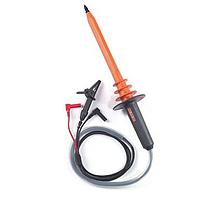
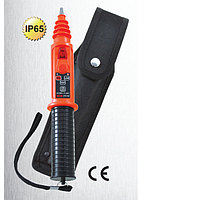
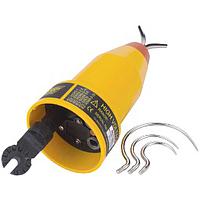
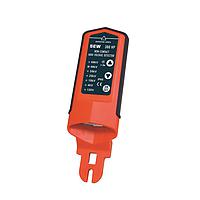
A practical way to evaluate this category is by understanding the role of each device type. Non-contact voltage detectors are designed for quick presence checks without direct metallic contact, which is especially useful in preliminary inspections and routine field verification. Contact or stick-based high-voltage detectors are more suitable when the procedure requires a defined testing method for medium- or high-voltage circuits.
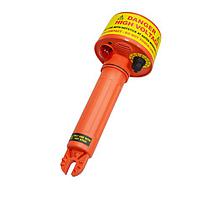
There are also specialized tools such as live-part detectors and phase testers. For example, the HASEGAWA HXC-3K Portable Live Part Detector supports work across a broad medium-to-high voltage range, while the HASEGAWA HPI-S20W Medium Voltage Phase Tester is intended for phase comparison and phase sequence tasks in overhead line applications. These are different use cases from simple voltage presence detection, so selecting the right instrument category is essential.
Examples from leading brands
This category includes products from established manufacturers such as HASEGAWA, Amprobe, and EXTECH. Each brand is relevant in different field scenarios, from compact personal warning devices to portable detectors for medium- and high-voltage verification.
For wearable warning applications, models such as the HASEGAWA HXA-6S Helmet Fitting Type and HASEGAWA HXA-6 Upper Arm Fitting Type are designed for overhead line work, giving personnel an audible warning when approaching energized conductors. For broader detection ranges, the Amprobe TIC 300 PRO High Voltage Detector and EXTECH DV690 High Voltage Detector are examples of non-contact tools used for quick indication over low-to-high voltage spans.
Where mixed-use requirements exist, some instruments bridge more than one operating range. The HASEGAWA HSS-6B1 Voltage Detector For Medium/Low Voltage and HASEGAWA HSN-6A1 Voltage Detector For Medium/Low Voltage are examples of detectors intended for field work where technicians may encounter lower voltage circuits as well as medium-voltage systems.
How to choose the right high voltage tester
The first selection point is the working voltage range. A tester should match the system voltage you expect to encounter, with suitable indication performance for that environment. A device intended for a few kilovolts is not interchangeable with a tester designed for much higher transmission or distribution voltages, even if both are described as high-voltage detectors.
The second factor is the testing method: non-contact warning, portable live-part confirmation, or phase verification. If the job is primarily lockout verification and basic energized-state confirmation, a non-contact detector may be appropriate. If the task involves system identification, sequence checking, or line comparison, a dedicated phase tester is the better fit.
It is also worth considering environmental conditions such as temperature range, audible alarm level, visibility of indicators in bright light, and whether the device is intended specifically for overhead line work. Battery type, expected operating time, and portability matter as well, especially for maintenance teams that rely on field-ready instruments throughout a shift.
Typical selection criteria for field and industrial users
For utility and overhead line crews, stand-off distance and physical configuration are often more important than compact size. Instruments such as the HASEGAWA HST-30 Medium Voltage & High Voltage Detector or HASEGAWA HST-W80L Medium Voltage & High Voltage Detector are more aligned with applications where extended reach and insulation structure are part of the operating procedure.
For plant maintenance and general electrical troubleshooting, users may also compare high-voltage detection tools with everyday measurement instruments. In many workflows, a detector is used first for safety verification, then a multimeter or other diagnostic instrument is used only after the circuit condition is confirmed and the procedure allows direct measurement.
Ground condition is another practical concern in electrical safety and fault investigation. In broader maintenance programs, high-voltage detection may be complemented by tools such as an earth resistance tester when verifying grounding quality or investigating site-level electrical issues.
Understanding wearable alarms and portable detectors
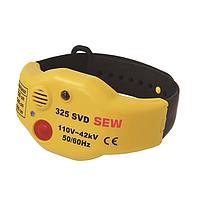
Wearable voltage alarms serve a different purpose from handheld detectors. Their role is proximity warning rather than formal measurement, making them useful for crews working near overhead conductors. Models such as the HASEGAWA HXW-6W Wrist Alarm give users an immediate alert when entering a potentially dangerous electric field zone.
Portable detectors, by contrast, are usually chosen when the technician needs a more deliberate check at a defined point. Devices like the HASEGAWA HXC-3K Portable Live Part Detector or EXTECH DV690 are better suited to inspection routines, energized-state verification, and maintenance checks where the operator actively brings the detector to the target area.
This distinction is important for procurement and safety planning. A wearable alarm improves awareness during movement, while a portable detector supports a direct checking step within a work procedure. Many teams use both, depending on the risk profile of the site.
Why category-level comparison matters
High-voltage testing equipment is rarely selected on price or brand name alone. Buyers usually compare product format, voltage coverage, indication style, portability, and suitability for their safety method. That is why a category page is useful: it allows engineers, technicians, and purchasing teams to review different approaches side by side instead of focusing on a single model too early.
If your application also involves insulation faults or difficult-to-trace electrical problems, related tools such as a ground fault locator may be relevant in the wider diagnostic workflow. High voltage testers help determine whether a circuit is energized, while fault-location tools support a different stage of troubleshooting.
Choosing with safety and application in mind
The right choice depends on where the instrument will be used, how close the operator needs to get, and whether the task is simple voltage presence detection or a more specialized phase or live-part check. From compact wearable alarms to medium- and high-voltage detectors for overhead systems, this category covers tools that support safer electrical verification in real field conditions.
When comparing products, focus on voltage range, intended use, indication method, and working environment rather than selecting by model name alone. That approach makes it easier to find a high voltage tester that fits your procedure, your equipment class, and the safety expectations of your site.
Get exclusive volume discounts, bulk pricing updates, and new product alerts delivered directly to your inbox.
By subscribing, you agree to our Terms of Service and Privacy Policy.
Direct access to our certified experts